
PAUL
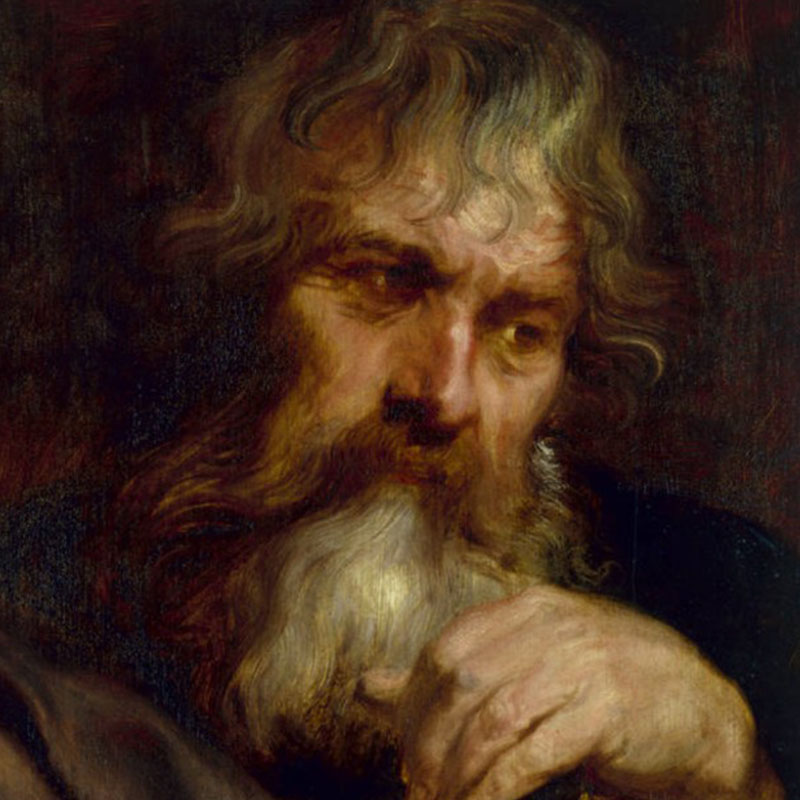
(Van Dyck, Anthony. The Apostle Saint Paul. Oil on panel; 63 × 46.5 cm. ca. 1618–1620. Staatliche Kunstsammlungen Dresden. Wikimedia Commons. https://commons.wikimedia.org/wiki/File:Anthony_van_Dyck_-_The_Apostle_Saint_Paul.jpg.)

How did the church’s fiercest opponent become its greatest builder?
c. A.D. 10 – c. 67 · Tarsus to Rome
Paul the Apostle was the most influential of the early members of the church. Born a Jew and a Roman, and first named Saul of Tarsus, he trained as a rabbi in the Pharisaic tradition and persecuted Christians, until his conversion on the road to Damascus turned him into the church’s great evangelist. His letters make up nearly one-third of the New Testament.
From Saul of Tarsus to Paul the Apostle
- Born: c. A.D. 10, a Jew and a Roman, named Saul of Tarsus
- Trained: As a rabbi in the Pharisaic tradition
- Before: A staunch opponent and persecutor of Christians
- Turning point: His conversion on the road to Damascus
- Wrote: The Epistles of Paul, nearly one-third of the New Testament
- Died: Martyred in Rome, about A.D. 67
Did a Gentile have to become a Jew to become a Christian?
Hover or tap each idea to follow Paul’s answer
- Evangelist and PreacherAfter his conversion Paul founded numerous churches and sustained others. He carried the young church into Europe and was the main reason it survived there.
- Letters to the CommunitiesAs an apostle he wrote to the communities he shepherded, answering their concerns and his own. These letters, the Epistles of Paul, form a major part of the New Testament.
- The Gentile QuestionThe early church had to decide whether to admit Gentiles at all, and whether those who joined must keep Jewish law, including circumcision and the Mosaic laws.
- Salvation Without ConversionPaul held that Gentiles need not convert to Judaism to be saved. Salvation was to be found in the Gospels and the New Covenant of Jesus Christ. His victory on this point was instrumental in the church’s future success.
- Doctrine for the ChurchHis guidance on other matters became church doctrine on baptism, Divine Grace, and the life of the Spirit versus the flesh.
Paul has been the most influential of the early members of the church.
By opening the church to Gentiles without requiring them to convert to Judaism, he made its later growth possible, and by carrying it into Europe he secured its survival there. His letters, written to answer the questions of young communities, became the foundation of Christian doctrine and still make up nearly one-third of the New Testament.
Where to read more about Paul and his letters.
- 1977Paul and Palestinian JudaismSanders, E. P. · Fortress Press
- 1994A Rereading of Romans: Justice, Jews, and GentilesStowers, Stanley K. · Yale University Press
- 1998The Theology of Paul the ApostleDunn, James D. G. · Eerdmans
- 2016When in Romans: An Invitation to Linger with the Gospel According to PaulGaventa, Beverly Roberts · Baker Academic
- 2018Paul: A BiographyWright, N. T. · HarperOne
- The Letters of PaulThe Pauline letters in the King James Version, with notes and translations at Early Christian Writings.Romans (Bible Gateway)Romans1 CorinthiansGalatians
- In the Goodrich Seminar RoomThe Oxford Self-Pronouncing Bible, the room’s Authorized King James Version.View the book
- Britannica: St. Paul the ApostleA biography by E. P. Sanders.britannica.com
- World History Encyclopedia: Paul the ApostleAn introduction by Rebecca Denova.worldhistory.org
- Early Christian WritingsEach Pauline letter with background, translations and commentary.earlychristianwritings.com
- Bible GatewayThe full text of Paul’s letters in many translations.biblegateway.com
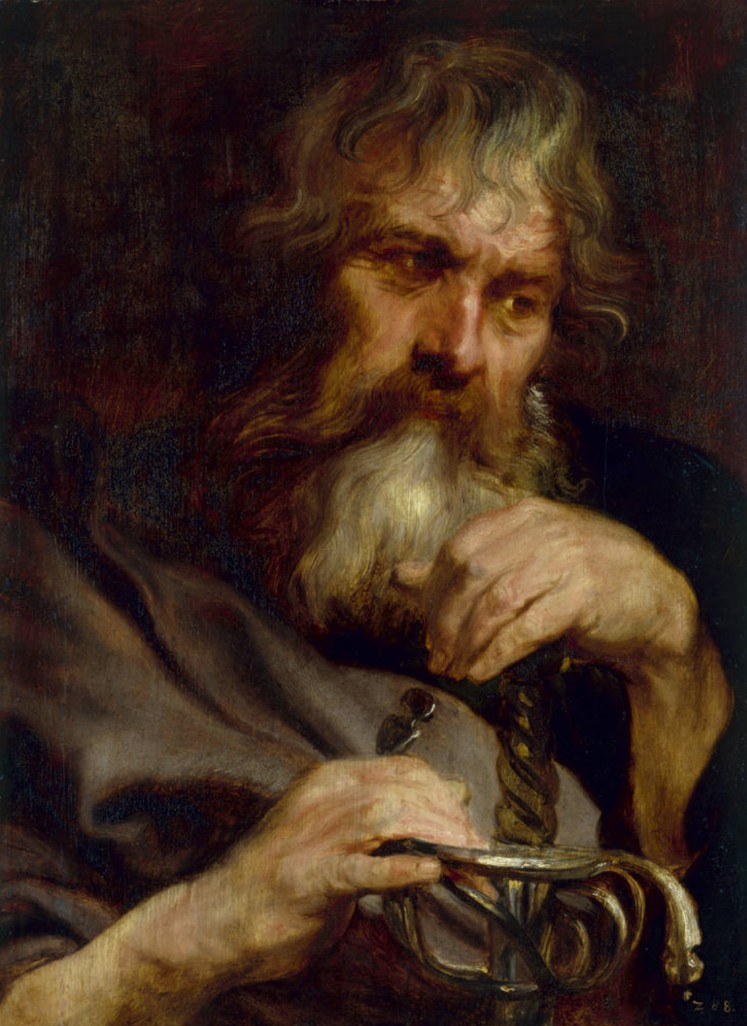
(Van Dyck, Anthony. The Apostle Saint Paul. Oil on panel; 63 × 46.5 cm. ca. 1618–1620. Staatliche Kunstsammlungen Dresden. Wikimedia Commons. https://commons.wikimedia.org/wiki/File:Anthony_van_Dyck_-_The_Apostle_Saint_Paul.jpg.)
A Baroque-era oil painting of the Apostle Saint Paul by Anthony van Dyck, portraying the early Christian leader in contemplative pose, holding a book and sword, symbolizing his writings and martyrdom.
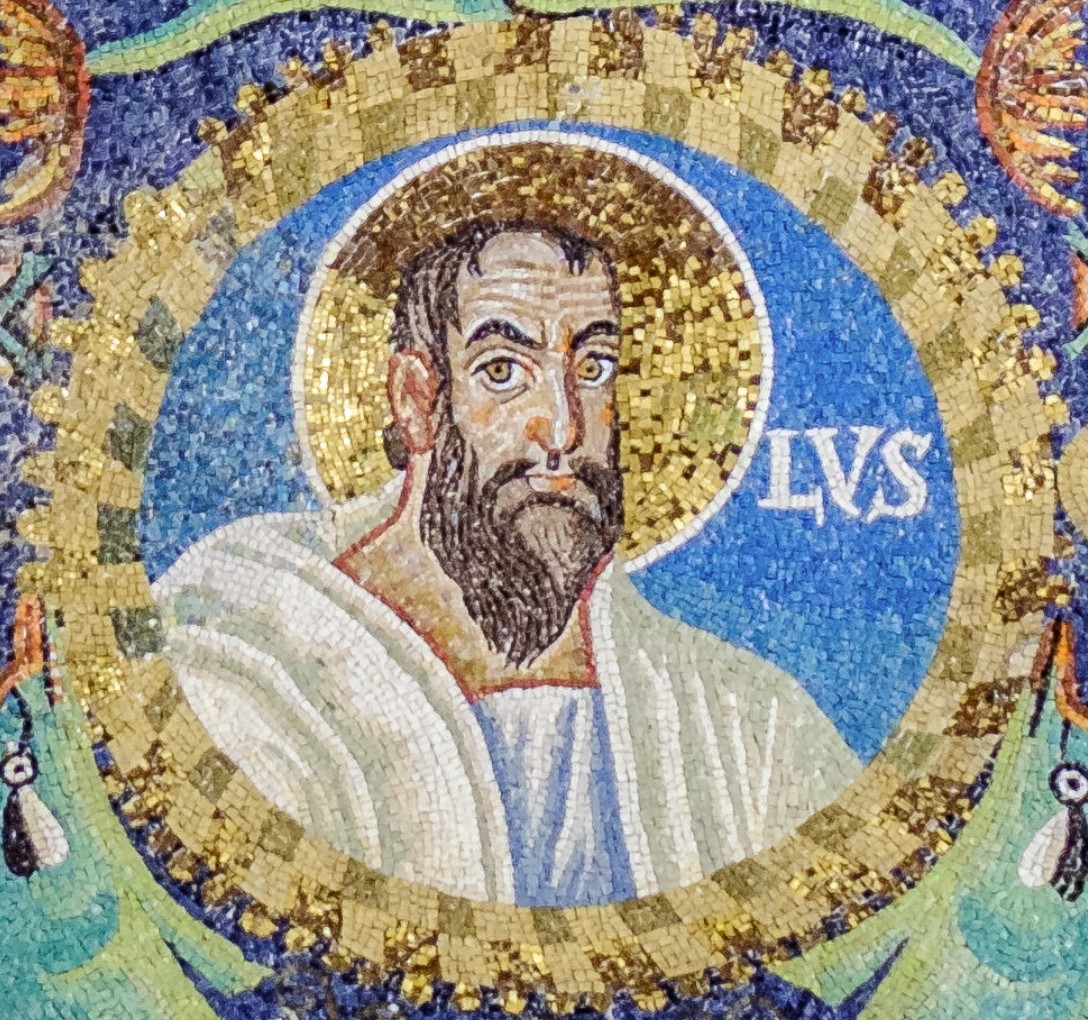
(Sartoni, Luca. Paul the Apostle. Detail of the Mosaic in the Basilica of San Vitale. Mosaic. Date unknown. Basilica of San Vitale, Ravenna, Italy. Wikimedia Commons. https://commons.wikimedia.org/wiki/File:Paul_the_Apostle._Detail_of_the_mosaic_in_the_Basilica_of_San_Vitale._Ravena,_Italy.jpg.)

A detail from a 6th-century mosaic in the Basilica of San Vitale, Ravenna, depicting Saint Paul the Apostle with a halo, holding a book against a gold background, exemplifying Byzantine art.
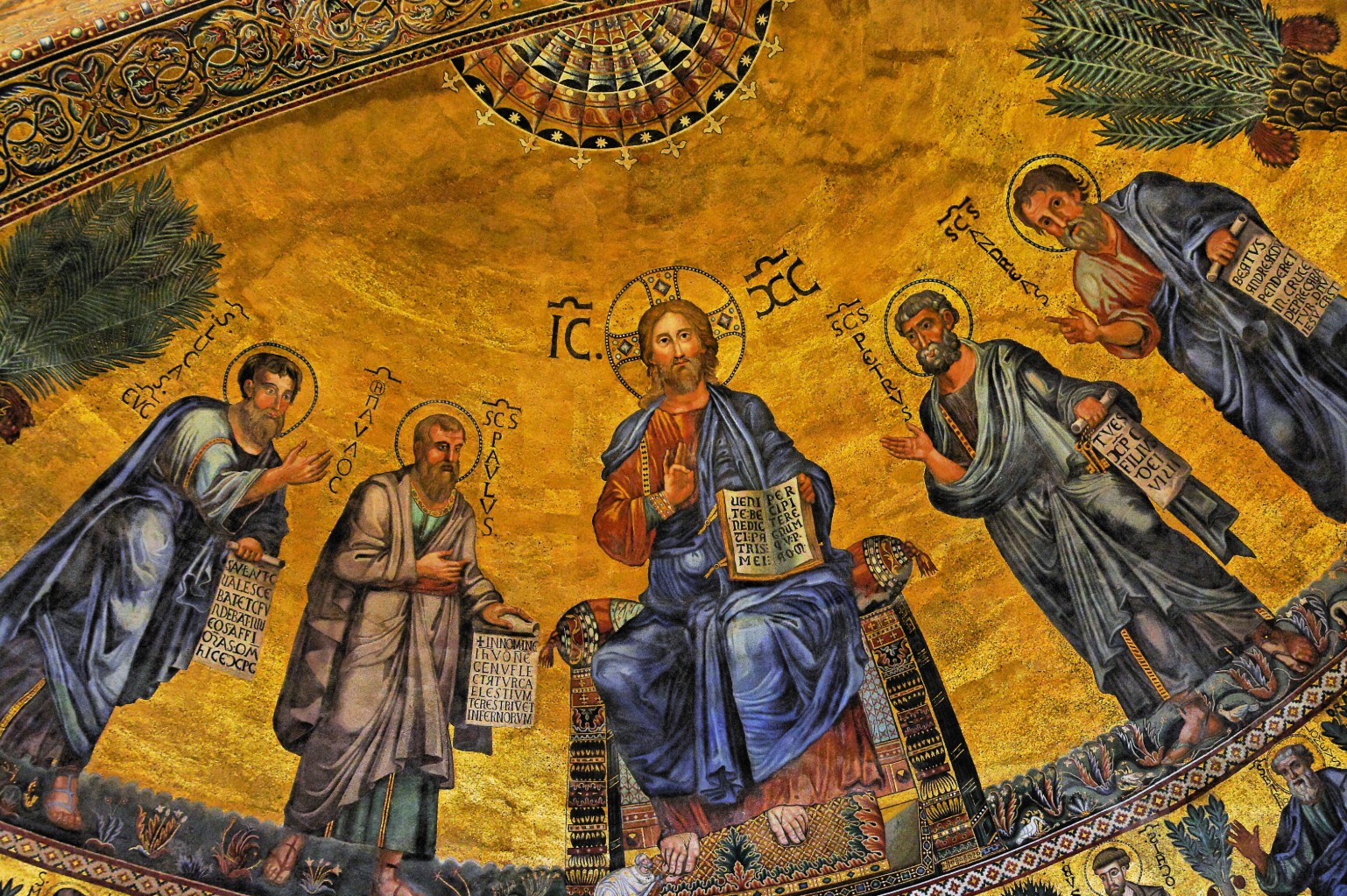
(Venetian Artists. Apse Mosaic of the Basilica of Saint Paul Outside the Walls. Mosaic. 1220. Basilica of Saint Paul Outside the Walls, Rome, Italy. Wikimedia Commons. https://commons.wikimedia.org/wiki/File:Apse_mosaic_of_the_Basilica_of_Saint_Paul_Outside_the_Walls.jpg.)

The apse mosaic from the Basilica of Saint Paul Outside the Walls, created by Venetian artists, showing Christ enthroned with Apostles including Paul, and Pope Honorius III at his feet.