
JOB
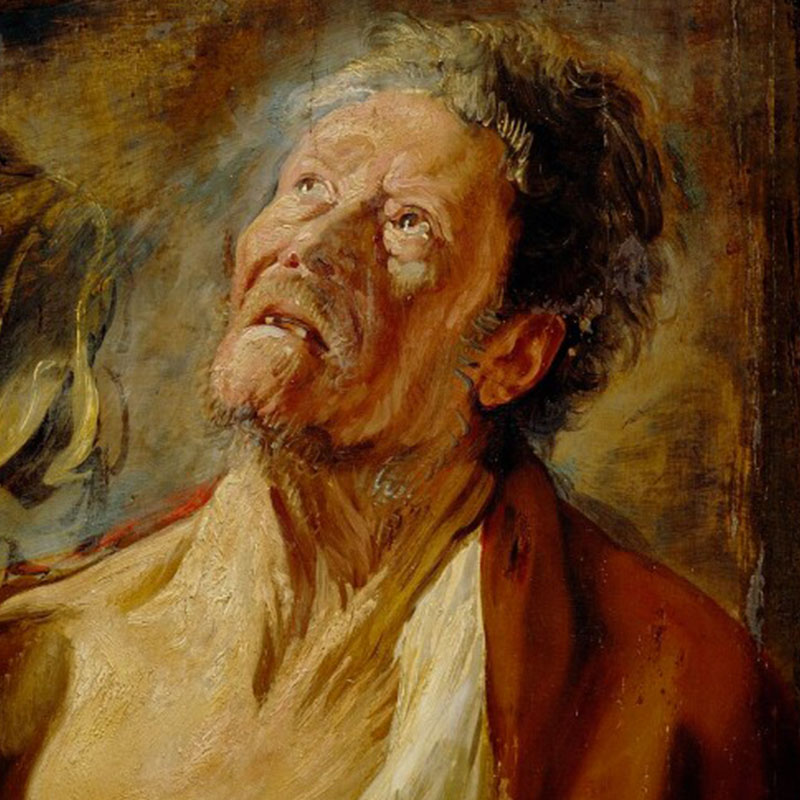
(Jordaens, Jacob. "Job." Wikimedia Commons. Ca. 1630. Accessed October 5, 2025. https://commons.wikimedia.org/wiki/File:Jacob_Jordaens_-_Job_-_43.418_-_Detroit_Institute_of_Arts.jpg.)

Why do good people suffer?
Written down in the sixth or fifth century B.C.
Job is the central character in an ancient story written down as the Book of Job. The work is acclaimed as one of the great masterpieces of early literature and a fundamental commentary on the human condition.
From suffering to understanding its limits
- The work: An ancient story, written down as the Book of Job in the sixth or fifth century B.C.
- Standing: One of the great masterpieces of early literature
- The trial: Job is afflicted with numerous personal trials and travails
- His claim: Against his friends, he insists that he has not sinned against God
- Resolution: Job converses directly with God
If you have done nothing wrong, why is this happening to you?
Hover or tap each idea to follow Job’s struggle
- Trials and TravailsJob is a man afflicted with numerous personal trials and travails.
- Against His FriendsHis friends assert that his suffering must have a cause in wrongdoing. Job insists that he has done no wrong, that he has not sinned against God.
- “Why Me?”Job struggles with the eternal question: why does suffering fall on the innocent?
- Face to Face with GodThe tension is resolved when Job converses directly with God.
- Beyond ComprehensionJob is led to conclude that the Lord’s intentions and ways in the world are purposeful, but beyond the ultimate comprehension of mankind.
One of the great masterpieces of early literature and a fundamental commentary on the human condition.
The Book of Job does not answer suffering with a formula. It gives voice to the question “Why me?” and ends with the conclusion that God’s ways are purposeful, even when they lie beyond human understanding.
Where to read more about Job and the problem of suffering.
- 1989Job 1–20, Job 21–37 and Job 38–42 (Word Biblical Commentary 17–18B)Clines, David J. A. · Word Books / Thomas Nelson, 1989–2011
- 2013Job 1–21: Interpretation and CommentarySeow, Choon-Leong · Eerdmans
- 2015Job (The Two Horizons Old Testament Commentary)Wilson, Lindsay · Eerdmans
- 2015“Communicating the Book of Job in the Twenty-First Century”Estes, Daniel J. · Themelios 40, no. 2Read online
- The Book of Job (King James Version)The full text, free from Project Gutenberg.gutenberg.org
- Sefaria: JobThe Hebrew text with English translation and classic Jewish commentaries.sefaria.org
- Leon Levy Dead Sea Scrolls Digital LibraryHigh-resolution images of the scrolls, including the oldest known copies of biblical texts, from the Israel Antiquities Authority.deadseascrolls.org.il
- Britannica: JobAn overview of the book, its composition and its interpretations.britannica.com
- BibleProject: Book of JobA guide to the book with videos and key themes.bibleproject.com
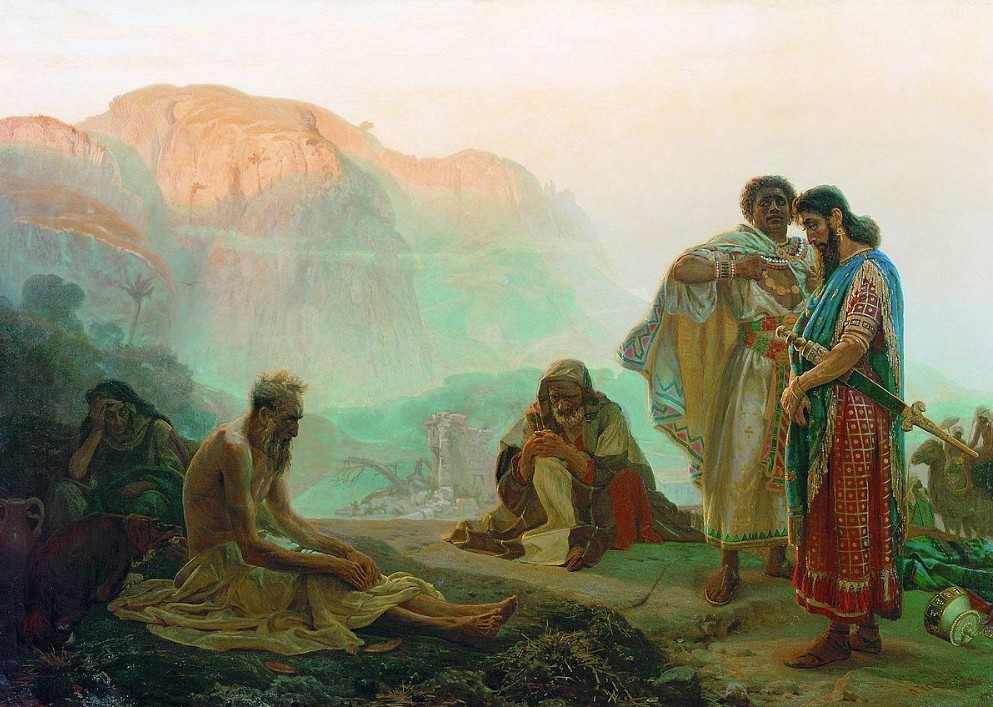
(Van Oosten, Isaac. "Job and His Friends." Wikimedia Commons. Ca. 1650. Accessed October 5, 2025.)
17th-century Baroque landscape by Isaac van Oosten showing Job seated in rags with his grieving wife and consoling friends.
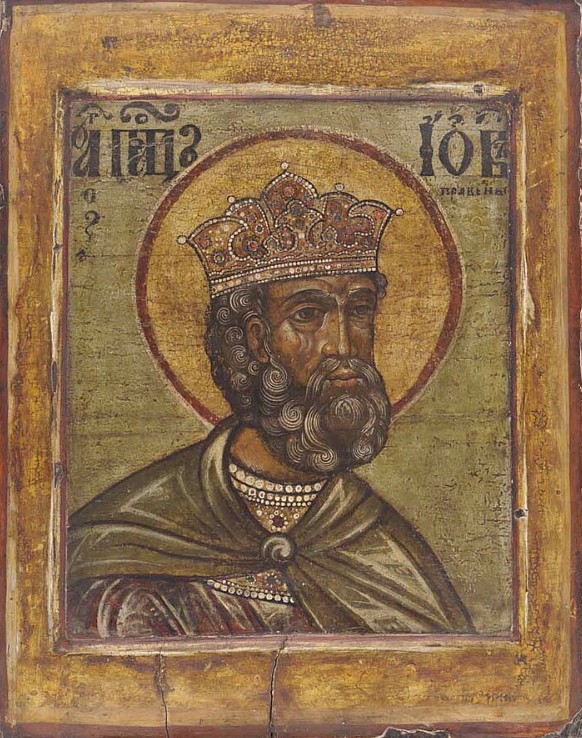
("Icon of Job." Wikimedia Commons. 17th century. Accessed October 5, 2025.)
A 17th-century North Russian Orthodox icon portraying Job in traditional saintly attire, emphasizing his patience in suffering.
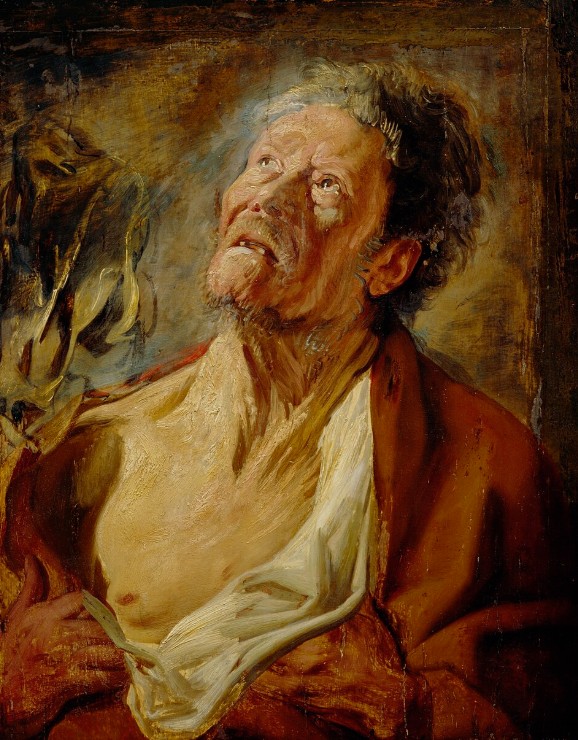
(Jordaens, Jacob. "Job." Wikimedia Commons. Ca. 1630. Accessed October 5, 2025. https://commons.wikimedia.org/wiki/File:Jacob_Jordaens_-_Job_-_43.418_-_Detroit_Institute_of_Arts.jpg.)
Jacob Jordaens' oil painting depicting Job in a dramatic pose, possibly modeled on actor Abraham Grapheus, conveying resilience.