
ZARATHUSHTRA

If the world is a contest between good and evil, which side will you choose?
Traditionally 628–552 B.C. · Persia
Zarathushtra (also Zarathustra, or Zoroaster) founded Zoroastrianism, a prominent religious force in ancient Persia. He is best known for his teachings about one supreme being, Ahura Mazda, and the doctrine of dualism.
Each person must choose a master
- Born: In the Persian city of Rhages, to a noble family of modest means
- Founded: Zoroastrianism, centered on one supreme being, Ahura Mazda, the “Wise Lord”
- Official faith: Under the later Achaemenian kings (465–331 B.C.) and the Sassanian Empire (A.D. 224–641/2)
- Decline: The Islamic conquest of Persia (A.D. 637–42) marked the end of Zoroastrianism as a major religion
If one good God rules the universe, where does evil come from?
Hover or tap each idea to follow Zarathushtra’s answer
- One Supreme BeingZarathushtra taught the existence of one supreme being, Ahura Mazda, the “Wise Lord.”
- Two SpiritsDualism refers to two spirits, one good and one evil, the latter called Ahriman. These two spirits are in constant contention throughout the universe.
- The Great ChoiceAccording to Zarathushtra, the great challenge facing each person is to choose one or the other as master.
- The End of TimeZarathushtra prophesied that at the end of time, good would triumph and Ahura Mazda would admit all who followed him into a realm of everlasting joy. The defeated followers of evil would be punished for their deeds in everlasting misery.
- Judgment of SoulsThe idea that souls will be judged, and rewarded or punished, on the morality of their lives seems to have entered Jewish religion sometime between 400 and 300 B.C.
Mazda
Zarathushtra’s ideas would influence later debates in Judaism and Christianity about free will in a divinely ordered universe.
Many scholars trace the Jewish and Christian ideas of hell and of a final judgment of souls to Zoroastrian influence. Dualism also remains a popular explanation for evil in the world. Among Christians it appeared as heresy in Manichaeism and in the teachings of the Bogomils and the Albigensians (Cathars). Saint Augustine (A.D. 354–430) opposed the Manichaeans because he believed dualism denied human responsibility for original sin.
Where to read more about Zarathushtra and his teachings.
- 1899Zoroaster, the Prophet of Ancient IranJackson, A. V. Williams · Columbia University Press / MacmillanFree scan
- 1951The Divine Songs of ZarathushtraTaraporewala, Irach J. S.Free scan (FEZANA)
- 1975The Gāthās of Zarathustra (Acta Iranica 8)Insler, Stanley · Brill / Bibliothèque Pahlavi
- 1989The Gathas, Our GuideJafarey, Ali A. · Ushta Publications
- 1994Understanding the Gathas: The Hymns of ZarathushtraIrani, Dinshaw J., edited by Kaikhosrov D. Irani · Ahura PublishersFree PDF
- 1994The Good Life: An Introduction to the Religion of ZarathushtraZoroastrian Association of Greater New York
- Avesta: Zoroastrian ArchivesThe complete surviving Avesta, including the Gathas, with translations and later Zoroastrian texts.avesta.org
- Pluralism Project: ZoroastrianismHarvard’s Pluralism Project essay “Ancient Faith in the Modern World.”pluralism.org
- Zarathushtrian AssemblyTranslations of and commentary on the Gathas, Zarathushtra’s seventeen hymns.zoroastrian.org
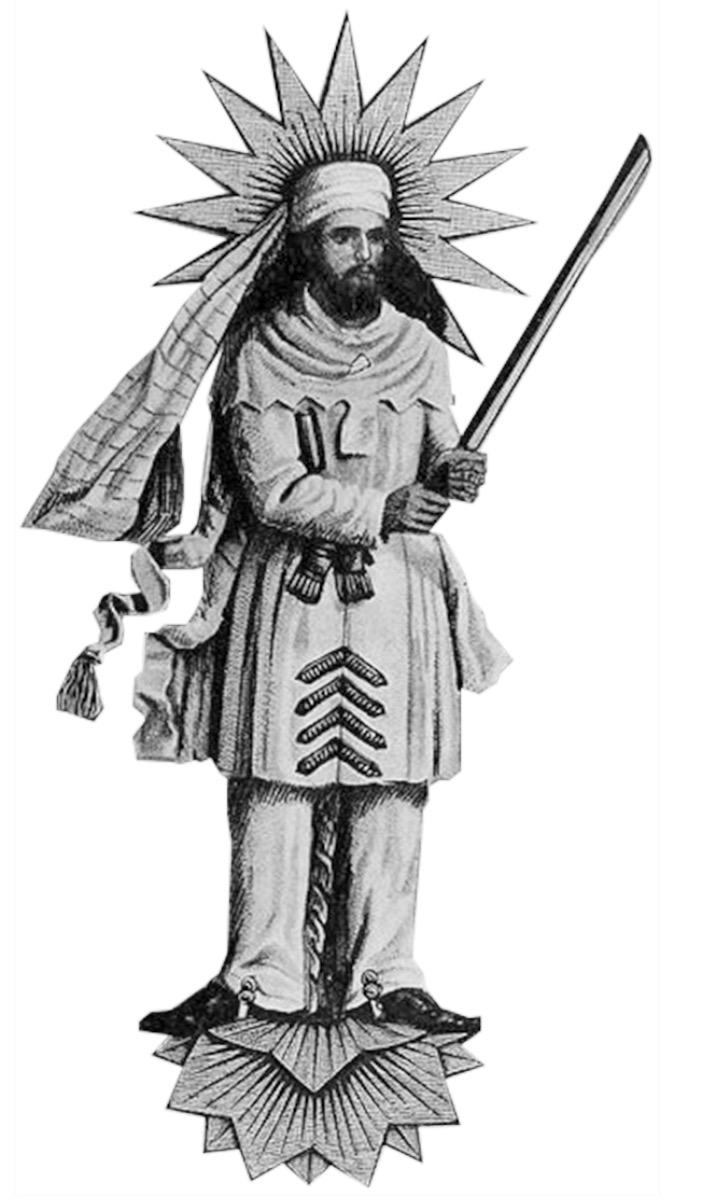
("Zartosht 30salegee." Wikimedia Commons. 4th century. Accessed October 5, 2025. https://commons.wikimedia.org/wiki/File:Zartosht_30salegee.jpg.)
A 4th-century Sassanid high-relief carving reinterpreted as Zoroaster during the investiture of Ardeshir II.

https://commons.wikimedia.org/wiki/File:Sanzio_01_Zoroaster_Ptolmey.jpg
Detail from Raphael's School of Athens fresco, portraying Zoroaster as an astronomer holding a globe in philosophical discussion.
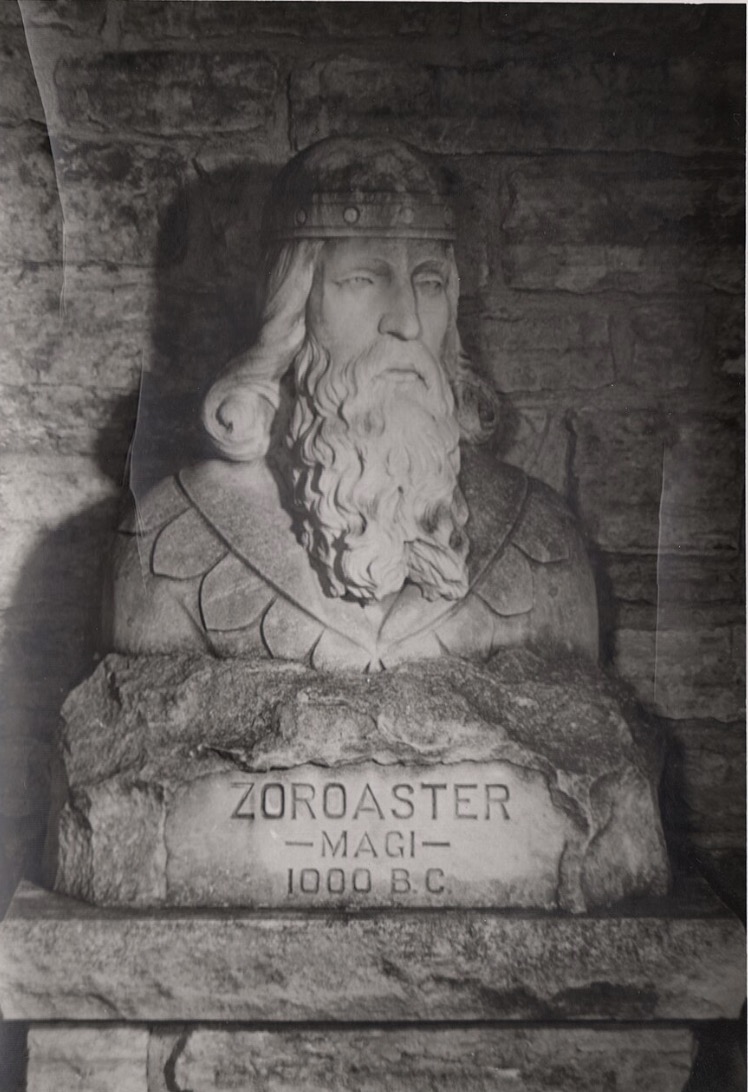
("Zoroaster Bust." Wikimedia Commons. Ca. 1000 B.C. Accessed October 5, 2025. https://commons.wikimedia.org/wiki/File:Zoroaster_Bust_-_DPLA_-_e7b3dc9cdb0d24feb660790feef994ce.jpg.)

Duccio di Buoninsegna's tempera panel from the Maestà altarpiece, depicting Hosea as a prophetic figure with a book.