
WYCLIFFE
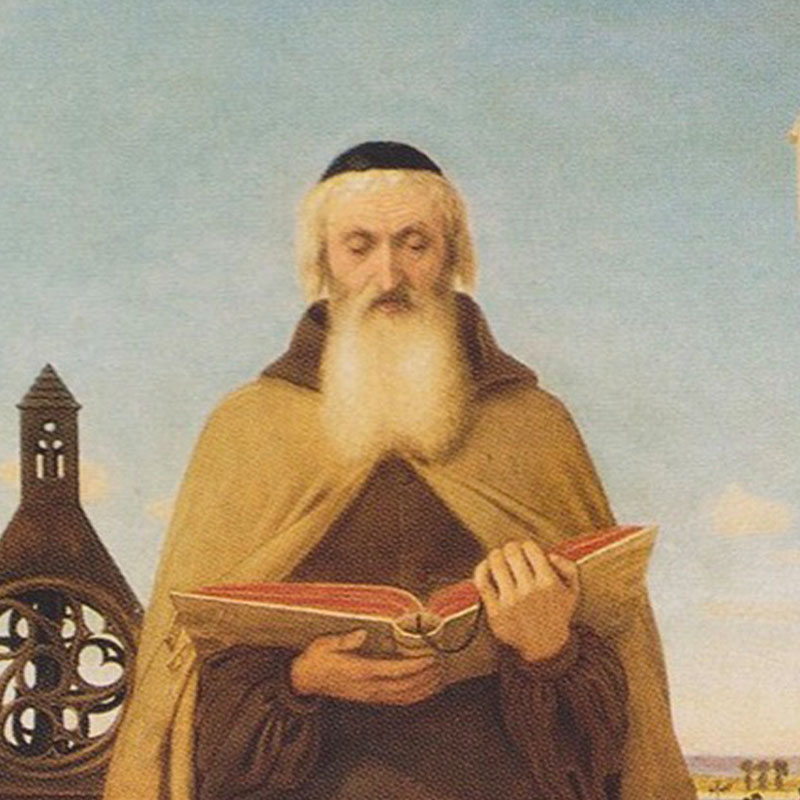
(Brown, Ford Madox. John Wycliffe Reading His Translation of the Bible to John of Gaunt. Oil on canvas. 1847–1861. Manchester Art Gallery. Wikimedia Commons. https://commons.wikimedia.org/wiki/File:Ford_Madox_Brown_-_John_Wycliffe_reading_his_translation_of_the_bible_to_John_of_Gaunt.jpeg.)

Born: circa 1330 CE, Yorkshire, England
Died: circa 1384 CE, Lutterworth, Leicestershire, England
Notable
-
English Biblical Reform: Led the first full Middle English Bible translation, making Scripture accessible beyond the clergy.
-
Eucharistic Critique: Rejected transubstantiation in favor of a spiritual interpretation.
-
Scriptural Authority: Asserted the Bible as the highest authority, anticipating Reformation ideas.
1300–1400 AD works
Biography
John Wycliffe (c. 1328–1384 CE) was an English theologian, scholar, and early reformer whose bold critiques of the medieval Church earned him the title “Morning Star of the Reformation.” Educated at Oxford—where he would also later teach—Wycliffe emerged as a leading voice against ecclesiastical corruption, challenging the Church’s immense wealth, political entanglements, and theological practices.
One of his most groundbreaking efforts was advocating for Scripture to be made available in the common language of the people. At a time when the Latin Bible was guarded closely by Church authorities, Wycliffe and his followers translated it into Middle English, opening access to ordinary believers and undermining clerical control over religious knowledge.
Wycliffe’s dissent didn’t stop there. He openly rejected key doctrines such as papal supremacy, the idea of transubstantiation, and the Church’s claim to mediate salvation. His radical views sparked outrage among Church leaders, and although he died before he could be formally condemned, his legacy lived on.
His writings significantly influenced later reformers like Jan Hus and Martin Luther. In a dramatic postscript to his story, Church authorities exhumed and burned his remains in 1428—decades after his death—as a symbol of their enduring condemnation of his teachings.
Influences & Notable For
Notable For
Producing the first complete English Bible translation from the Latin Vulgate
Publicly challenging papal authority and clerical elitism
Proclaiming Scripture as the sole, infallible source of Christian truth
Anticipating Reformation doctrines like justification by faith and predestination
Inspiring the Lollard movement, a populist and proto-Protestant call for reform
Influences
Educated within the Scholastic tradition, Wycliffe was deeply influenced by Augustine, Thomas Aquinas, and William of Ockham. However, he broke from their orthodoxy by applying rigorous logic to critique Church dogma and institutional excess.
His reformist ideas emerged during the Avignon Papacy, the Western Schism, and growing English resentment toward Church taxation and foreign influence. Wycliffe’s theology resonated with both academic and political circles seeking ecclesiastical reform.
Famous quotes
- “Trust wholly in Christ; rely altogether on his sufferings; beware of seeking to be justified in any other way than by his righteousness.” — Sermons
- “The Bible is for the government of the people, by the people, and for the people.” — Attributed
- “It is not necessary to go either to Rome or to Avignon in order to understand the faith of the Gospel.” — De Veritate Sacrae Scripturae
Legacy & Modern Significance
Wycliffe laid essential groundwork for later reformers like William Tyndale, Martin Luther, and John Calvin. His principle of sola scriptura (Scripture alone) and calls for moral reform foreshadowed the Protestant Reformation by more than a century.
Despite being labeled a heretic, his vision endured through the Lollards—a movement that kept reformist teachings alive in pre-Reformation England. Wycliffe is now honored within Anglican, Reformed, and Evangelical traditions as a foundational figure in the movement toward religious freedom and biblical accessibility.
Modern Moments & Impact on 21st Century
Global Bible Translation: Wycliffe Bible Translators, a leading organization named in his honor, continues his mission to bring Scripture to every language community on Earth.
Symbol of Reform: Wycliffe remains a powerful symbol of resistance to ecclesiastical corruption and centralized religious control.
Digital Access: His writings and Bible translations are now widely digitized, studied in medieval literature, theology, and church history programs.
Public Memory: Memorials to Wycliffe stand in Oxford and the Reformers’ Memorial in Geneva, celebrating his role in religious and intellectual liberation.
Suggested Reading and Resources
Key Scholarly Texts
Hudson, Anne. The Premature Reformation: Wycliffite Texts and Lollard History. Oxford University Press, 1988.
Workman, Herbert B. John Wyclif: A Study of the English Reformer. Clarendon Press, 1926.
Levy, Ian C. John Wyclif: Scriptural Logic, Real Presence, and the Parameters of Orthodoxy. Marquette University Press, 2003.
Kenny, Anthony. Wyclif. Oxford University Press, 1985.
Digital Archives and Organizations
Wycliffe Bible Translators: https://www.wycliffe.org
Lollard Society Archive: http://www.lollardsociety.org
British Library – Wycliffe Bible Manuscripts: https://www.bl.uk
Stanford Encyclopedia of Philosophy: https://plato.stanford.edu/entries/wyclif/
MORNING STAR OF THE REFORMATION
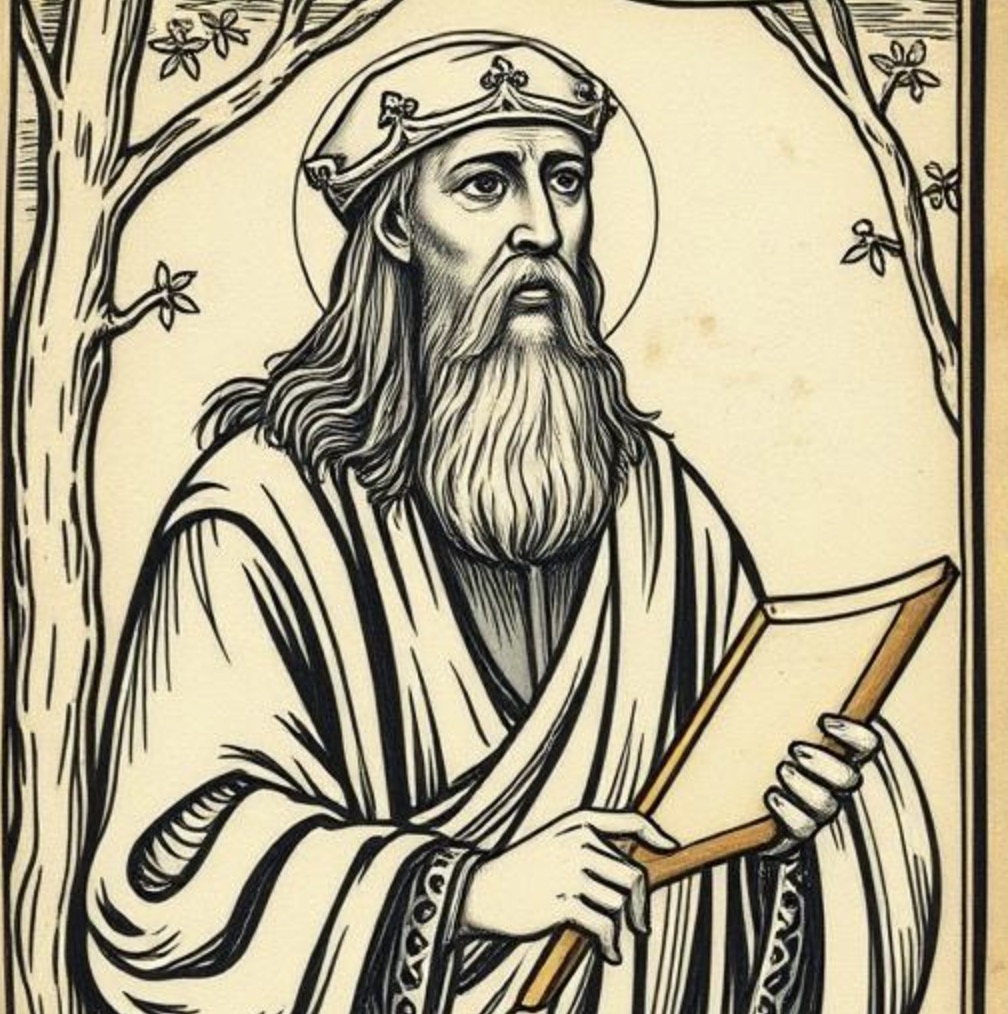
(AI-generated)
John Wycliffe’s teachings were condemned at the Council of Constance (1415), leading to his bones being exhumed, burned, and scattered in 1428—yet his English Bible translation survived and influenced later reformers.
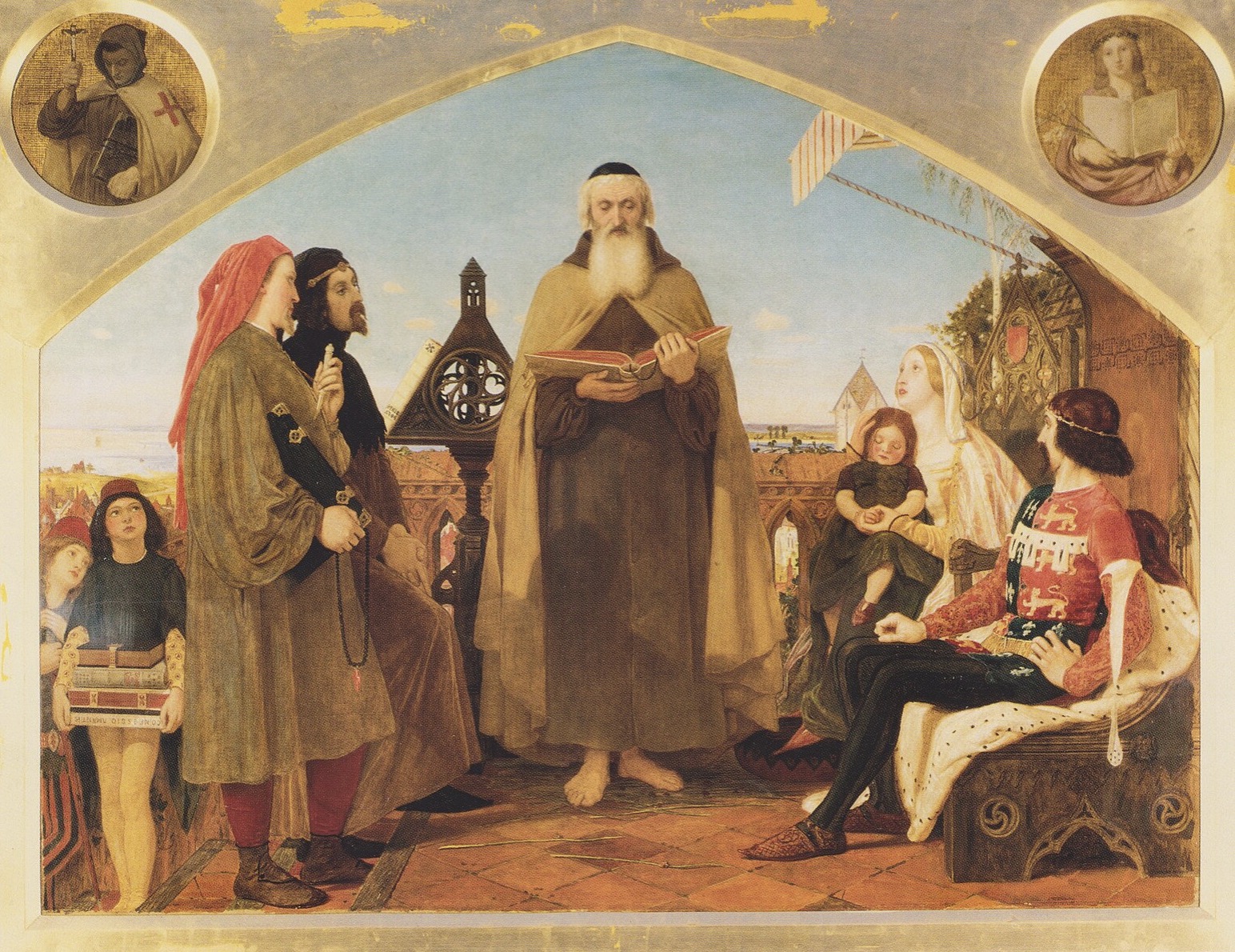
(Brown, Ford Madox. John Wycliffe Reading His Translation of the Bible to John of Gaunt. Oil on canvas. 1847–1861. Manchester Art Gallery. Wikimedia Commons. https://commons.wikimedia.org/wiki/File:Ford_Madox_Brown_-_John_Wycliffe_reading_his_translation_of_the_bible_to_John_of_Gaunt.jpeg.)
Ford Madox Brown's Pre-Raphaelite painting illustrates John Wycliffe reading his English Bible translation to John of Gaunt and fellow reformers in 1377, with dramatic lighting and detailed medieval attire, emphasizing his challenge to church authority.
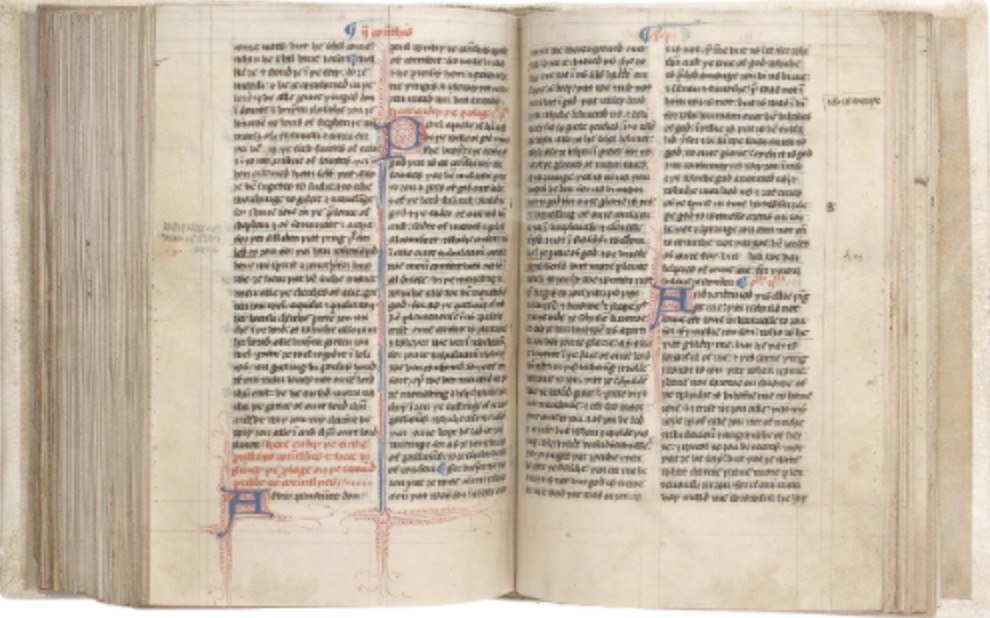
(Unknown. Wycliffe New Testament. Manuscript on vellum. ca. 1382. Wikimedia Commons. https://commons.wikimedia.org/wiki/File:Wycliffe_new_testament.png.)

A 19th-century stained glass window depiction of Saint Anselm in the Victoria and Albert Museum style, showing him haloed with a book and staff, illustrating his monastic life and contributions to scholasticism.