Urukagina

URUKAGINA

Urukagina
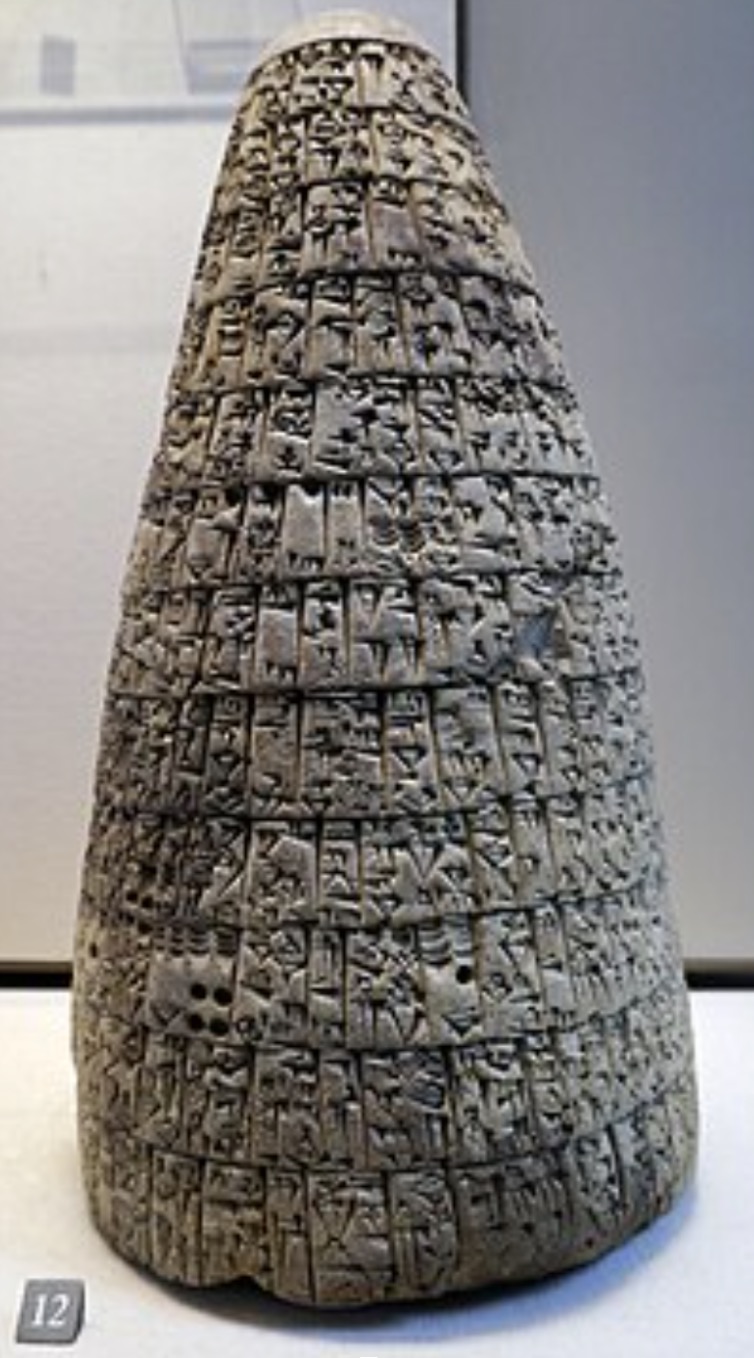
(“Urukagina – Wikipedia.” Photograph, 2000s. https://en.wikipedia.org/wiki/Urukagina)

Born: c. 2350 BC, Lagash, Sumer (approximate)

Died: c. 2340 BC, Lagash, Sumer (approximate)

Notable

  • Earliest Reformer: Recognized for enacting the earliest known social, economic, and religious reforms, protecting the weak and curbing abuses by wealthy landowners.
  • Liberty Cones and Tablets: Authored royal inscriptions detailing his reforms, often cited as the foundation of legal and social governance in ancient Mesopotamia.
  • Protection of the Vulnerable: Focused on regulating temple practices and burial rights to safeguard the disadvantaged.
  • Legacy of Justice: His efforts established a precedent for governance based on fairness, influencing later Mesopotamian rulers.

2350 BCE

BIOGRAPHY

Urukagina was king of the city-states of Lagash and Girsu in Mesopotamia, and the last ruler of the 1st Dynasty of Lagash. Lagash and Girsu were located in the southeast corner of modern Iraq, operating as city-states organized around a king and priesthood. Urukagina assumed the title of king, claiming to have been divinely appointed, upon the downfall of his corrupt predecessor, Lugalanda. While Lugalanda is described as an unjust and power-hungry king, little else is known about his reign. In the ancient world, where art and literacy were a form of elite power, records of kings can often blend between recorded history and mythology.

Urukagina is best known for combating corruption through various reforms organized around the concept of “ama-gi,” which is translated as “freedom,” or a release from obligations such as debt, slavery, taxation, and punishment. Urukagina’s reforms are cited as the first legal codes in human history. The actual text of his reforms has not survived, although the contents are deciphered from contemporary references.

Urukagina decreed that widows and orphans were exempt from tax and the city was compelled to pay funeral expenses. These reforms were also accompanied by measures against usury (predatory loans), crimes, and property seizure executed by the priesthood and large property owners. Like many Mesopotamian kings, Urukagina participated in several conflicts throughout his reign, most notably losing a border conflict with the city of Uruk, famously featured in the Epic of Gilgamesh.

Urukagina reigned from c. 2378 – c. 2372 BC. While his exact birthdate is unknown, Urukagina is assumed to have died around 2370 BC. (Wikipedia, Finegan, Jack, 2019). Archaeological History of the Ancient Middle East. Routledge. p. 46. ISBN 978-0-429-72638-5, “The Reforms of Urukagina.” History-world.org. Archived from the original on 2018-11-17. Retrieved 2019-12-03.

BIBLIOGRAPHY

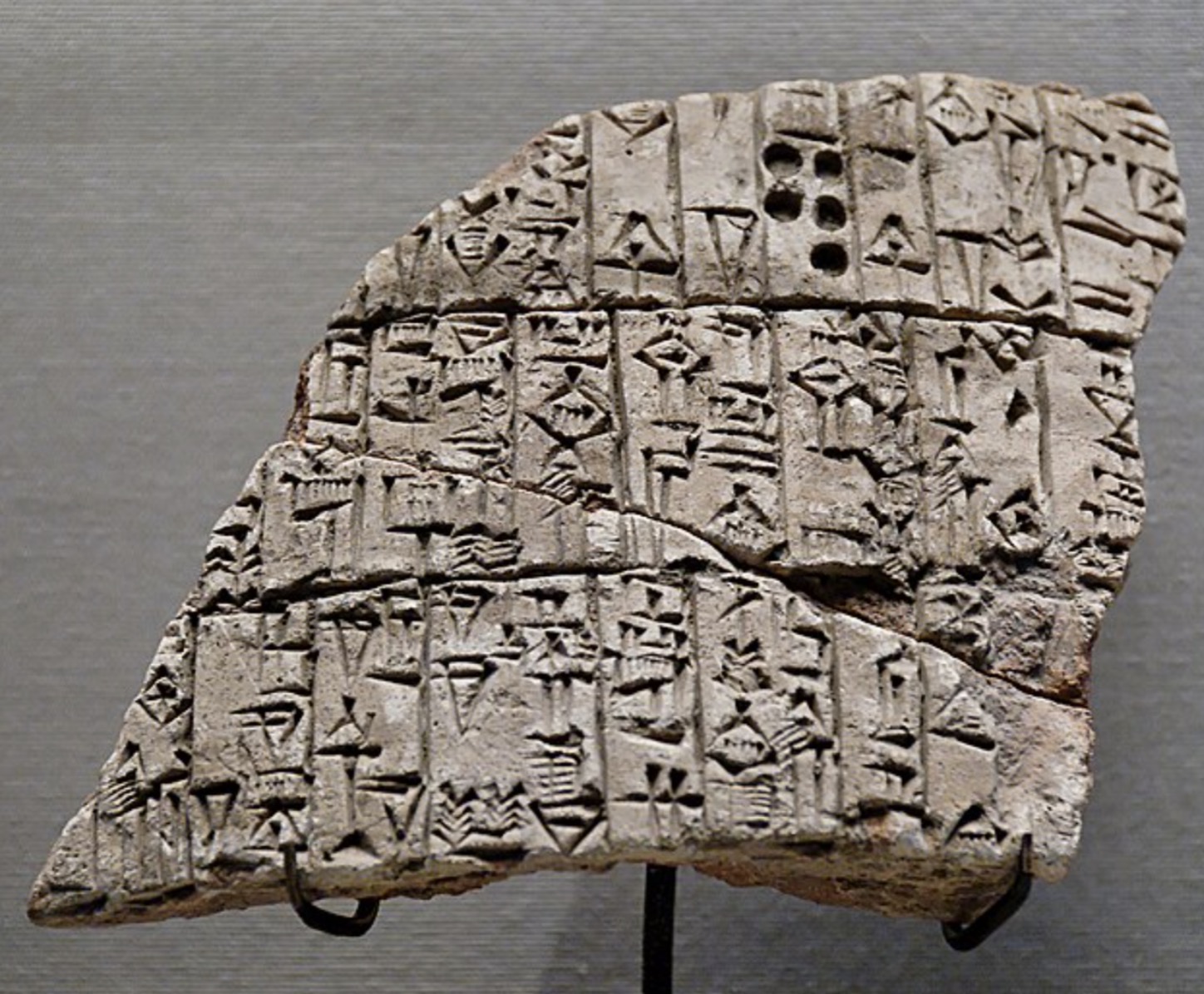
The Liberty Cones and Tablets of Urukagina, currently held in the Louvre Museum, Paris, document the social, economic, and religious reforms enacted by Urukagina, ruler of Lagash. Written in Sumerian, these royal inscriptions focus on protecting the weak, regulating temple and burial practices, and curbing abuses by wealthy landowners. While not formal law codes, they are often cited as the earliest known legal reforms in history

Editions and Translations

  • Sollberger, E. (1956): Corpus des inscriptions “royales” pre-sargoniques de Lagas (CIRPL), Ukg 04 cone B (lineart).
  • Kramer, Samuel (1964): First published and translated some of Urukagina’s decrees.
  • Frayne, Douglas R. (2007): Royal Inscriptions of Mesopotamia, Early Periods (RIME 1.09.09.01, ex. 01).

Administrative Tablets Several surviving administrative texts from Urukagina’s reign highlight the political instability and military threats faced by Lagash:

  • DP 545 (ca. 2500–2340 BC): Mentions a siege by the “man of Uruk” on Girsu.
  • NIK 1, 227 (ca. 2500–2340 BC): References the “month that the man of Uruk came a third time.”

Lament for the Fall of Lagash A lamentation text, possibly the earliest of its genre, describes the destruction of Lagash by Lugalzagesi of Umma. It portrays Urukagina’s innocence and the divine punishment of his conqueror (ca. 2350 BC

INFLUENCES

Urukagina’s legal and social reforms have endured beyond their ancient application. Regarded as the earliest recorded reforms of their kind, the series of decrees – inscribed on clay stones and tablets – aimed to curb corruption, protect the poor from exploitation, and regulate the conduct of elites and officials. The story of Lugalanda and Urukagina demonstrates the complexity of Ancient Mesopotamia which, while dominated by despotic elites, was not a caricature of tyranny.

Unlike the absolute despotism popularly associated with Mesopotamian city-states, Urukagina’s reforms addressed unfair taxation, the abuse of power by elites, and the protection of widows and orphans. These reforms demonstrate the evolving relationship between executive authority, elites, and a wider population. The established principles of justice and social equity were unique for the period, receiving less attention than Hammurabi’s reforms half a millennia later.

Urukagina’s reforms are often cited as the first known attempt to codify laws and ensure social justice, predating later legal codes such as Hammurabi around 1755–1750 BC, while also focusing less on punitive justice.

His inscriptions, known as the “Reforms of Urukagina,” survive on artifacts like the famous stone cone housed at the Louvre Museum, and they detail his efforts to restore fairness and order in Lagash.

FAMOUS QUOTES
  • “Their prison he cleared out.” This brief but powerful statement refers to his general amnesty, even extending mercy to criminals, thieves, and murderers; unprecedented at the time. – Urukagina’s second foundational cone, “The Oxen of the Gods the Garlic Plots of the Ruler did Plow.” 
  • “That the orphan or widow to the powerful will not be subjugated, with Ningirsu Urukagina made a binding agreement as to that command.” This phrase, often cited from summaries of Urukagina’s reforms, highlights his commitment to protecting the vulnerable from exploitation by the elite and is sometimes considered the earliest documented use of the concept of legal protection for the weak. – Urukagina’s second foundational cone, “The Oxen of the Gods the Garlic Plots of the Ruler did Plow.” 


MAJOR WORKS

Reform Tablets and Cones of Urukagina (c. 2350 BCE) – The most famous and influential writings, these inscriptions detail Urukagina’s sweeping social, economic, and religious reforms, including protections for widows and orphans, limits on the power of priests and officials, and the reduction of taxes and corruption.

Administrative Tablets (c. 2350–2340 BCE) – These documents record the political and military events during Urukagina’s rule, such as sieges and conflicts with neighboring city-states, providing insight into the challenges Lagash faced under his leadership.

Lament for the Fall of Lagash (c. 2350–2340 BCE) – An early Sumerian lamentation text, possibly composed at the end of Urukagina’s reign, describing the destruction of Lagash and reflecting on the king’s innocence and the city’s fate.

INTELLECTUAL CONTEXT

Influenced by Sumerian religious tradition, Urukagina grounded his authority as a divine appointment from Ningirsu, the patron deity of Lagash.

The immediate context for Urukagina’s reforms was the widespread corruption and abuse under his predecessor, Lugalanda. The exploitations outlined in his reforms prompted Urukagina to act as a social reformer.

The administrative and legal culture of Sumer, which included the use of cuneiform for recording decrees and transactions, provided the framework for Urukagina’s reforms. His Liberty Cones and other inscriptions were part of a tradition of royal proclamations and public records.

LEGACY AND MODERN SIGNIFICANCE

Interpretation as Social Reform: Urukagina’s inscriptions have been seen as the earliest attempt at legal and social reform, emphasizing justice for the poor and limits on elite and priestly power. They have often been compared to later legal codes and cited as foundational for the concept of social justice and equal rights.

Reassessment as Readjustment: Recent scholarship has critiqued the notion of “reform,” suggesting that Urukagina’s actions are more accurately reflected as a “readjustment,” or restoration of a previous social order, rather than a revolutionary change.

Cultic and Religious Emphasis: Some studies focus on the religious and cultic aspects of Urukagina’s policies, noting that changes – such as the renaming of institutions and shifts in ritual focus – were more symbolic than structural. These viewpoints argue that despite claims of reform, the underlying administrative and social frameworks of Sumerian culture largely remained intact.

MODERN MOMENTS

2018: The workshop “Ancient Near Eastern Royal Ideology” at Doshisha University (Kyoto, Japan) included a scholarly presentation on the cultic aspects of Urukagina’s reforms, as documented in the proceedings published in ORIENT, Volume 55, 2020, pp. 63–70.

2020: The academic journal ORIENT published “On the Cultic Aspect of the ‘Reforms of Urukagina’: Some Changes in the Festival of the Goddess Baba” by Fumi Karahashi, analyzing Urukagina’s religious policies and their impact on institutional practices

2024: The journal Zeitschrift für Altorientalische und Biblische Rechtsgeschichte (ZAR) published “Reevaluating the So-Called ‘Reforms of Urukagina’ (1) Social Justice, Vertical Solidarity and Reciprocity” by R. Westendorf, offering a contemporary reassessment of Urukagina’s reform texts and their juridical implications.

Ongoing: The Cuneiform Digital Library Initiative (CDLI) and other digital humanities projects maintain online editions, transliterations, and translations of Urukagina’s inscriptions, making his texts accessible to global audiences (see CDLI and Wikipedia external links for “Urukagina”).

Ongoing: University courses and world history textbooks (e.g., “The Reforms of Urukagina” on Course Bible, 2002) regularly cite Urukagina’s reforms as foundational in the study of ancient law and governance.

2025: Wikipedia’s “Urukagina” entry, updated as of February 2025, continues to serve as a widely referenced resource summarizing Urukagina’s reforms and their historical significance.

READINGS AND RESOURCES

Secondary Literature (Scholarship)
Elizabeth Meier Tetlow, Women, Crime and Punishment in Ancient Law and Society (2004): Comprehensive examination of Urukagina’s reforms, especially regarding their impact on women.

Douglas R. Frayne, Royal Inscriptions of Mesopotamia, Early Periods (2007): Provides critical editions of Urukagina’s inscriptions.

Brill’s Urukagina’s Rise to Power (2022): Discusses the historical context and significance of Urukagina’s reforms.
(https://brill.com/display/book/9789004526822/BP000001.xml?language=en)

CDLI Wiki: “The Reforms of UruKAgina” and “Urukagina” entries provide artifact descriptions, translations, and references to primary texts.
(http://cdli.ox.ac.uk/wiki/doku.php?id=reforms_of_urukagina , http://cdli.ox.ac.uk/wiki/doku.php?id=urukagina)

Wikipedia: “Urukagina” entry includes links to Sumerian texts, translations, and further reading.
(https://en.wikipedia.org/wiki/Urukagina)