
SOPHOCLES
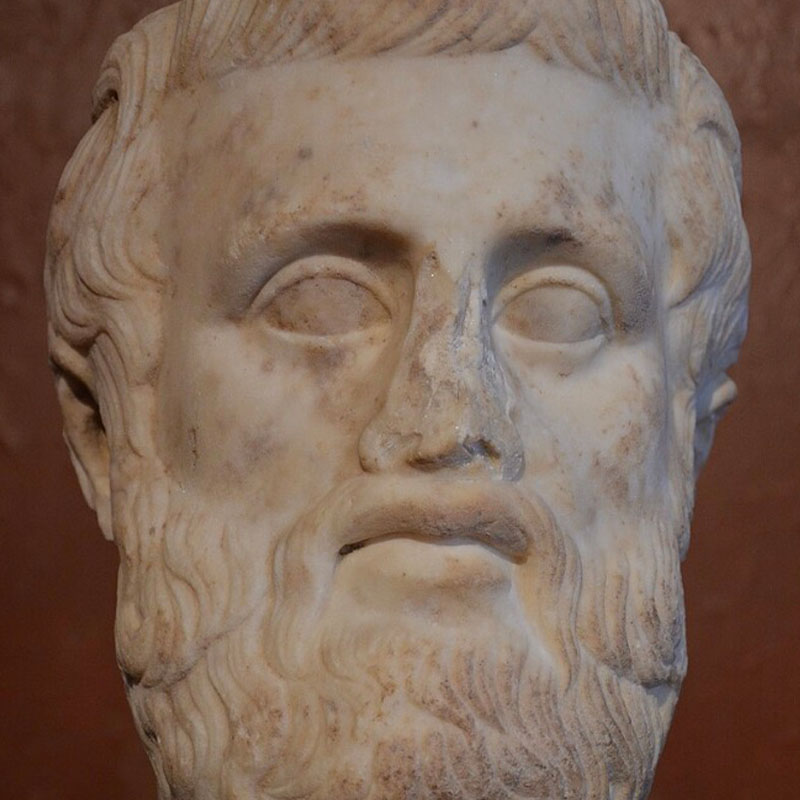
("Portrait of the Athenian Tragedian Sophocles." Wikimedia Commons. 4th century B.C. (original). https://commons.wikimedia.org/wiki/File:Portrait_of_the_Athenian_tragedian_Sophocles_(498-406_BC),_Roman_copy_of_a_Greek_original_from_the_4th_century_BC,_Neues_Museum,_Berlin.jpg.)
What can seven plays tell us about a writer who wrote more than a hundred?
496–406 B.C. · Athens
Perhaps the greatest of Athens’s three great playwrights, with Aeschylus and Euripides, Sophocles is known to have written at least 123 dramas, of which only 7 survive. His best-known work is Oedipus Rex.
Seven plays carry his name today
- Born: 496 B.C., in Colonus, near Athens
- Died: 406 B.C., in Athens
- Family: His father, Sophillus, was a well-to-do armor manufacturer who gave him an excellent education
- Teachers: By tradition, Aeschylus, and Lamprus, the greatest musician of the day
- First fame: Took first place in a drama contest in 468 B.C., winning even over Aeschylus
- Character: By all accounts gracious, dignified and well loved, a citizen who moved in good society and enjoyed life’s pleasures
Can anyone escape their fate?
Hover or tap each idea to follow Sophocles’ answer
- An Unknowable PowerSophocles’ works embrace the orthodoxy of his day: a powerful divine force, ultimately unknowable to man, runs the universe.
- Divine LawThat force has established a body of divine law that humans must follow if they are to avoid calamity.
- The Power of FateThrough his characters, Sophocles explored good and evil and the role of free will. In a divinely ordered universe, fate is a powerful force. Those who oppose it wreak havoc on themselves and their community.
- OedipusOedipus brings suffering to his kingdom when he tries to fight his fate by denying the signs and portents sent to him. Virtue, by contrast, comes through accepting fate as it is divinely revealed.
- AntigoneIn Antigone, Sophocles portrays the conflict between those who uphold the laws of the gods, like Antigone, and those who abuse the power of the state.
- A Question of DepthThough lauded as a master of his art, Sophocles has been criticized by some for lacking major philosophical considerations.
Perhaps the greatest of Athens’s three great playwrights.
Only seven of his plays survive, yet Oedipus Rex and Antigone still shape how we think about fate, free will, and the conflict between the laws of the gods and the power of the state.
Where to read more about Sophocles and his plays.
- 1954The Complete Greek Tragedies: Sophocles I and IIGrene, David, and Richmond Lattimore, eds. · University of Chicago Press, 1954–57
- 1981Tragedy and Civilization: An Interpretation of SophoclesSegal, Charles · Harvard University Press
- 1982The Three Theban PlaysFagles, Robert, trans., introduction by Bernard Knox · Penguin Classics
- 1994Sophocles: Ajax, Electra, Oedipus Tyrannus (Loeb Classical Library)Lloyd-Jones, Hugh, ed. and trans. · Harvard University Press
- 1999Sophocles: Antigone (Cambridge Greek and Latin Classics)Griffith, Mark, ed. · Cambridge University Press
- Plays of Sophocles: Oedipus the King, Oedipus at Colonus, AntigoneFrancis Storr’s translations, free from Project Gutenberg.gutenberg.org
- The Internet Classics Archive: SophoclesAll seven surviving plays in English translation, from MIT.classics.mit.edu
- Britannica: SophoclesA biography and overview of his plays.britannica.com
- World History Encyclopedia: SophoclesAn introduction to his life and works by Mark Cartwright.worldhistory.org
- Perseus Digital LibraryGreek texts of the plays with translations and reference tools, from Tufts University.perseus.tufts.edu
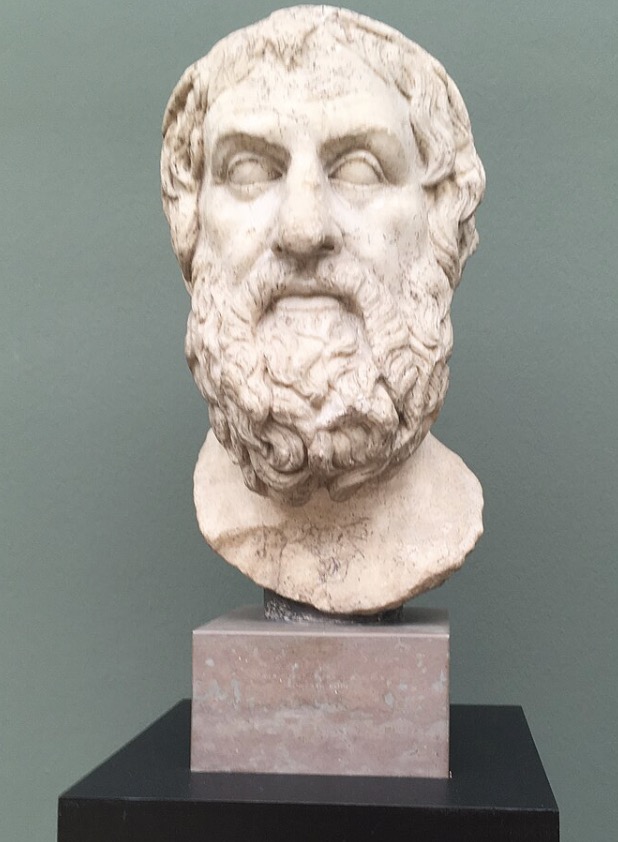
("Portrait of the Tragic Poet Sophocles." Wikimedia Commons. 19th century. Accessed October 5, 2025. https://commons.wikimedia.org/wiki/File:Portrait_of_the_Tragic_Poet_Sophocles.jpg.)
19th-century engraved portrait of Sophocles as the tragic poet, based on ancient sources, with dramatic shading.
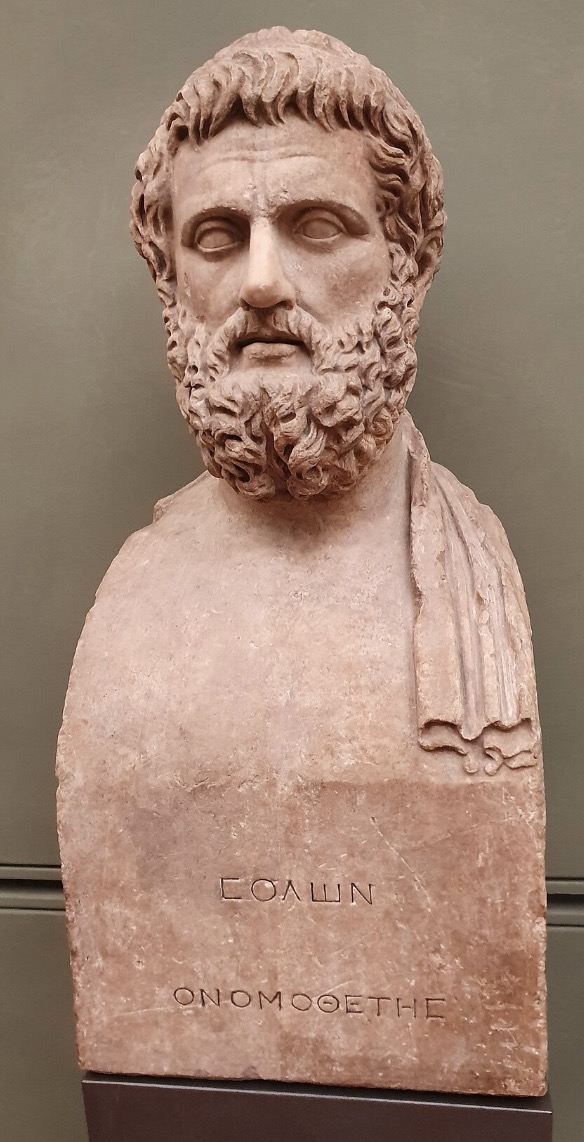
("Portrait Bust of Sophocles on Herm (Known as Solon)." Wikimedia Commons. 4th century B.C. (original). https://commons.wikimedia.org/wiki/File:Portrait_bust_of_Sophocles_on_Herm_(known_as_Solon)-Uffizi.jpg.)
Herm bust misidentified as Solon but confirmed as Sophocles, from the Uffizi Gallery, showing classical Greek features.
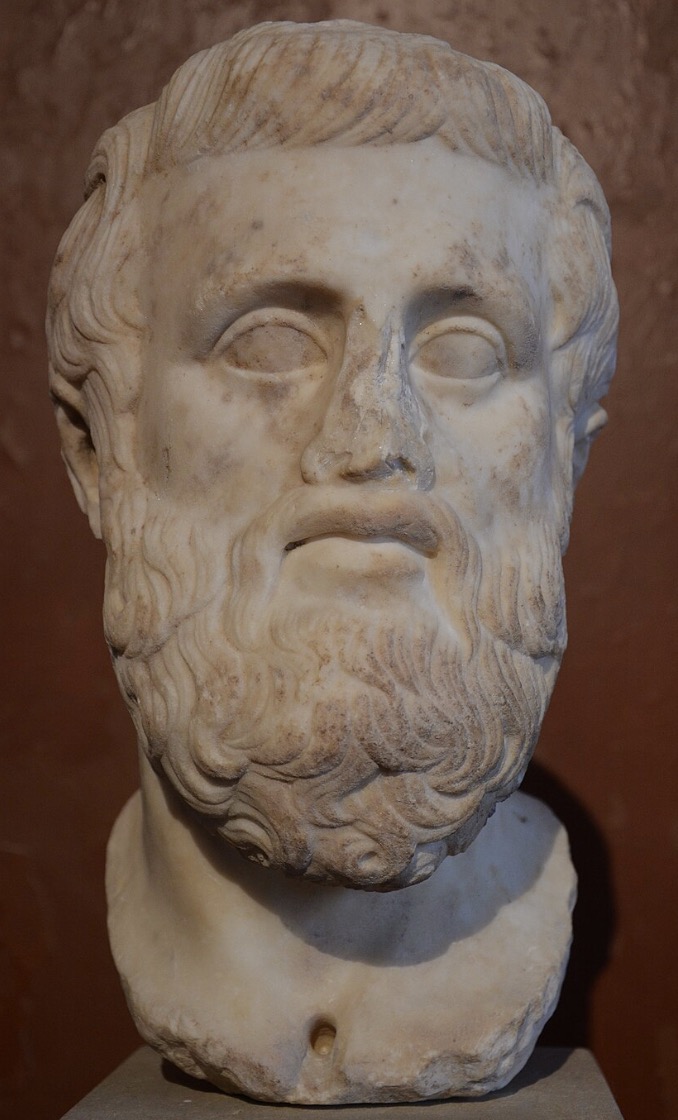
("Portrait of the Athenian Tragedian Sophocles." Wikimedia Commons. 4th century B.C. (original). https://commons.wikimedia.org/wiki/File:Portrait_of_the_Athenian_tragedian_Sophocles_(498-406_BC),_Roman_copy_of_a_Greek_original_from_the_4th_century_BC,_Neues_Museum,_Berlin.jpg.)
Roman marble copy of a 4th-century B.C. Greek original bust of Sophocles, displayed in Berlin's Neues Museum, capturing his thoughtful visage.