
SHIH CHING
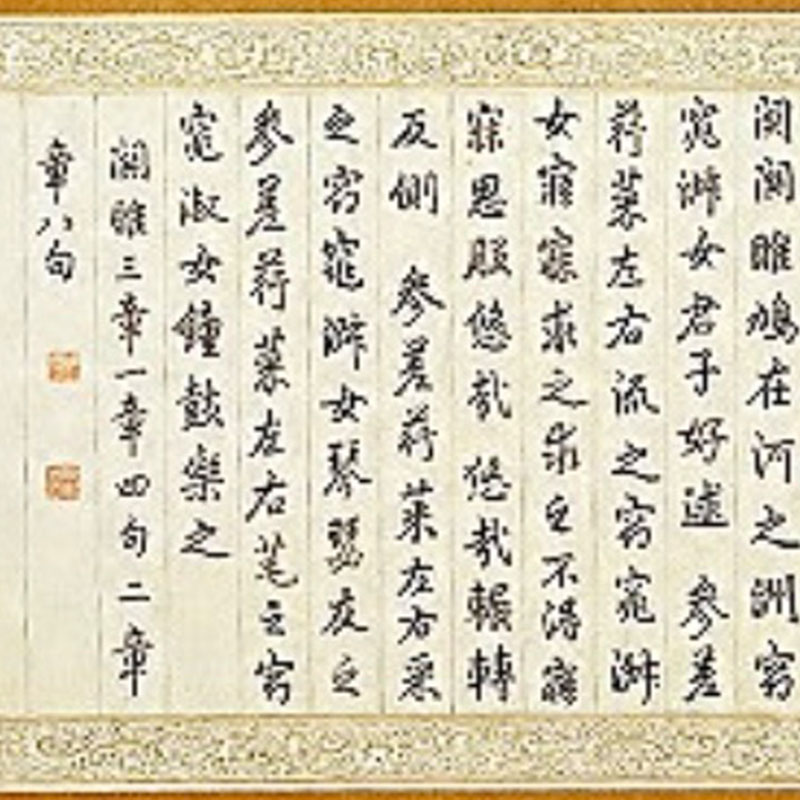
("Chinese Classic Poetry: The Shih King | Online Library of Liberty." Photograph, 2000s. https://oll.libertyfund.org/pages/chinese-classic-poetry-the-shih-king)
Why did Confucius care so much about a book of poems?
Arranged around 520 B.C. · China
The Shih Ching (also She King), or The Book of Poetry, predates Confucius by some three centuries, although he is often credited with arranging it into its current form around 520 B.C. It is a compilation of some three hundred verses of poetry illustrating the proper conduct of a sovereign and general rules “for inculcation of propriety and righteousness.”
Some three centuries apart
- Also known as: The She King, or The Book of Poetry
- Contents: Some three hundred verses of poetry
- Arranged by: Confucius, by tradition, around 520 B.C.
- Older than Confucius: By some three centuries
- Purpose: Illustrating the proper conduct of a sovereign
What should a ruler learn from poetry?
Hover or tap each idea to look closer
- The Conduct of a SovereignThe verses illustrate the proper conduct of a sovereign and general rules “for inculcation of propriety and righteousness.”
- Saved by ConfuciusConfucius probably did not do much to alter the original text, but his interest in it ensured the book’s survival:“The master said, ‘It is by the Odes that the mind is aroused.’”
- Warnings to the PowerfulThe stanzas are replete with admonitions to rulers overzealous for power and glory.
- The Earl of Fan’s ComplaintA passage ascribed to the Earl of Fan, aimed at King Yu (around 780–770 B.C.):“The Royal Domain has over-run private holdings; if the feudal lords had retainers, you have usurped them; the people are as birds in a net, the innocent lie in the sprung trap of the stocks, and the criminals walk up and down boasting.”
- Compassion and ModerationThe central lesson of these poems is that the prince should rule with compassion and moderation.
The prince should rule with compassion and moderation.
That is the central lesson of the Shih Ching. Its verses set out the proper conduct of a sovereign and warn rulers overzealous for power and glory. Though Confucius probably did little to alter the original text, his interest in the poems ensured that the book survived.
Where to read more about the Shih Ching.
- 1871The Chinese Classics, Vol. IV: The She KingLegge, James
- 1991Poetry and Personality: Reading, Exegesis, and Hermeneutics in Traditional ChinaVan Zoeren, Steven · Stanford University Press
- 1996An Anthology of Chinese Literature: Beginnings to 1911Owen, Stephen · W. W. Norton
- 2001“Ritual, Text, and the Formation of the Canon: Historical Transitions of Wen in Early China”Kern, Martin · T’oung Pao (journal article)
- Chinese Text Project: Book of PoetryThe full text in Chinese with James Legge’s English translation.ctext.org
- Academia Sinicasinica.edu.tw
- World Digital Library (Library of Congress)loc.gov
("Chinese Classic Poetry: The Shih King | Online Library of Liberty." Photograph, 2000s. https://oll.libertyfund.org/pages/chinese-classic-poetry-the-shih-king)
A faint ink landscape drawing featuring hills, trees, and a path.
Ai-Generated
The Classic of Poetry (Shih Ching) reflects cultural and moral values, promoting harmony and governance, and has shaped literature and Confucian thought for millennia.
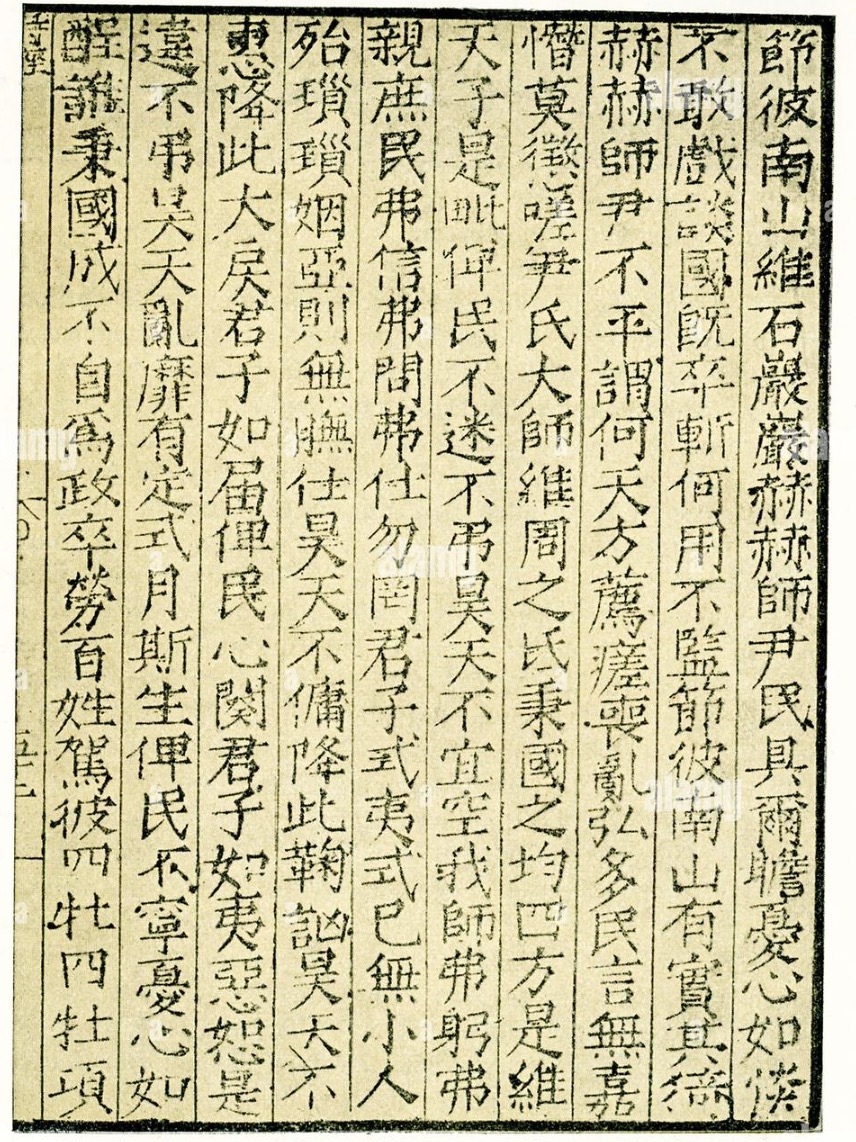
"Classic of poetry shijing hi-res stock photography and images - Alamy." Photograph, 2000s.
https://www.alamy.com/stock-photo/classic-of-poetry-shijing.html
A vertical page of dense Chinese characters in columns, printed in black ink on aged paper.