Roman Chant

ROMAN CHANT

Roman Chant
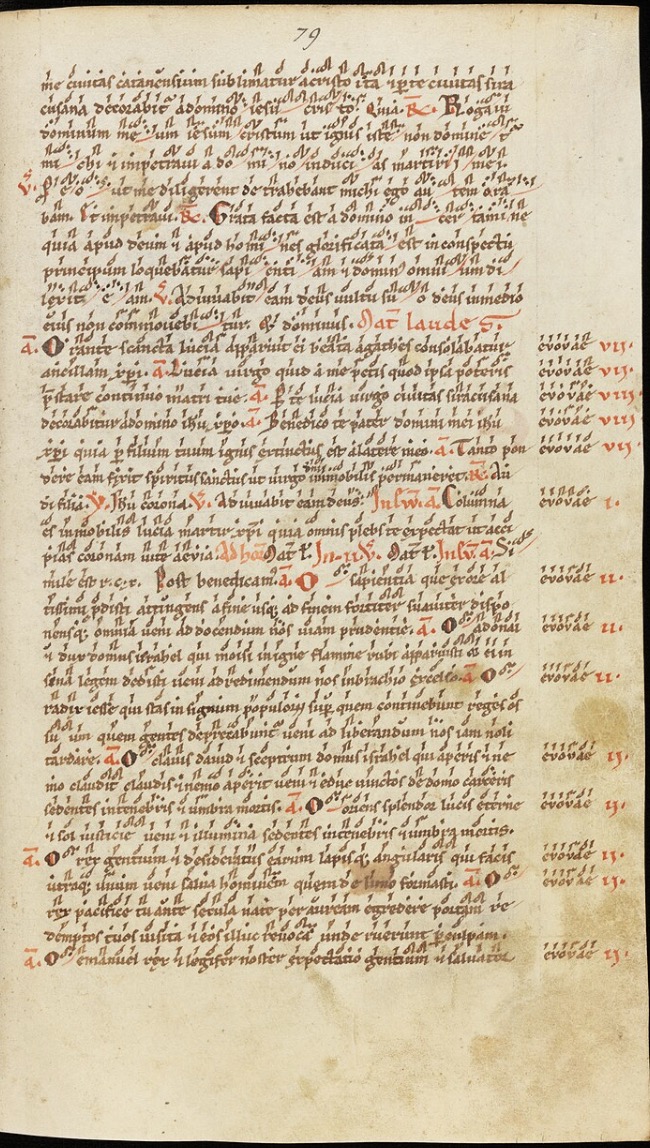
(“https://digi.vatlib.it/view/MSS_Arch.Cap.S.Pietro.B.79”)

Composed: 1100 CE, Medieval Europe

Notable

  • Founder of Gregorian Chant Notation: Developed early forms of neumatic notation and the four-line staff, enabling the precise transmission of sacred melodies across monasteries.
  • Preservation of Liturgical Heritage: Codified a vast repertoire of monophonic plainchant that unified Christian worship and preserved theological expression through music.
  • Practical Expression: Designed chant for liturgical function—enhancing prayer, ritual, and communal devotion—while establishing principles of modal theory that shaped Western music.

circa 1100 CE

About

Old Roman Chant is the liturgical plainchant tradition of the early Christian Church in Rome. It is regarded as the direct precursor of Gregorian chant, forming a core component of the Roman Rite. Its melodies and traditions took shape before the seventh century, transmitted primarily through oral tradition, and later notated between the 11th and 13th centuries. The practice developed in the context of Rome’s central churches and the Schola Cantorum (Roman papal choir school), serving as the musical backbone for Mass and Office services of the Roman liturgy. Unlike other chant traditions, Old Roman Chant shares its liturgical texts nearly identically with Gregorian chant, yet remains musically distinct and more ornate.

Primary Sources

Key Manuscript and Source Editions:

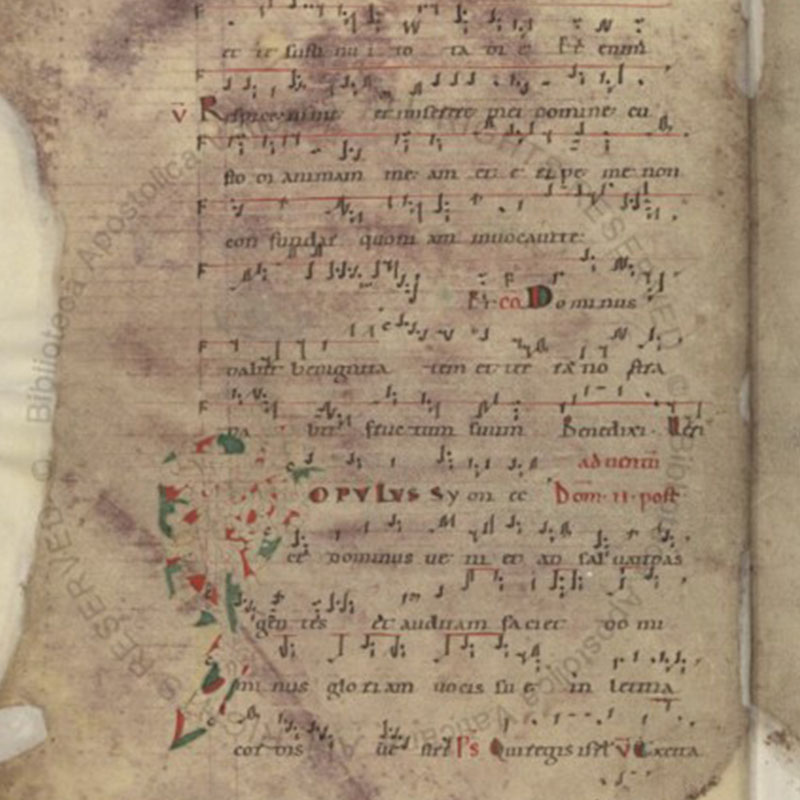
Graduals (3 manuscripts), dated 1071–1250 (Vatican, Rome)
Antiphoners (2 manuscripts), dated 11th–13th centuries (Vatican, Rome)
Orational (prayer book), 12th century

Examples:

Graduale of St. Peter (Vatican Library, MS Lat. 5319, 1071)
Graduale of Santa Cecilia (Santa Cecilia in Trastevere, 12th century)
Antiphoner of Santa Maria in Cosmedin (c. 1100)


Influences & Notable For

Notable For

Foundation of plainchant in the Western Church ritual and liturgy.
Precursor and close relative to Gregorian chant.
Celebrated for its ornate melodic style and preservation of ancient musical motifs.
Direct influence on the structure and text of the Roman Rite Mass and Office.

Influences

Rooted in the Jewish synagogue’s psalm-singing traditions and the earliest Christian liturgical practice.
Developed through the Schola Cantorum of Rome (est. 4th century).
Influenced by contemporaneous chant forms: Ambrosian (Milan), Mozarabic (Spain), Gallican (Gaul).
Closely tied to the Carolingian Renaissance: Carolingian rulers Pepin and Charlemagne imported Roman chant traditions to the Frankish north, leading to the synthesis of “Gregorian” chant.

    Famous quotes
    • As a vocal repertoire, Old Roman Chant is not attributed to a single author or set of named composers. Quotations come from modern assessments and medieval sources:
    • “When the melodies of the Old Roman tradition were first published… it became clear that these represented a more ornate version of the repertory.” – https://www.britannica.com/topic/Old-Roman-chant
    • “Old Roman chants have intricate melodic motion within a narrow ambitus, with small, repeating melodic motifs, which are common in the Italian chant traditions.” – https://en.wikipedia.org/wiki/Old_Roman_chant
    Legacy & Modern Significance

    Provided the textual and melodic foundation for Gregorian Chant, which became the core chant of Western Christianity.
    Its transmission, adaptation, and eventual replacement document key points of interaction between Rome and the Frankish kingdoms.
    Continues to inform studies in medieval musicology, liturgy, and the development of Western sacred music.
    Surviving manuscripts offer rare insight into pre-Gregorian chant traditions and help reconstruct the soundscape of early Christian liturgy.

    Modern Moments & Impact on 21st Century

    1890: Rediscovery of primary Old Roman Chant manuscripts in Rome (Vatican Library, scholarly cataloguing).
    Late 20th–21st Century: Inclusion of Old Roman Chant repertory in modern critical editions (Monumenta Monodica Medii Aevi).
    Ongoing: Performance and research by ecclesiastical choirs, early music ensembles, and university musicology departments.
    Digital Access: Chants and facsimiles made available via Vatican Library Digital Collections and research projects.

    Suggested Reading and Resources

    Secondary Literature (Scholarship)

    Hiley, David. Western Plainchant: A Handbook. Oxford University Press, 1993.
    https://muse.jhu.edu/article/442475

    Apel, Willi. Gregorian Chant. Indiana University Press, 1958.

    McKinnon, James W. The Advent Project: The Later Seventh-Century Creation of the Roman Mass Proper. University of California Press, 2000.

    Jeffery, Peter. Re-Envisioning Past Musical Cultures: Ethnomusicology in the Study of Gregorian Chant. University of Chicago Press, 1992.

    Archival or Online Sources

    “Old Roman Chant,” Wikipedia.
    https://en.wikipedia.org/wiki/Old_Roman_chant

    “Old Roman chant,” Britannica.
    https://www.britannica.com/topic/Old-Roman-chant

    “Old Roman Chant,” Encyclopedia.com.
    https://www.encyclopedia.com/religion/encyclopedias-almanacs-transcripts-and-maps/old-roman-chant

    “Rediscovering the Elegance of Old Roman Chant,” Liturgical Arts Journal.
    https://www.liturgicalartsjournal.com/2024/11/rediscovering-elegance-of-old-roman.html