
ROBINSON
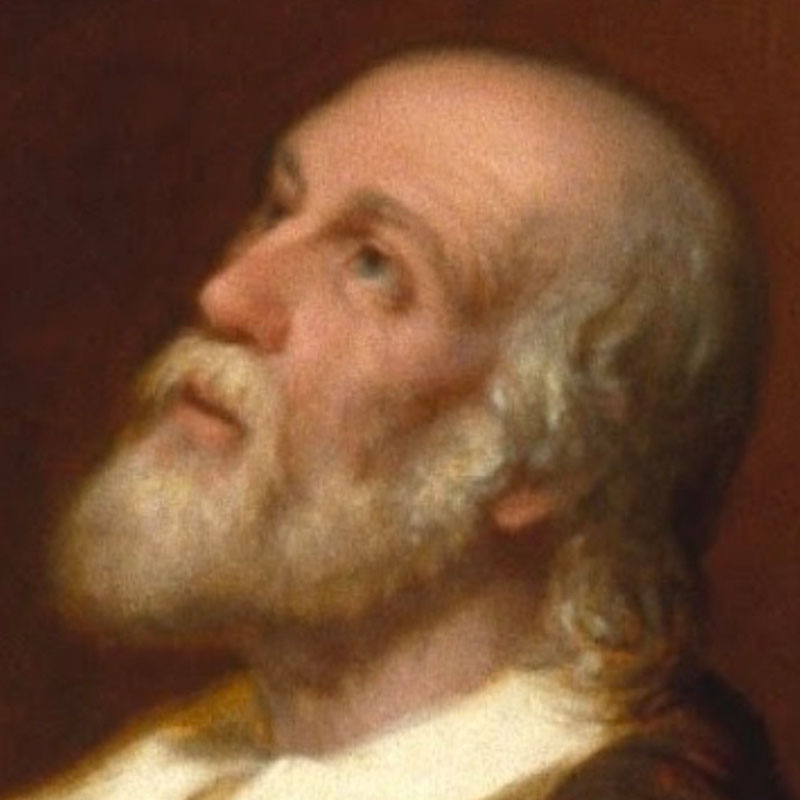
(Weir, Robert Walter. Embarkation of the Pilgrims. Oil on canvas. 1844. Brooklyn Museum, New York. Wikimedia Commons. https://commons.wikimedia.org/wiki/File:John_Robinson_in_painting_Embarkation_of_the_Pilgrims.jpg.)

Born: c. 1576, Sturton le Steeple, Nottinghamshire, England
Died: March 1, 1625, Leiden, Dutch Republic
Notable
- Founder of American Congregationalism: Established the first enduring Separatist church with covenant-based, lay-governed polity that became the model for New England congregations.
- A Justification of Separation from the Church of England (1610): Systematically defended withdrawal from Anglican hierarchy and ritual as biblically mandated, rejecting state-imposed uniformity.
- Principle of Continuing Revelation: Declared in his 1620 farewell sermon that “the Lord hath more truth yet to break forth out of His holy word,” urging openness to progressive scriptural insight over fixed tradition.
1600–1700 AD works
Biography
John Robinson (1576–1625 CE) was an English Separatist pastor, theologian, and one of the founders of the Congregational Church alongside Robert Browne and Henry Barrow. Born in Sturton le Steeple, Nottinghamshire, he studied at Corpus Christi College, Cambridge, embracing Puritanism before resigning from the Church of England over episcopacy and rituals. Leading the Scrooby congregation, he fled persecution to Amsterdam (1608) and Leiden (1609), where he pastored a stable church of 300 members. As spiritual guide to the Pilgrim Fathers, he preached farewell sermons before their 1620 Mayflower voyage to Plymouth Colony, advocating emigration while embodying tolerance and Calvinist orthodoxy. His writings defended Separatism, debated Arminianism, and promoted church polity reform.
Modern scholars hail Robinson as a bridge between Puritan radicalism and American Congregationalism: his progressive yet orthodox theology fostered stable exile communities, influencing Plymouth's governance and free church traditions. His Leiden church pioneered self-sustaining Separatism, avoiding the splits plaguing others.
Influences & Notable For
Notable For
Pastor to the Pilgrim Fathers: Delivered Delfshaven farewell sermon (1620), charging Pilgrims to pursue ongoing revelation.
Founder of Congregationalism: Stable Leiden church model; defended Separatism while advocating tolerance.
Calvinist Debater: Championed Dort doctrines in Leiden University disputations.
Progressive Orthodoxy: "The Lord hath more truth...yet to break forth" – prophetic of further Reformation.
Sources:
Britannica; Tomkins, Journey to the Mayflower (2020).
Influences
Hume was influenced by a wide range of thinkers, including John Locke, who built upon Locke's empiricist philosophy and theory of knowledge. Isaac Newton inspired Hume with his scientific method, which Hume sought to apply to the study of human nature. Francis Hutcheson's ideas on ethics and aesthetics shaped Hume's moral philosophy. Pierre Bayle influenced Hume's skepticism and critical approach to religious belief. Montesquieu's political philosophy also informed Hume's writings on government and liberty.
Famous quotes
- “I charge you...follow me no further than you have seen me follow Christ...the Lord hath more truth and light yet to break forth from His holy word.” – Farewell Sermon, Delfshaven (1620); Journey to the Mayflower, p. 330.
- “To walk in all his ways...whatsoever it should cost them.” – Scrooby Covenant (1608?).
Legacy & Modern Significance
Shaped Plymouth Colony's church-state; inspired Congregationalism, Baptist tolerance. Posthumous Works (1851) revived scholarship. Memorials: Pieterskerk plaques (1891, 1928); Robinson Memorial Church, Gainsborough (1897).
Modern Moments & Impact on 21st Century
2009: 400th Leiden anniversary; Works reprinted (Reformation Heritage Books).
2019–2020: Mayflower 400; Tomkins' Journey to the Mayflower (Pegasus).
Ongoing: Digitized Works (OLL, Archive.org); Plimoth Patuxet curricula.
2020s: Quotes in religious liberty debates; Leiden tourism (Pieterskerk).
Suggested Reading and Resources
Secondary Literature
Tomkins, Stephen. The Journey to the Mayflower. Pegasus, 2020.
Burgess, Walter H. John Robinson, Pastor of the Pilgrim Fathers. Wipf & Stock, 2009 (repr.).
Ashton, Robert (ed.). The Works of John Robinson (3 vols.). 1851 (OLL).
Archival or Online Sources
Online Library of Liberty: Works – https://oll.libertyfund.org/titles/robinson-the-works-of-john-robinson-3-vols
Internet Archive: 1851 Edition – https://archive.org/details/worksofjohnrobin01robi
Wikipedia: John Robinson – https://en.wikipedia.org/wiki/John_Robinson_(pastor)
Plimoth Patuxet: Robinson Profile – https://plimoth.org/faith-spirituality/communities-of-faith/john-robinson-pastor-of-the-pilgrims-1575-1625
PASTOR OF THE PILGRIMS
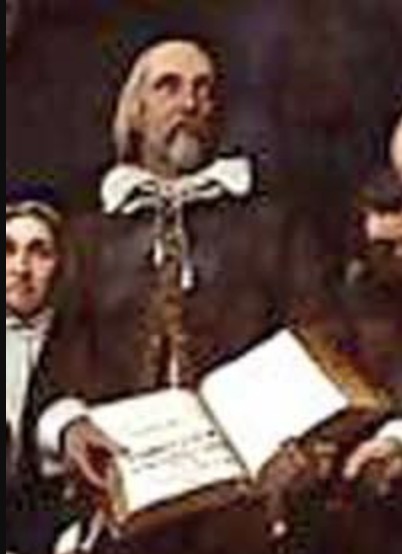
(Unknown. John Robinson. Engraving. ca. 1900. Monergism. https://www.monergism.com/topics/puritans/john-robinson-1575-1625.)
A 19th-century engraving from Monergism depicts John Robinson as an elderly pastor with a long beard and clerical collar, emphasizing his theological writings and pastoral care for the Scrooby congregation during the early 17th century.
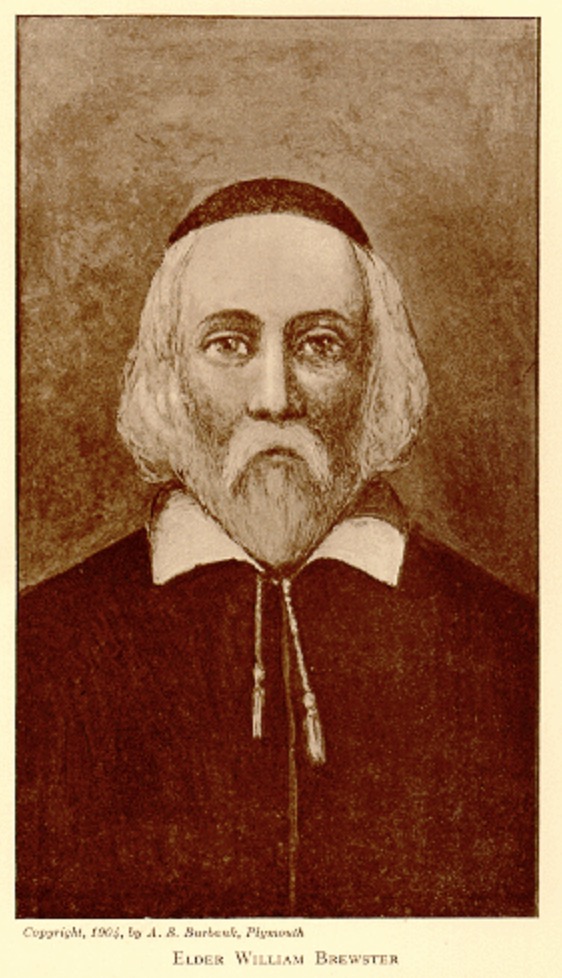
(Unknown. Portrait of John Robinson. Digital illustration. 2023. World History Encyclopedia. https://www.worldhistory.org/John_Robinson/.)
A historical illustration from World History Encyclopedia shows John Robinson in traditional Puritan attire with a beard and robes, holding a Bible, representing his role as a separatist leader and advocate for congregational governance among the Pilgrims.
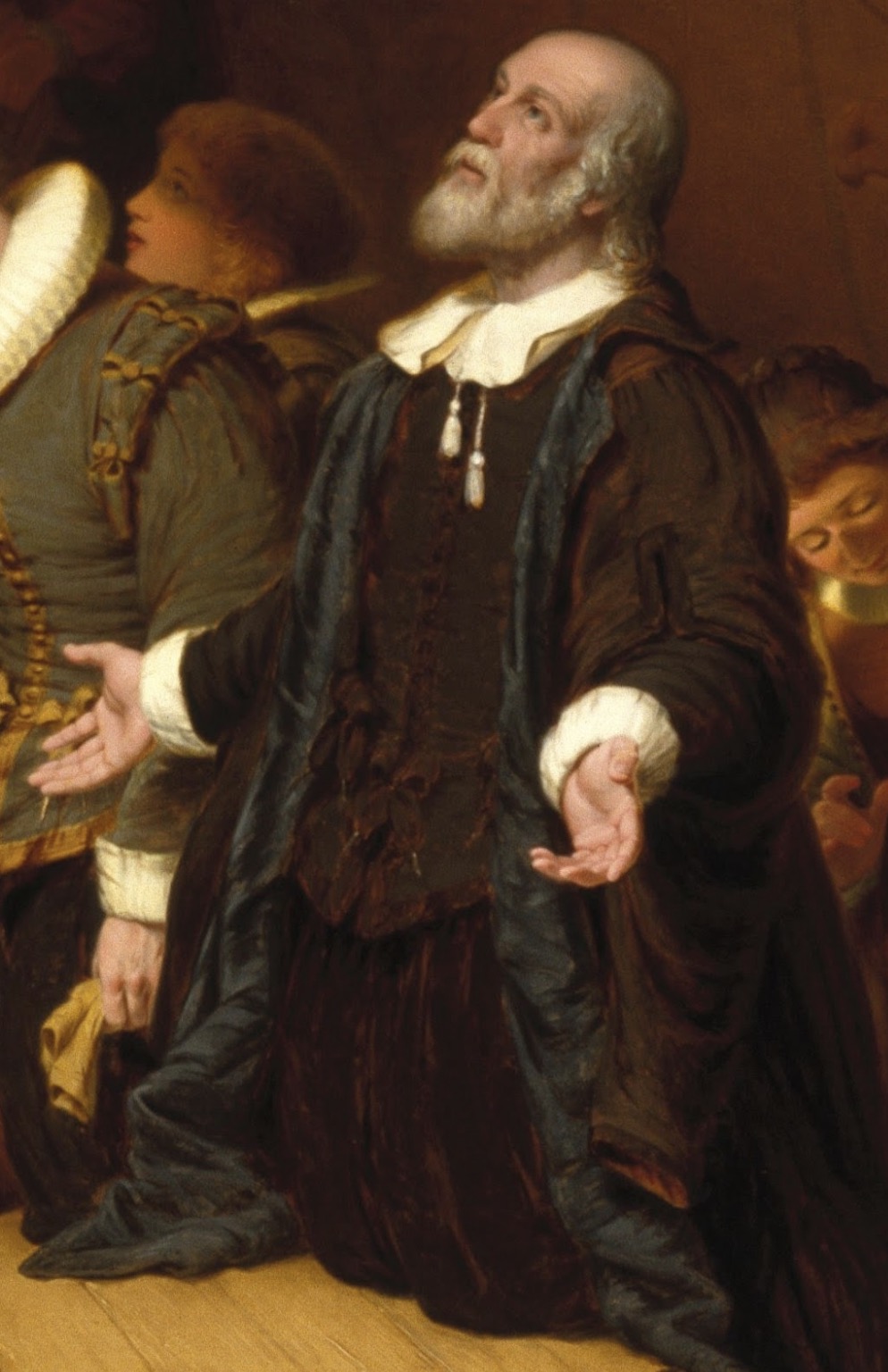
(Weir, Robert Walter. Embarkation of the Pilgrims. Oil on canvas. 1844. Brooklyn Museum, New York. Wikimedia Commons. https://commons.wikimedia.org/wiki/File:John_Robinson_in_painting_Embarkation_of_the_Pilgrims.jpg.)
A 19th-century painting by Robert Weir titled Embarkation of the Pilgrims depicts John Robinson, the Puritan pastor, in a farewell scene with the Pilgrims at Delft Haven in 1620, kneeling in prayer with outstretched arms, symbolizing his guidance toward religious liberty in the New World.