
MO TZU
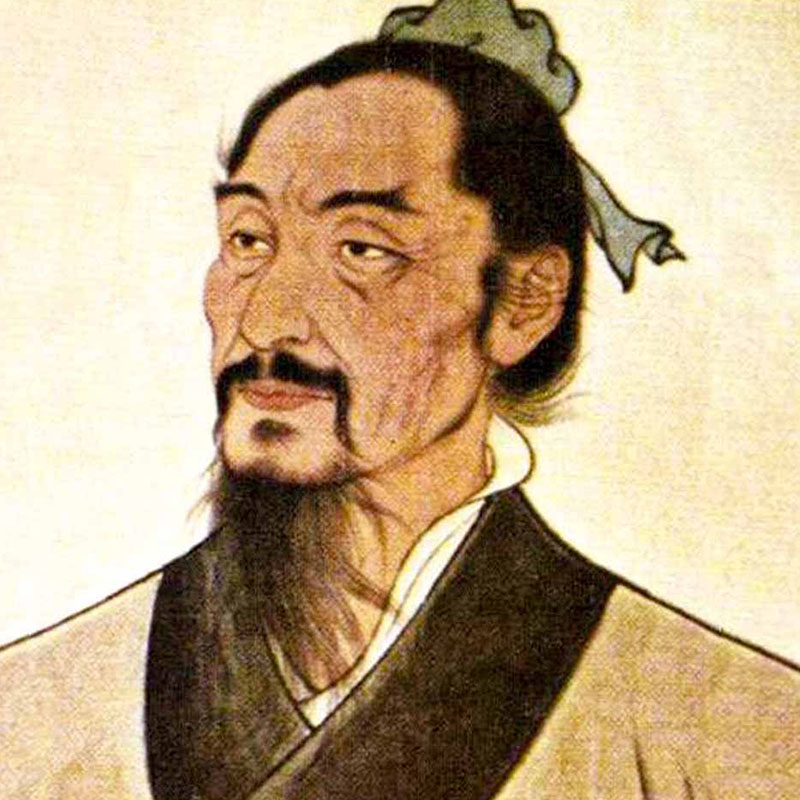
(By Vjacheslav Rublevskiy - https://commons.wikimedia.org/w/index.php?curid=106219380)
What if we cared for strangers as much as for our own families?
c. 470–391 B.C. · China
Mo Tzu (also Mo-Tse) was a philosopher whose school briefly rivaled Confucianism as the leading school of thought in ancient China. He looked back to a time before rank and privilege, when people were not yet divided into clans and families but lived in relative equality, amicable and cooperative.
The doctrine of universal love
- Born: Around 470 B.C., shortly after Confucius died
- Died: Around 391 B.C.
- Beginnings: Said to have started as a Confucian, then grown dissatisfied with its focus on ceremony and on family loyalty above the general good
- Way of life: Said to have practiced primitive simplicity and austerity
- His school: Briefly rivaled Confucianism, then faded into obscurity, criticized as impractical
Would anyone attack another city if they loved it as their own?
Hover or tap each idea to follow Mo Tzu’s answer
- An Earlier EqualityFacing the same volatile politics as Confucius, Mo Tzu also sought the best path to order. But rather than venerate an aristocratic past, he looked to an even earlier time, when people lived in relative equality, without the pomp and ceremony of rank and privilege.
- Universal LoveHis doctrine of universal love, the book notes, is strikingly similar to Christianity, and one passage closely resembles the Golden Rule.“When everyone regards the states and cities of others as he regards his own, no one will attack the others’ state or seize the others’ cities.” (trans. Y. P. Mei)
- Beyond the FamilyHe broke with Confucianism over its preoccupation with ceremony, and its loyalty to family above loyalty to the general good.
- SimplicityMo Tzu argued against the frivolity of music and anything else that distracted people from following the “will of Heaven.”
- The Will of HeavenThose who followed the path of righteousness would be rewarded; those who did not invited punishment. Here too the book sees startling parallels to Christianity, especially its Calvinist forms.“Certainly Heaven desires to have all men benefit and love one another and abominates to have them hate and harm one another.” (trans. Y. P. Mei)
For a time, Mo Tzu’s school rivaled Confucianism as the leading school of thought in ancient China.
It later faded into obscurity, criticized as impractical. Yet his call to love others without distinction, and to regard every city as one’s own, remains one of the most striking ideas in early Chinese thought, and one that invites comparison with the ethics of Christianity.
Where to read more about Mo Tzu and the Mohist school.
- 1978Later Mohist Logic, Ethics and ScienceGraham, A. C. · The Chinese University Press
- 1992A Daoist Theory of Chinese Thought: A Philosophical InterpretationHansen, Chad · Oxford University Press
- 2005Readings in Classical Chinese Philosophy (2nd ed.)Ivanhoe, Philip J., and Bryan W. Van Norden, eds. · Hackett Publishing
- 2010The Mozi: A Complete TranslationJohnston, Ian, trans. · The Chinese University Press
- 2016The Philosophy of the Mozi: The First ConsequentialistsFraser, Chris · Columbia University Press
- Chinese Text Project: MoziThe original Chinese text with English translation, including the chapters on universal love.MoziUniversal Love I
- Stanford Encyclopedia of Philosophy: MohismA scholarly entry by Chris Fraser.plato.stanford.edu
- Internet Encyclopedia of Philosophy: MoziA detailed entry by Hui-chieh Loy.iep.utm.edu
- World History Encyclopedia: Mo TiAn introduction by Joshua J. Mark.worldhistory.org
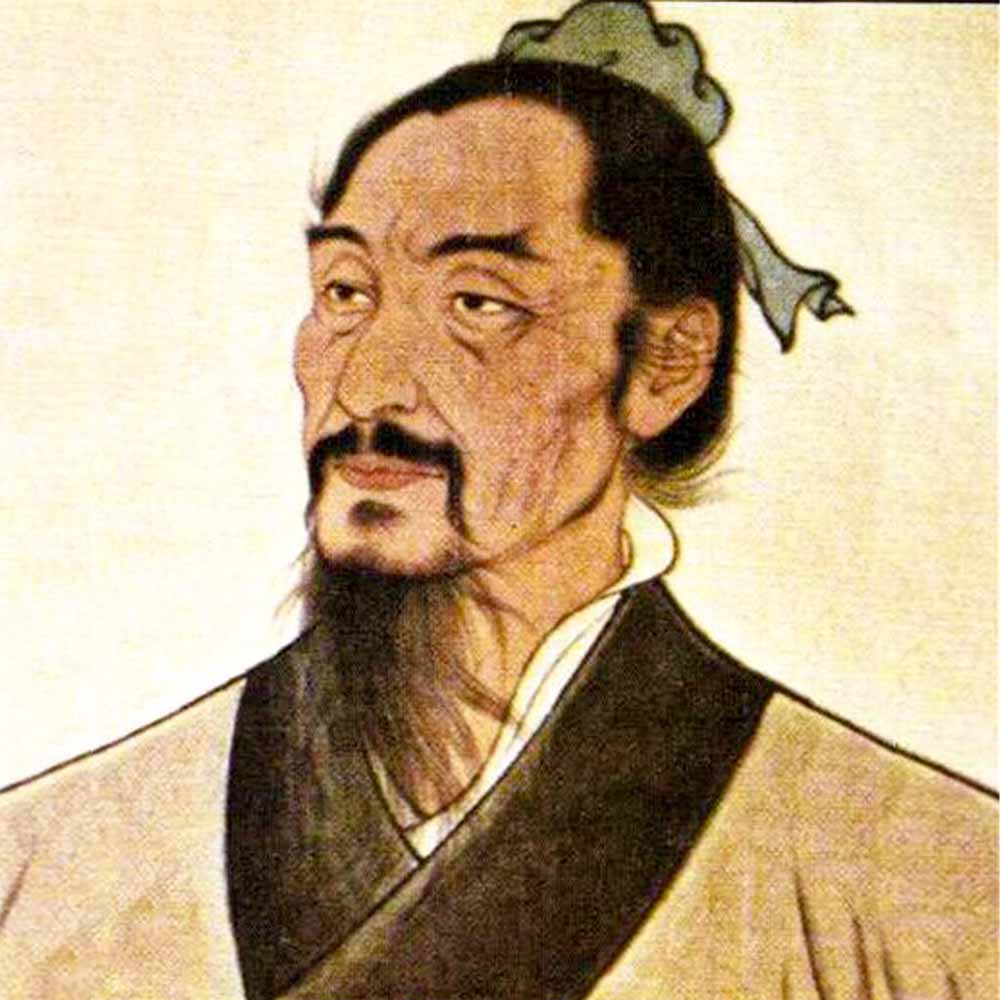
FATHER OF UNIVERSAL LOVE
(By Vjacheslav Rublevskiy - https://commons.wikimedia.org/w/index.php?curid=106219380)
Mozi (circa 470 – 391 BCE) was a Chinese philosopher and the founder of the Mohist school of thought. His teachings emphasized universal love, frugality, and practical governance, often in contrast to the more idealistic or ritual-focused approaches of his contemporaries.
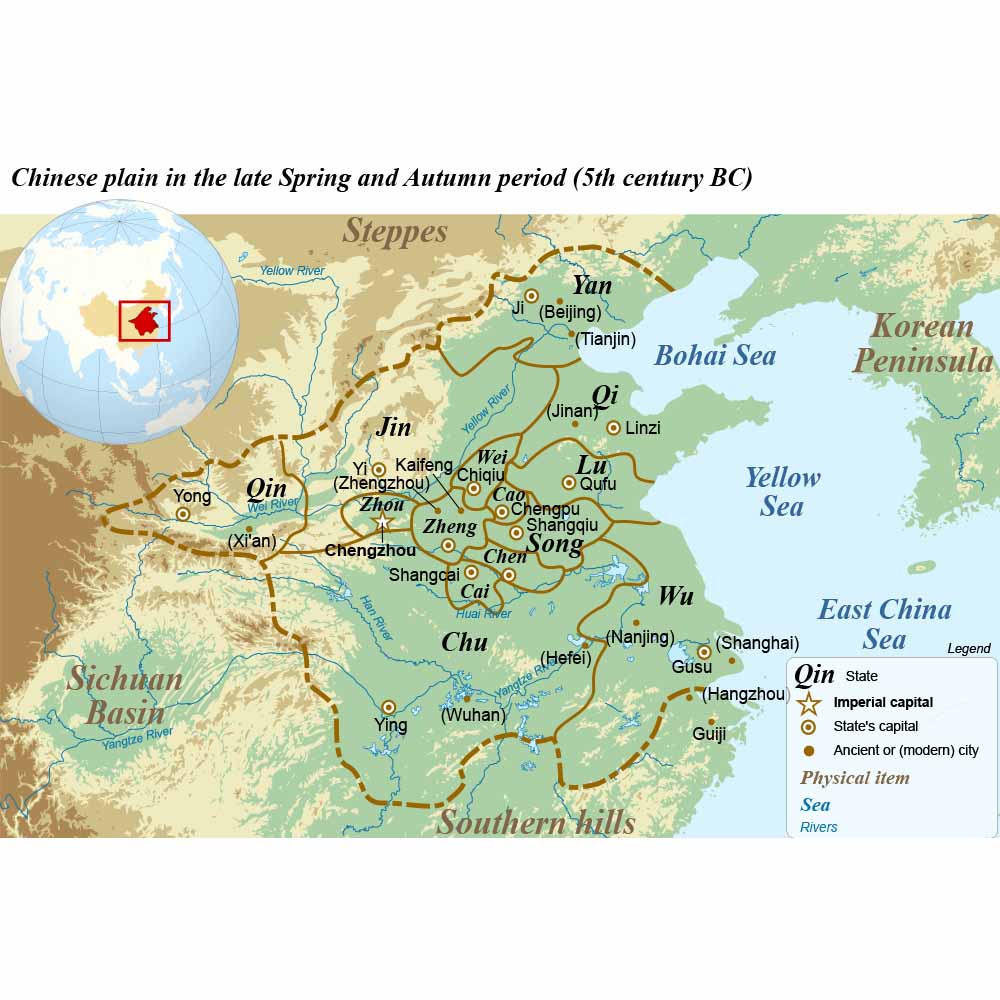
ZHUO, STATE OF JIN, CHINA
(By Yug - Own work,*Background data: ETOPO1 + QGIS > then vectorized using Inkscape*Semantic data: some from Le Monde Chinois, Gernet, p58.or (en:) Gernet (1996) A History of Chinese Civilisation, Cambridge university press, p. 59, CC BY-SA 3.0, https://commons.wikimedia.org/w/index.php?curid=15585702)
Born in the State of Jin (modern-day Shanxi), Mozi's practical philosophy challenged the norms of his time, advocating for societal reforms grounded in utility, collective benefit, and the welfare of all people, not just the elite.
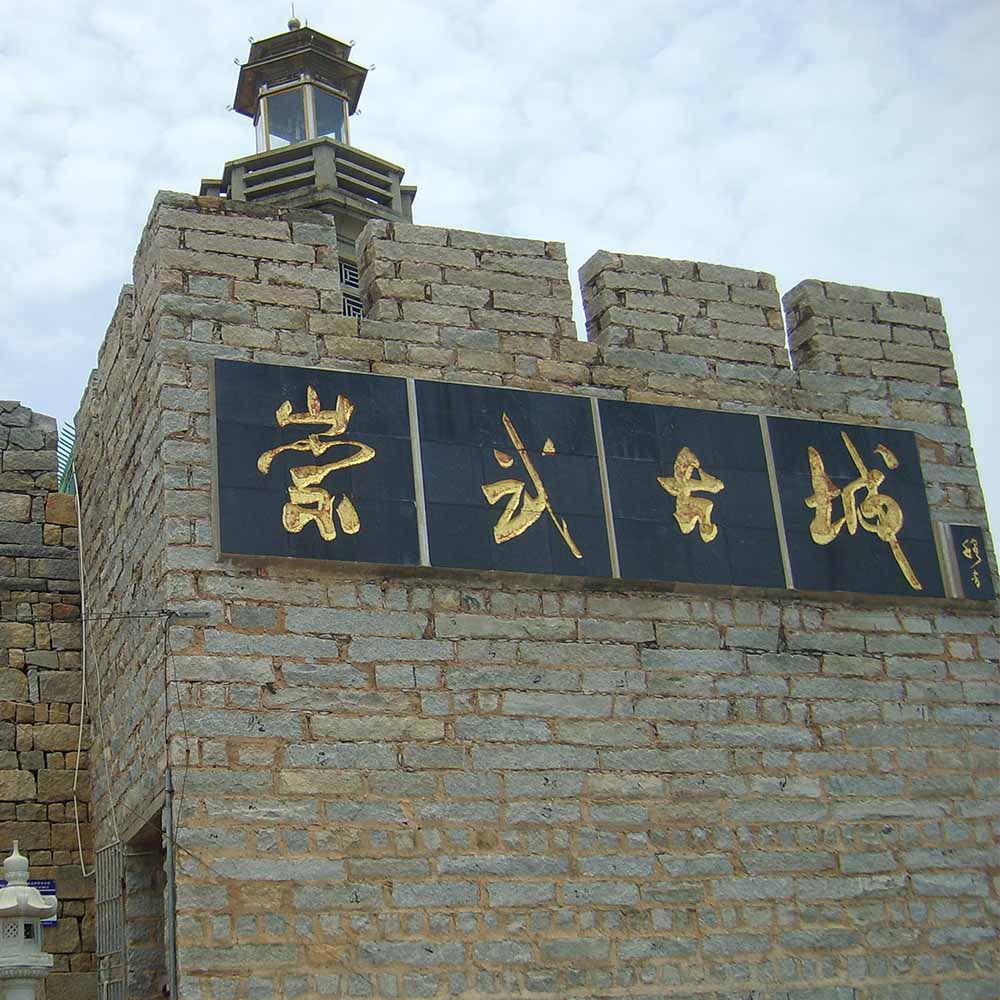
INFLUENCE ON LATER THINKERS
(By Dingar - Own work, Public Domain, https://commons.wikimedia.org/w/index.php?curid=4175954 - The Mohists were experts at building fortifications and siege defenses as shown above.)
Mozi’s ideas profoundly impacted later Chinese thought, offering an alternative to Confucianism by advocating for meritocracy and utilitarian ethics, which influenced both the development of Chinese philosophy and governance throughout history.