
MENCIUS
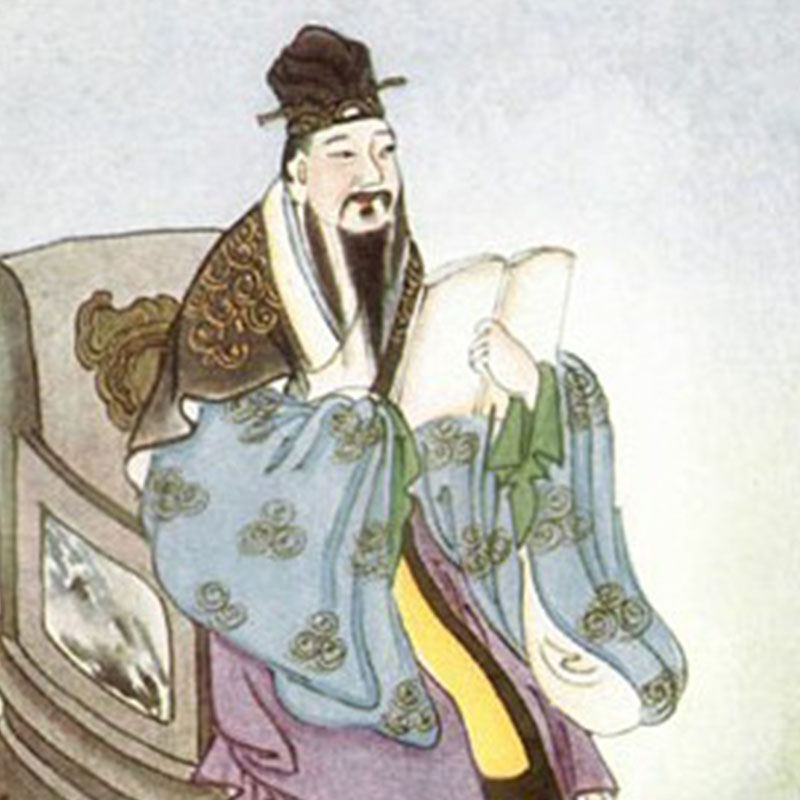
("Mencius." Ink on paper. Qing dynasty, circa 19th century. Unknown artist. Wikimedia Commons. https://commons.wikimedia.org/wiki/File:Mencius.jpg.)

How did a mother’s choice shape a philosopher?
371–289 B.C. · State of Tsou, China
Mencius was born to a minor noble family in the small state of Tsou. His father died when he was three, but his mother took a keen interest in her child’s well-being and moved the family near a school so that he would grow up in the proper environment. Tutored by the grandson of Confucius, he became a leading expert in Confucian thought in his own right.
“The tendency of man’s nature to good is like the tendency of water to flow downwards.”Mencius
- Also known as: Meng tzu, or Mengtzu
- Born: Around 371 B.C., in the state of Tsou, in present-day Shandong province
- Taught by: Tzu Ssu, the grandson of Confucius
- Served: Briefly as a state official in Ch’i
- Remembered as: The “Second Sage”
What makes a society stable and happy?
Hover or tap each idea to look closer
- Princes Who Guard the PeopleMencius taught that a stable and happy society is one in which princes guard the well-being of the common people by promoting economic growth and education.
- Lower Taxes, Free TradeBoth objectives, he argued, could be attained only if the princes lowered taxes and allowed for free trade.
- Restraint from WarPrinces must also conserve resources, especially human ones, by restraining themselves from unnecessary warfare.
- Human Nature Is GoodLike Confucius, Mencius held that human nature is essentially good when freed from abusive power:“The tendency of man’s nature to good is like the tendency of water to flow downwards. There are none but have this tendency to good, just as all water flows downwards.”
- Teaching the PrincesDuring the unstable Period of Warring States (481–221 B.C.), Mencius believed he could help bring order by tutoring the princes of the various provinces.
By the time of his death, Mencius was regarded as the “Second Sage.”
A leading expert in Confucian thought, Mencius taught that rulers serve their people best by promoting economic growth and education, lowering taxes, allowing free trade, and avoiding unnecessary war, and that human nature, freed from abusive power, tends toward good as surely as water flows downhill.
Where to read more about Mencius.
- 1963A Source Book in Chinese PhilosophyChan, Wing-tsit, trans. and ed. · Princeton University PressIncludes a chapter of selections from the Mencius.
- 1967Reflections on Things at Hand: The Neo-Confucian AnthologyChan, Wing-tsit, trans. · Columbia University Press
- 1999Encyclopedia of China: The Essential Reference to China, Its History and CulturePerkins, Dorothy, ed. · Facts On FileIncludes an entry on Mencius.
- 2003MenciusLau, D. C., trans. · Penguin Classics · revised edition, first published 1970
- 2009MenciusBloom, Irene, trans. · Ivanhoe, Philip J., ed. · Columbia University Press
- Stanford Encyclopedia of Philosophy: MenciusBy Bryan W. Van Norden.plato.stanford.edu
- Encyclopaedia Britannica: MenciusBy Roger T. Ames.britannica.com
- Wikipedia: Menciusen.wikipedia.org
- International Society for Chinese Philosophyiscp-online1.org
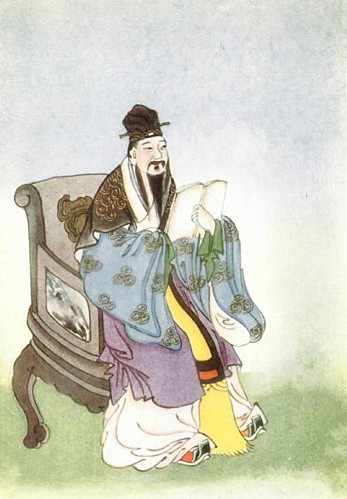
("Mencius." Ink on paper. Qing dynasty, circa 19th century. Unknown artist. Wikimedia Commons. https://commons.wikimedia.org/wiki/File:Mencius.jpg.)
A traditional Chinese portrait of Mencius, the Confucian philosopher, rendered in ink with a serene face and scholar's robe, symbolizing moral and ethical teachings.
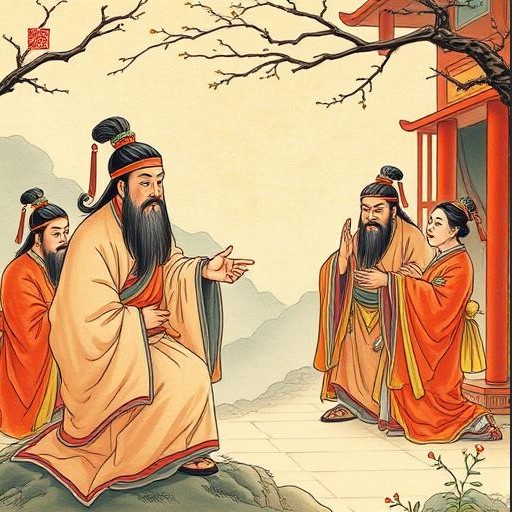
(Mencius, AI generated)
A traditional Chinese depiction of Mencius, the Confucian philosopher, shown teaching his disciples in a serene outdoor setting. Dressed in flowing scholar’s robes, Mencius gestures thoughtfully as his students listen attentively beneath a blossoming tree and beside a red pavilion. The artwork symbolizes wisdom, moral dialogue, and the transmission of ethical teachings central to Confucian philosophy.
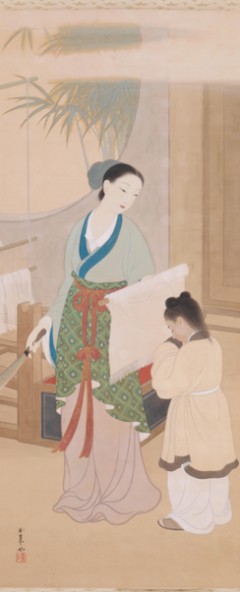
(Kurihara, Gyokuyō. "Mother’s Love (Mencius’ Mother Cutting the Loom)." Woodblock print. 1921. Ink and color on paper. Library of Congress, Washington, DC. Wikimedia Commons. https://commons.wikimedia.org/wiki/File:Kurihara_Gyokuyo_-_Mother%E2%80%99s_Love_(Mencius%E2%80%99_Mother_Cutting_the_Loom).png.)

A 1921 woodblock print by Kurihara Gyokuyō titled "Mother’s Love (Mencius’ Mother Cutting the Loom)," illustrating a key anecdote from Mencius' life emphasizing diligence and family influence.