
MARK
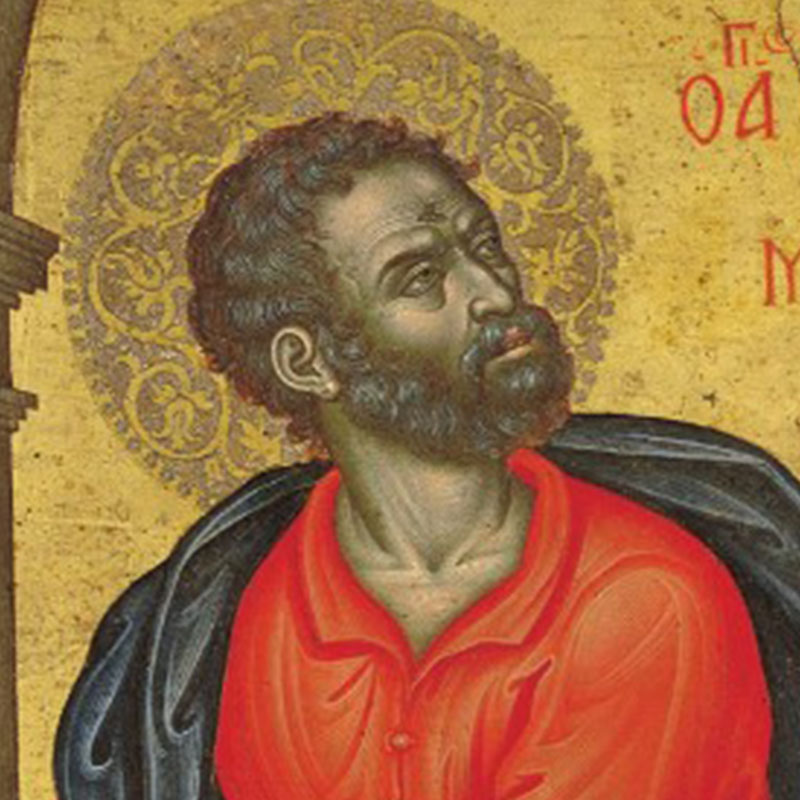
(Tzanes, Emmanuel. St. Mark the Evangelist. Tempera and gold leaf on panel; 66 × 54.1 cm. 1657. Benaki Museum, Athens. Wikimedia Commons. https://commons.wikimedia.org/wiki/File:Tzanes_Emmanuel_-_St_Mark_the_Evangelist_-_Google_Art_Project.jpg.)

Who stood behind the oldest of the four Gospels?
First century A.D. · Antioch, Rome, Alexandria
Mark was born sometime in the first century A.D. and is said to have died in Alexandria, Egypt. Information about his life is fragmentary, but it traces a path across the early Christian world.
A fragmentary life, traced by place
- Born: Sometime in the first century A.D.
- First mission: Set out from Antioch (Antakya, Turkey) with his cousin Barnabas and Paul, but left early for unknown reasons
- Cyprus: Later went to Cyprus with Barnabas
- Rome: Active in the missionary work of both Peter and Paul
- Known for: By tradition, the author of the second of the synoptic Gospels
- Died: Said to have died in Alexandria, Egypt
Why would a Gospel reveal who Jesus is only gradually?
Hover or tap each idea to follow Mark’s Gospel
- The Oldest GospelBy tradition the second of the synoptic Gospels, Mark’s is the oldest of the four. Both Matthew and Luke used it extensively in their own work.
- Peter’s WitnessThe Gospel of Mark is traditionally said to have been based on the teachings of Peter, Mark’s close companion and mentor.
- A Chronological LifeMark tells the life of Christ in chronological order.
- ParablesThe Gospel is notable in part for its parables, the short stories through which Jesus taught.
- A Gradual RevelationThe work reveals gradually the full nature of Jesus, his role on earth and in heaven, and the significance of the New Covenant.
Mark’s is the oldest of the four Gospels, used extensively by both Matthew and Luke in their work.
Drawn, by tradition, from the teachings of Peter, it gradually reveals the full nature of Jesus and the significance of the New Covenant. Mark’s influence reached beyond the page as well: the Egyptian church traces its founding back to him and has been called Cathedra Marci, the See of Mark, since the fourth century A.D.
Where to read more about Mark and the oldest Gospel.
- 1988Binding the Strong Man: A Political Reading of Mark’s Story of JesusMyers, Ched · Orbis Books
- 1991The Gospel According to Saint MarkHooker, Morna D. · A & C Black (Black’s New Testament Commentaries)
- 2000Mark 1–8: A New Translation with Introduction and CommentaryMarcus, Joel · Doubleday (Anchor Bible); continued in Mark 8–16, Yale University Press, 2009
- 2001Mark for EveryoneWright, N. T. · SPCK / Westminster John Knox Press
- 2002The Gospel of Mark (Sacra Pagina)Donahue, John R., and Daniel J. Harrington · Liturgical Press
- The Gospel of Mark (King James Version)The full text, free from Project Gutenberg.gutenberg.org
- Bible Gateway: MarkRead the Gospel online and compare translations.biblegateway.com
- Early Christian Writings: Gospel of MarkDating, authorship and early testimony about the Gospel, with links to texts and commentary.earlychristianwritings.com
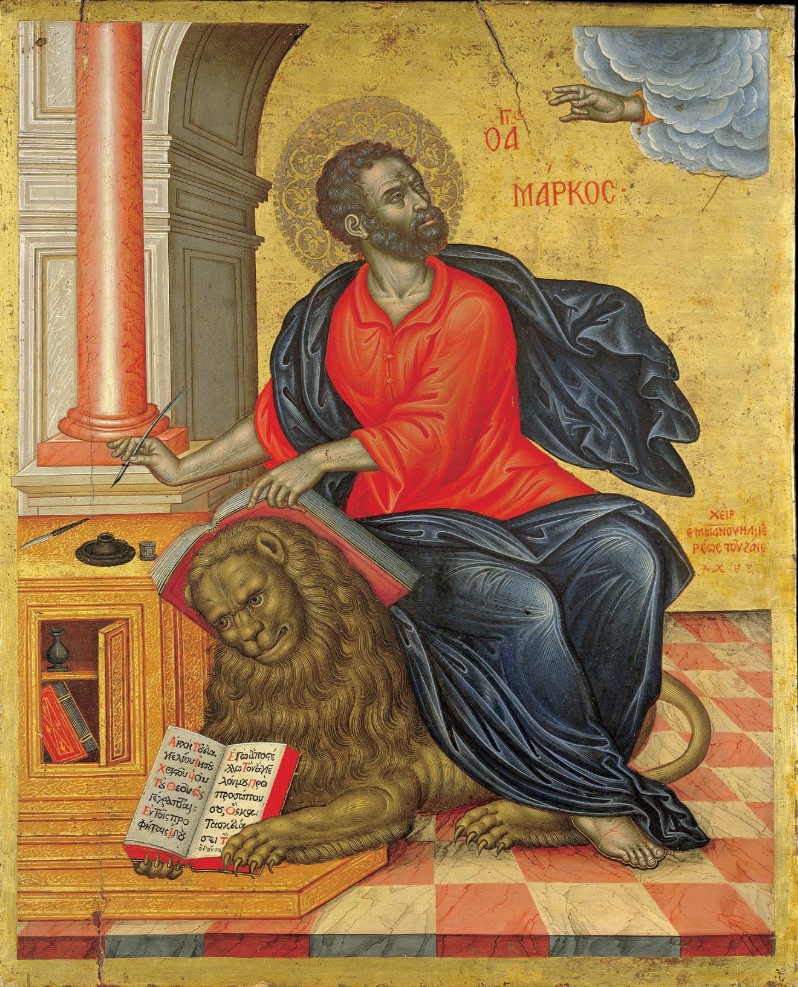
(Tzanes, Emmanuel. St. Mark the Evangelist. Tempera and gold leaf on panel; 66 × 54.1 cm. 1657. Benaki Museum, Athens. Wikimedia Commons. https://commons.wikimedia.org/wiki/File:Tzanes_Emmanuel_-_St_Mark_the_Evangelist_-_Google_Art_Project.jpg.)
An ornate 17th-century icon of Saint Mark the Evangelist, painted in tempera and gold leaf on panel by Cretan artist Emmanuel Tzanes, depicting the Gospel writer in traditional religious attire.
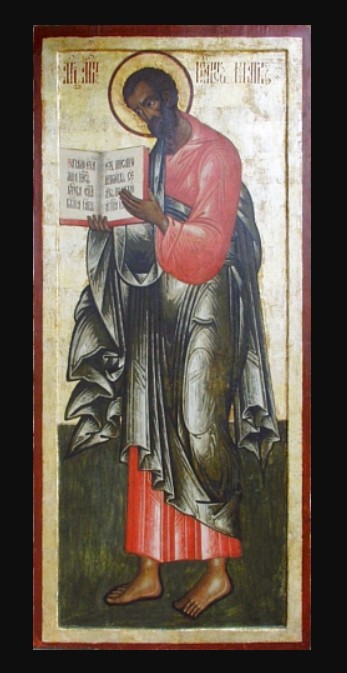
(Unknown. Mark the Evangelist. Icon. ca. first quarter of the 18th century. Transfiguration Church, Kizhi Monastery, Karelia, Russia. Wikimedia Commons. https://commons.wikimedia.org/wiki/File:Mark_Evangelist.jpg.)

A Russian icon from the first quarter of the 18th century depicting Saint Mark the Evangelist, shown standing with a book, part of the iconostasis in the Transfiguration church at Kizhi monastery.
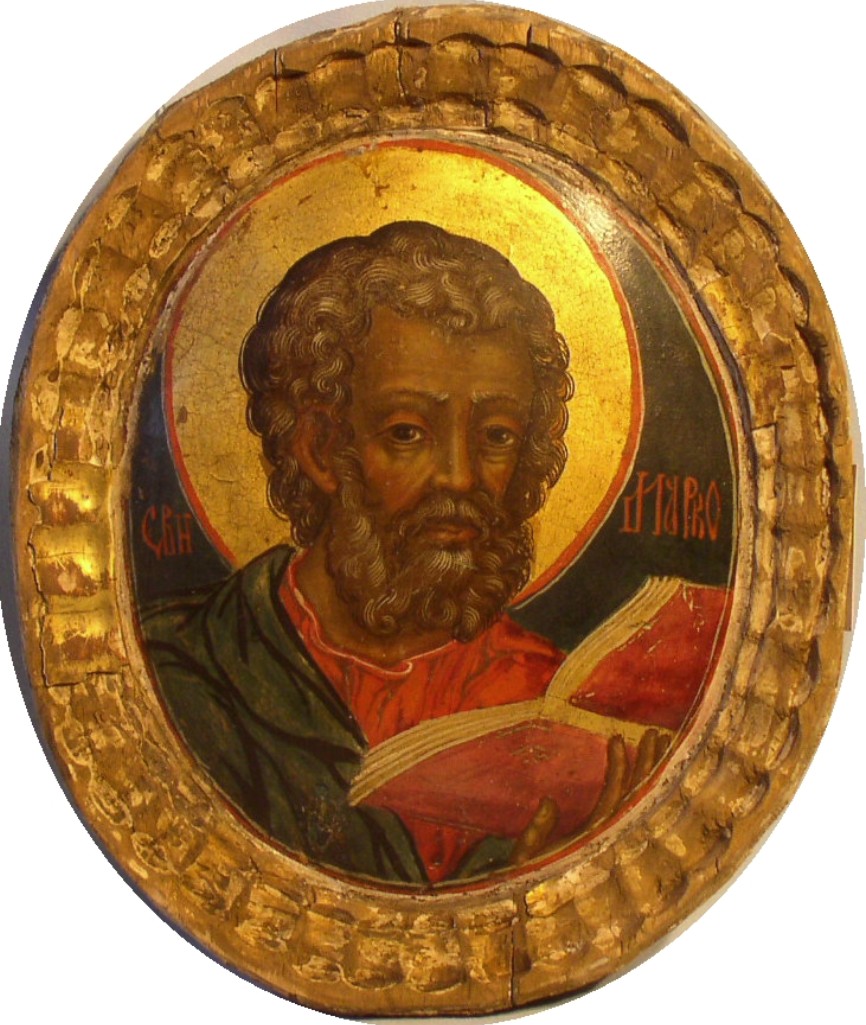
(Unknown. Saint Mark - Orthodox Icon. Icon. 18th century. Wikimedia Commons. https://commons.wikimedia.org/wiki/File:Saint_Mark_-_Orthodox_Icon.jpeg.)

An 18th-century Russian Orthodox icon of Saint Mark the Evangelist, portraying the Gospel author holding a book, with the inscription in Ukrainian suggesting possible origins from Ukraine or Belarus.