
MAIMONIDES
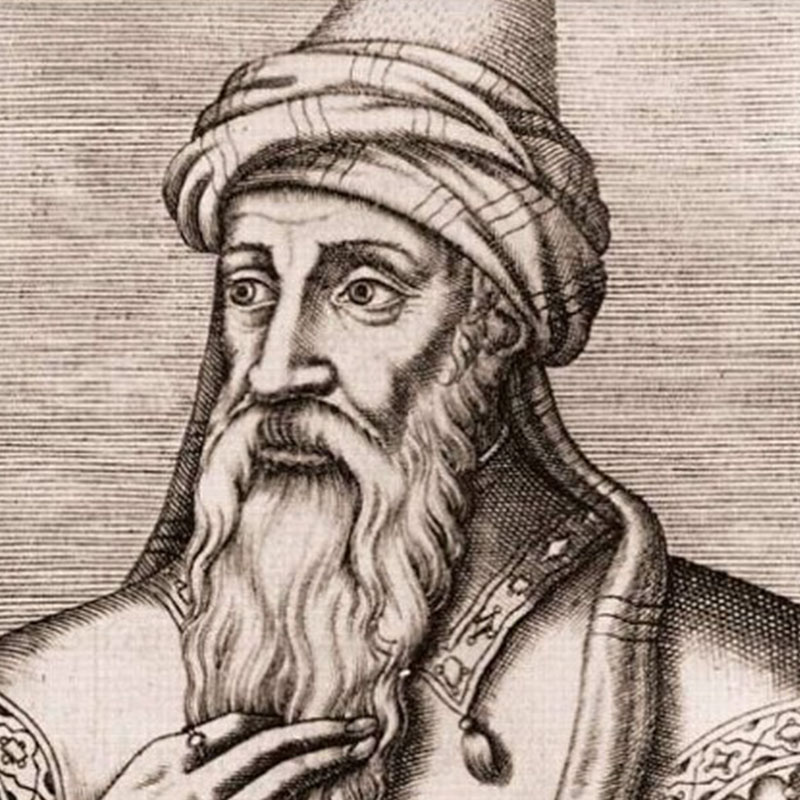
(Unknown. Maimonides. Engraving. 19th century. PICRYL Public Domain Media. https://picryl.com/media/maimonides-185c39.)
Born: Possibly 30 March or 6 April 1135 in Cordoba, Spain, during the Almoravid Empire.
Died: 12 December 1204 in Cairo, Egypt (at the age of 66–69 years).
Notable
-
Jewish Philosopher and Lawgiver: Integrated Jewish law with Aristotelian philosophy.
-
Foundational Works: Authored Mishneh Torah and Guide for the Perplexed, shaping Jewish scholarship.
-
Reason and Faith: Emphasized rational understanding of religious texts.
-
Physician and Scholar: Renowned doctor whose medical writings influenced medieval medicine.
1100–1200 AD works
Biography
Maimonides, also known as Moses Ben Maimon, was a famous Jewish philosopher, theologian, physician, and influential Torah scholar in the Middle Ages. He was born in Cordoba, Spain, around 1135 AD, and died in Cairo, Egypt, in 1204. Maimonides is considered one of the greatest Jewish scholars of all time, known for his vast contributions to philosophy, medicine, and Jewish law. In his time, he served as a personal physician of Saladin—the famous first sultan of both Syria and Egypt. He used to see patients at the Sultan’s palace in the morning and then treat patients at his home until evening, barely having time to eat and sleep. On Sabbaths, Maimonides used to teach and lead the Jewish community.
Maimonides was heavily influenced by the works of Aristotle and other Greek philosophers, incorporating their ideas into his own writings. His most famous work, the "Mishneh Torah," is a comprehensive code of Jewish law that continues to be studied and respected in Jewish communities worldwide. Maimonides' philosophical masterpiece, the "Guide for the Perplexed," explores the relationship between reason and faith, addressing complex theological and philosophical questions.
Throughout his life, Maimonides was forced to move and faced exile due to his beliefs and teachings, yet he continued to write influential works that left a lasting impact on Jewish thought and scholarship. His legacy as a scholar, philosopher, and physician continues to be celebrated and studied to this day.
Influences & Notable For
Maimonides is best known for his contributions to Jewish philosophy, law, and medicine.
He is best known for successfully bridging Jewish religious law with Aristotelian philosophy.
His works, i.e., the "Mishneh Torah" and the "Guide for the Perplexed," made Jewish law accessible not just to scholars but also to ordinary people, continuing to be studied by many and remaining a foundational text in Jewish scholarship today.
Maimonides integrated Greek philosophy, especially the works of Aristotle, into Jewish thought, which was groundbreaking and influenced generations of scholars and philosophers like Thomas Aquinas and Islamic philosophers.
His focus on reasoning and intellectual understanding of religious texts has had a lasting impact on Jewish theology and philosophy.
Maimonides was also a renowned physician and was well known in his time for serving as the personal physician to the Sultan Saladin of Egypt.
His medical writings, including "Aphorisms of Maimonides," contributed significantly to the field of medicine during his time.
Famous quotes
"The foundation of all foundations and the pillar of wisdom is to know that there is a primordial being." – Mishneh Torah, Maimonides
"The physician should not treat the disease but the patient who is suffering from it." – Treatise on Asthma, Maimonides
"Give a man a fish and you feed him for a day; teach a man to fish and you feed him for a lifetime." – Eight Levels of Charity, Maimonides
"Anyone who destroys a life is considered by Scripture to have destroyed an entire world; and anyone who saves a life is as if he saved an entire world." – Mishneh Torah, Maimonides
Legacy & Modern Significance
Maimonides' legacy as a scholar, philosopher, and physician continues to be celebrated and studied in the modern era as one of the most influential Jewish thinkers in history. His contributions to Jewish philosophy, law, and medicine have had a lasting impact on Western thought and continue to be influential in contemporary discussions of ethics, theology, and philosophy.
Maimonides' emphasis on reason, ethics, and intellectual inquiry remains relevant in the 21st century, as scholars and practitioners continue to engage with his works to address contemporary challenges and questions. His legacy as a bridge between Jewish, Islamic, and Greek thought, his rationalist approach helps Jews reconcile tradition with modernity, while his emphasis on education and self-sufficiency continues to influence Jewish ethics and social justice movements. His innovative approach to philosophy and theology ensures that Maimonides' influence will endure for generations to come.
Modern Moments & Impact on the 21st Century
Maimonides' work continues to be celebrated and studied in the 21st century, with numerous events and resources dedicated to his legacy. Some modern moments and impacts include:
Maimonides' works have been translated into multiple languages, making his ideas accessible to a global audience.
In 2018, the Israeli Supreme Court cited Maimonides' legal methods in bioethics cases. His 12th-century principles helped shape rulings on end-of-life care and human dignity.
In 2019, the Maimonides Fund launched a $100 million Jewish-Muslim medical initiative. It was inspired by his service to both communities in medieval Cairo.
In 2020, during COVID-19, healthcare workers worldwide cited his plague response writings. His emphasis on community health and treating all patients equally proved remarkably relevant.
These modern moments highlight the enduring significance of Maimonides' intellectual contributions and his continued relevance in contemporary society.
Influences & Intellectual Context
Greek Philosophy: Maimonides was heavily influenced by Greek philosophy, particularly the works of Aristotle and Plato, which he used to explain Jewish concepts. His philosophical writings reflect a deep engagement with the works of classical philosophers and a desire to reconcile reason and faith within the context of Jewish theology.
Islamic Philosophy: Maimonides was influenced by Islamic philosophy and theology, as well as Jewish mystical traditions. Living in Islamic Spain and Egypt exposed him to advanced Islamic scholarship in mathematics, astronomy, and medicine. His works demonstrate a complex intellectual synthesis of diverse influences, creating a unique and innovative approach to philosophy, law, and theology.
Historical Context: Maimonides' intellectual context was shaped by the vibrant intellectual and cultural exchanges of the medieval Mediterranean world, where Jewish, Islamic, and Christian scholars engaged in dialogue and shared ideas across religious and cultural boundaries.
Suggested Reading & Resources
"Maimonides." Stanford University. [https://plato.stanford.edu/archives/win2019/entries/maimonides/]
"Maimonides." The Jewish Encyclopedia. [https://www.jewishencyclopedia.com/articles/10513-maimonides]
Altmann, Alexander. "Maimonides." Encyclopaedia Judaica, 2nd ed., vol. 13, Macmillan Reference USA, 2007.
Strauss, Leo. "Maimonides." Encyclopædia Britannica, 25 May 2021.
"Maimonides." Jewish Virtual Library.
Nuland, Sherwin B. Maimonides. United Kingdom: Knopf Doubleday Publishing Group, 2008.
Kraemer, Joel L. Maimonides: The Life and World of One of Civilization's Greatest Minds. United Kingdom: Crown Publishing Group, 2010.
Rosner, Fred. The Medical Legacy of Moses Maimonides. Israel: KTAV Publishing House, 1998.
PHYSICIAN, RABBI, AND MASTER OF WISDOM
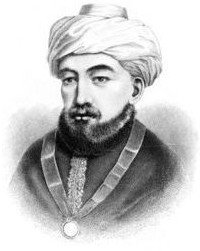
(Ugolino, Blaisio. Maimonides. Engraving. 1744. Wikimedia Commons. https://commons.wikimedia.org/wiki/File:Maimonides-2.jpg.)

An 18th-century engraving of Moses Maimonides (Rambam), the medieval Jewish philosopher and codifier of Jewish law, depicted in traditional attire with a turban, based on a 1744 portrait from the Rambam Institute.
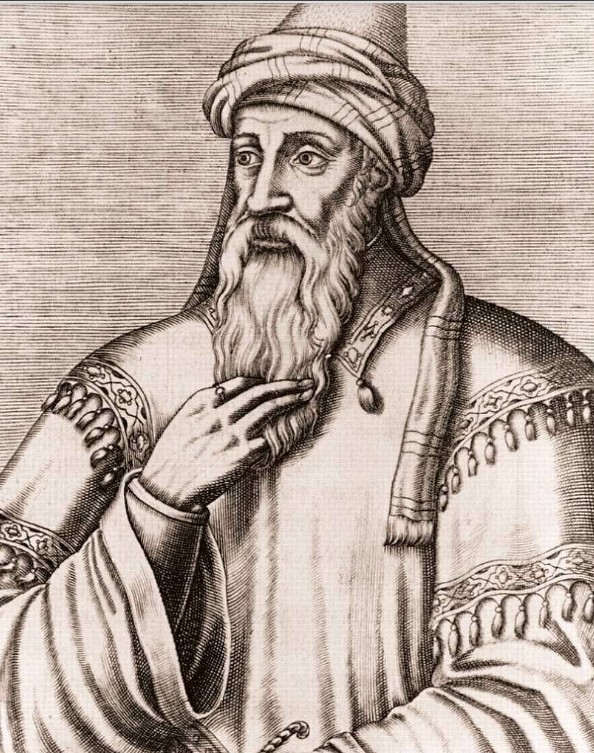
(Unknown. Maimonides. Engraving. 19th century. PICRYL Public Domain Media. https://picryl.com/media/maimonides-185c39.)
A public domain portrait engraving of Maimonides, the Sephardic rabbi and physician, shown in contemplative pose with beard and robes, illustrating his authorship of the Mishneh Torah and Guide for the Perplexed.
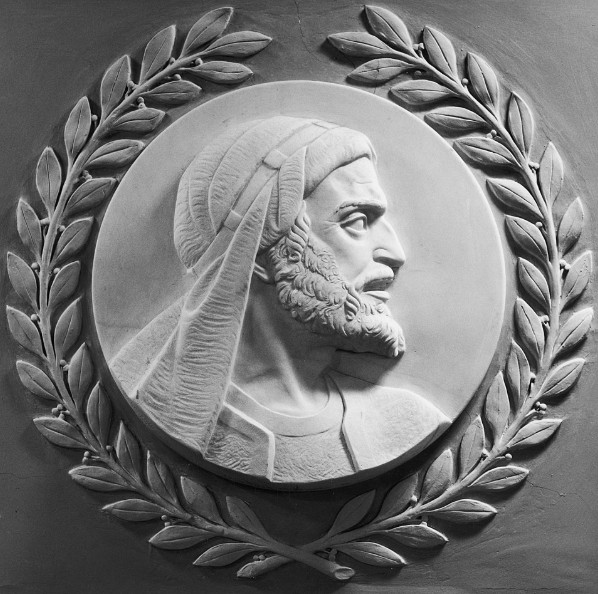
(Unknown. Maimonides Bas-Relief in the U.S. House of Representatives. Sculpture. 20th century. Wikimedia Commons. https://commons.wikimedia.org/wiki/File:Maimonides_bas-relief_in_the_U.S._House_of_Representatives_chamber_cropped.jpg.)

A cropped bas-relief sculpture of Maimonides in the U.S. House of Representatives chamber, portraying the philosopher in profile with laurel wreath, honoring his contributions to ethics, law, and rational theology.