Mahabharata

MAHABHARATA

Mahabharata
(“https://www.gutenberg.org/files/19630/19630-h/images/frontespiece.jpg”)

Composed: Circa 400 BCE–400 CE, Ancient India (based on scholarly estimates for oral composition and later written compilation)

Finalized: Circa 4th century CE (approximate date of the written text in its current form)

Notable

  • Epic Narrative of the Bharata Dynasty: One of the two major Sanskrit epics of ancient India, recounting the Kurukshetra War and the fates of the Pandava and Kaurava cousins, blending history, mythology, and philosophy.
  • Bhagavad Gita Inclusion: Contains the Bhagavad Gita, a sacred dialogue between Arjuna and Krishna, exploring dharma (duty), yoga, and spiritual liberation, revered as a standalone philosophical text.
  • Moral and Ethical Complexity: Presents intricate dilemmas on duty, righteousness, and human relationships, challenging readers to navigate the gray areas of morality through its characters’ choices.

400 BCE – 400 CE

Biography

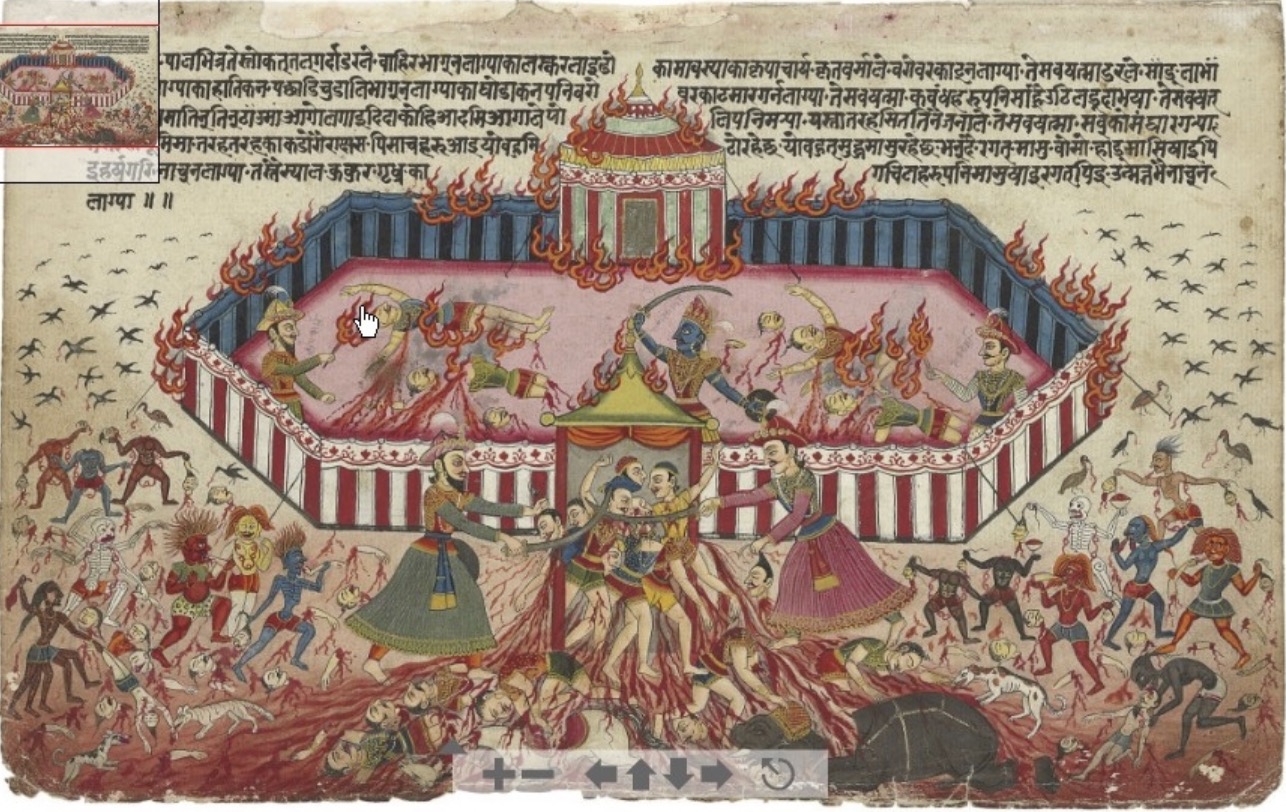
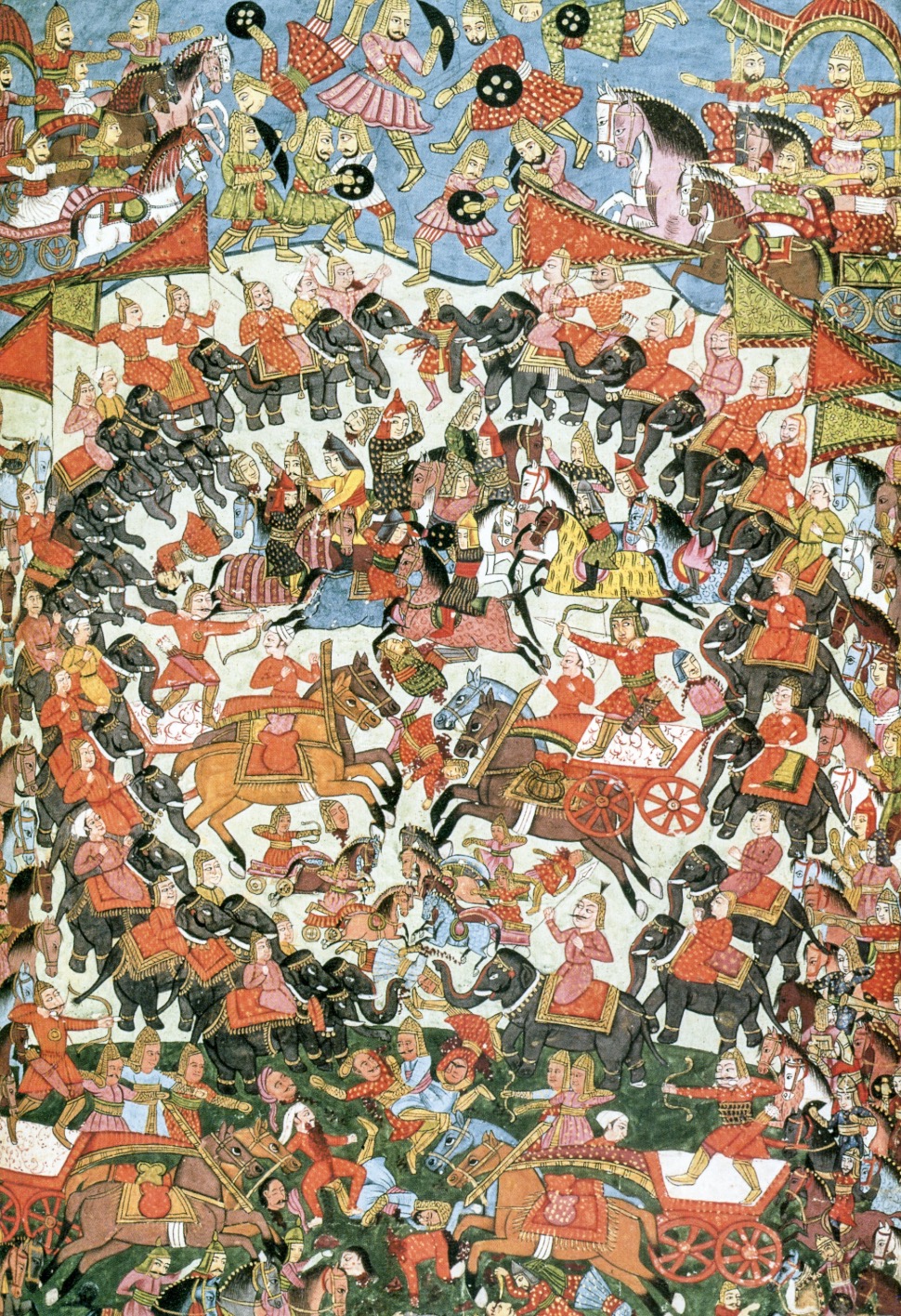
Mahabharata is one of the two major Sanskrit epics of ancient India (the other is Ramayana) that is attributed traditionally to the sage Vyasa, who narrated the events of the Kurukshetra War and its background into a structured poem, while Lord Ganesha transcribed it. It consists of over 100,000 verses. Its exact date of composition remains unknown, but scholars believe that the written epic took shape anywhere between the 3rd or 4th century BCE and the 4th century CE. The Mahabharata is a complex text that addresses various aspects of human life, including ethics, morality, duty, and the nature of existence. It is primarily focused on the Kurukshetra War (battle for the throne of Hastinapura), a climactic battle between two factions of a royal family, the Pandavas (sons of Pandu) and the Kauravas (sons of Dhritarashtra).

The Mahabharata is not just a work of literature but also a religious and philosophical text that has had a profound influence on Indian culture and society. It is considered one of the foundational texts of Hinduism and has been the subject of numerous interpretations, adaptations, and commentaries over the centuries. It is divided into 18 books (i.e., parvas), and each tells different aspects of the story. Some of the key books include Adi Parva (The Book of the Beginning), Sabha Parva (The Book of the Assembly Hall), and Bhagavad Gita (The Song of God – showing conversation between Prince Arjuna and Lord Krishna). The Mahabharata contains various subplots, stories, and philosophical discourses.

Bibliography & Major Works

Mahabharata – Encyclopedia Britannica.
https://www.britannica.com/topic/Mahabharata

Ganguli, Kisari Mohan (trans.). “The Mahabharata of Krishna-Dwaipayana Vyasa.” Sacred Texts.
https://www.sacred-texts.com/hin/maha/index.htm

“Harivamsa.” Encyclopedia Britannica.
https://www.britannica.com/topic/Harivamsa

Swami Sri Ramsukhdas ji Maharaj. “The Bhagavad Gita.” https://archive.org/search.php?query=creator%3A%22Swami+Sri+Ramsukhdas+ji+Maharaj%22

Beck, Brenda E. The Mahabharata. Ancient History Encyclopedia.
https://www.ancient.eu/Mahabharata/

“Mahabharata.” National Museum, New Delhi.
https://www.nationalmuseumindia.gov.in/prodCollections.asp?pid=46&id=1&lk=dp1

Influences & Notable For

Notable For

Conflict between the Pandavas and the Kauravas, which revolves around the Kurukshetra War.

The Mahabharata is renowned for its character development, particularly the complex personalities of the main protagonists (Pandavas) such as Arjuna, Yudhishthira, Bhima, Nakula, and Sahadeva.

The Mahabharata is best known for the Bhagavad Gita, a sacred text that consists of conversation between Lord Krishna and Prince Arjuna on the battlefield of Kurukshetra, where Krishna enlightens and guides Arjuna with spiritual wisdom. It is considered one of the most important philosophical works in Hinduism.

(Source: Hopkins, E. Washburn (trans.). “The Great Epic of India: Character and Origin of the Mahabharata.” University of Calcutta, 1901.)

Influences

Significant Intellectual and Cultural Influences: Rooted in Vedic tradition, the Mahabharata has a profound influence on Indian culture, society, and the religious teachings of Hinduism.

Contributions to Fields or Disciplines: Crucial for literary studies, philosophy, theology, ethics, and cultural history within South Asia. The epic addresses fundamental questions of morality, duty, and righteousness in Hindu mythology.

Notable Achievements and Recognition: Known for the Bhagavad Gita, an influential philosophical and spiritual dialogue between Lord Krishna and Prince Arjuna, contained within the epic. It contains philosophical discourses on topics such as dharma (duty), karma (action), and moksha (liberation), which have been central to Hindu thought.

Famous quotes
  • “One who performs his duty without attachment, surrendering the results unto the Supreme Lord, is unaffected by sinful action.” – Bhagavad Gita, Chapter 5, Verse 10

  • “For him who has conquered the mind, the mind is the best of friends; but for one who has failed to do so, his mind will remain the greatest enemy.” – Bhagavad Gita, Chapter 6, Verse 6

  • “When righteousness (dharma) is destroyed, it destroys; when righteousness is protected, it protects.” — Mahabharata, Shanti Parva, Chapter 188

  • “Divinity blossoms there where women are honoured.” — Mahabharata, Anushasana Parva, Chapter 113

  • “It is better to live your own destiny imperfectly than to live an imitation of somebody else’s life with perfection.” – Mahabharata, Book 12, Section 289

Legacy & Modern Significance

Historical and contemporary relevance: The Mahabharata continues to significantly influence Indian literature, culture, religious practices, and ethical thought.

Documented modern references or adaptations: It has been widely adapted in literature, theater, film, television, and art across South Asia and globally. It has countless interpretations in various art forms.

Current scholarly interpretations and discussions: Extensive scholarship explores narrative complexity, philosophical insights, historical contexts, and cultural significance.

Source of Guidance: The Mahabharata remains a source of moral and spiritual guidance for many Hindus and scholars alike. Its philosophical discourses continue to provoke deep reflection and debate on the nature of existence and human behavior.

Modern Moments & Impact on 21st Century

In 2018, a new English translation of the Mahabharata by acclaimed translator Bibek Debroy was released, bringing the epic to a wider global audience.

The Mahabharata continues to be a subject of academic conferences and symposia, such as the International Conference on the Mahabharata held at the University of Delhi in 2020.

Digital resources and online platforms have made the Mahabharata more accessible than ever, with websites offering interactive versions of the epic and scholarly resources for further study.

From the early 2000s to now, global universities include Mahabharata teachings in courses on World Literature, Comparative Religion, and Philosophy. It continues to help people navigate the chaos of modern life with wisdom, courage, and clarity.

Suggested Reading and Resources

Debroy, Bibek (trans.). “The Mahabharata: Volume 1.” Penguin Books, 2015.

Menon, Ramesh (trans.). “The Mahabharata: A Modern Rendering.” iUniverse, 2006.

Brockington, John. “The Sanskrit Epics.” Brill, 1998.

“The Cambridge Companion to the Mahabharata,” edited by Vasudeva, Shashi. Cambridge University Press, 2011.

“Remembering the Mahabharata: War and Peace in the Global South,” edited by Chakravarti, Uma. Routledge, 2020.

Swami Chidbhavananda (trans.). The Bhagavad Gita. Tirupparaitturai: Ramakrishna Tapovanam, 1980.