
LUTHER
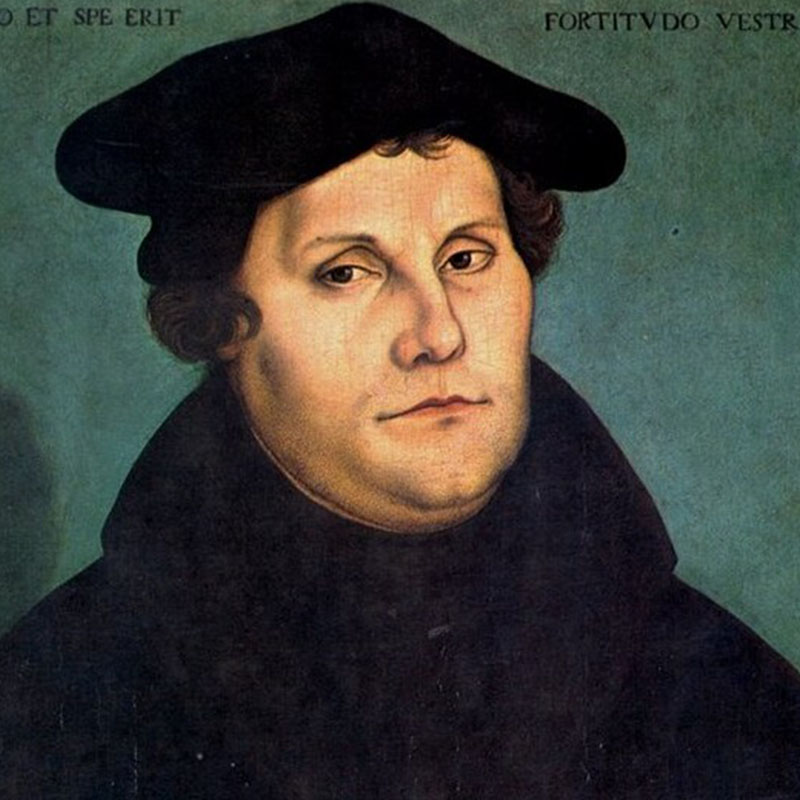
(Cranach the Elder, Lucas. Martin Luther. Oil on panel. 1529. Uffizi Gallery, Florence. Wikimedia Commons. https://commons.wikimedia.org/wiki/File:Martin_Luther,_1529.jpg.)

Born: November 10, 1483, Eisleben, Holy Roman Empire
Died: February 18, 1546, Eisleben
Notable
- Author of the 95 Theses: Sparked the Reformation; challenged indulgences and papal power.
- Sola Scriptura, Sola Fide, Sola Gratia: Core Protestant principles.
- German Bible Translation: Standardized High German; “Luther Bible” still in use.
- Hymnody: “Ein feste Burg ist unser Gott” (A Mighty Fortress).
1500–1600 AD works
Biography
Martin Luther (1483–1546 CE) was a German monk, theologian, professor, and reformer whose 95 Theses (1517) ignited the Protestant Reformation, fracturing Western Christendom. Born in Eisleben (Saxony), he studied law at Erfurt before a 1505 thunderstorm vow led him to join the Augustinian friars. Ordained in 1507, he earned a doctorate in theology (1512) and taught at Wittenberg University. Tormented by guilt and Anfechtungen (spiritual trials), Luther developed a theology of justification by faith alone (sola fide), rejecting indulgences and papal authority. Excommunicated in 1521, he translated the Bible into German, married Katharina von Bora (1525), and shaped Lutheran confessional identity. His hymns, catechisms, and polemics transformed worship, education, and politics.
Modern scholars view Luther as a pivotal figure in modernity: catalyst of individualism, vernacular literacy, and secular authority, while critiquing his anti-Jewish writings and role in peasant revolts. His legacy dominates Protestantism, influences Catholicism (via ressourcement), and persists in global Christianity.
Influences & Notable For
Author of the 95 Theses: Sparked the Reformation; challenged indulgences and papal power.
Sola Scriptura, Sola Fide, Sola Gratia: Core Protestant principles.
German Bible Translation: Standardized High German; “Luther Bible” still in use.
Hymnody: “Ein feste Burg ist unser Gott” (A Mighty Fortress).
Famous quotes
“Here I stand, I can do no other. God help me. Amen.”
– Diet of Worms, April 18, 1521 (traditional, likely apocryphal)
“Faith is a living, daring confidence in God’s grace.”
– Freedom of a Christian
“The Bible is the cradle wherein Christ is laid.”
– Preface to the Old Testament
Legacy & Modern Significance
Historical Impact: Fragmented Christendom; inspired Calvin, Zwingli, Anabaptists.
Political: Cuius regio, eius religio (Peace of Augsburg, 1555).
Cultural: Vernacular literacy, congregational singing, work ethic.
Modern Reappraisal: Ecumenical dialogue (Lutheran-Catholic Joint Declaration, 1999); critiques of antisemitism.
Modern Moments & Impact on the 21st Century
1955–1986: Luther’s Works American Edition (55 vols.); expanded 2009–.
1999: Joint Declaration on Justification (Vatican & Lutheran World Federation).
2017: 500th Reformation anniversary; global events, Pope Francis in Lund.
Ongoing: Weimar Edition digitized (luther.werke.de); Project Wittenberg (texts).
Ongoing: Core in theology, history, German studies (Heidelberg, Yale, Uppsala).
Ongoing: Stanford/IEP maintain peer-reviewed entries.
2020s: Luther in digital theology, AI sermon analysis, Reformation tourism (Wittenberg UNESCO).
Influences & Intellectual Context
Augustinian Theology: Via Staupitz; grace, predestination, anti-Pelagian.
Scriptural Humanism: Erasmus, Reuchlin; ad fontes method.
Medieval Mysticism: Tauler, Theologia Deutsch.
Scholasticism: Critiqued Ockham, Biel; rejected Aristotle in theology.
Suggested Reading & Resources
Secondary Literature (Scholarship)
Oberman, Heiko A. Luther: Man Between God and the Devil. Yale University Press, 1989.
Brecht, Martin. Martin Luther (3 vols.). Fortress Press, 1985–1993.
Hendrix, Scott H. Martin Luther: Visionary Reformer. Yale University Press, 2015.
Kolb, Robert. Martin Luther: Confessor of the Faith. Oxford University Press, 2009.
Marty, Martin E. Martin Luther: A Life. Penguin, 2004.
Archival or Online Sources
Project Wittenberg: English texts – https://lutheranreformation.org
Lutheran World Federation: Ecumenical documents – https://lutheranworld.org
Internet Encyclopedia of Philosophy: Luther – https://iep.utm.edu/luther/
Stanford Encyclopedia of Philosophy: Luther – https://plato.stanford.edu/entries/luther/
REFORMER OF CONSCIENCE AND COURAGE
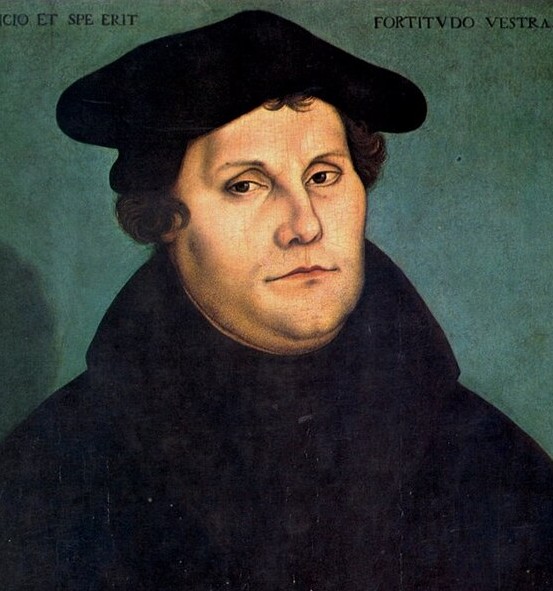
(Cranach the Elder, Lucas. Martin Luther. Oil on panel. 1529. Uffizi Gallery, Florence. Wikimedia Commons. https://commons.wikimedia.org/wiki/File:Martin_Luther,_1529.jpg.)
Lucas Cranach the Elder's 1529 oil portrait of Martin Luther, the German reformer, in black robes with a resolute gaze, symbolizing his Ninety-Five Theses and role in sparking the Protestant Reformation through justification by faith.
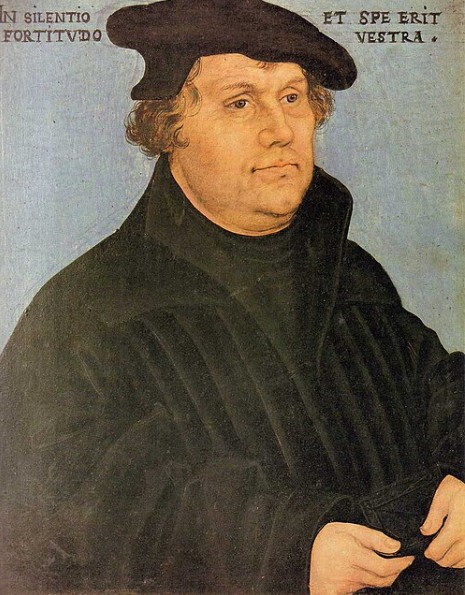
(Cranach the Elder, Lucas. Martin Luther. Engraving. 1532. Wikimedia Commons. https://commons.wikimedia.org/wiki/File:Martin-Luther-1532.jpg.)

A 1532 engraving by Lucas Cranach the Elder depicts Martin Luther in profile, with a doctoral cap and robes, emphasizing his theological writings like the Small Catechism and translation of the Bible into German.
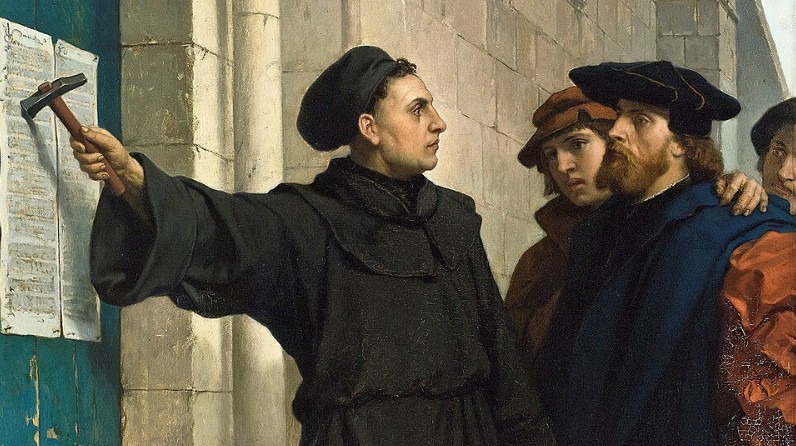
(Unknown. Luther's Ninety-Five Theses. Woodcut. ca. 1550. Wikimedia Commons. https://commons.wikimedia.org/wiki/File:Luther95theses.jpg.)

A 16th-century woodcut illustration of Martin Luther's Ninety-Five Theses, showing the reformer nailing them to the Wittenberg church door in 1517, capturing the iconic act that ignited widespread religious reform across Europe.