
LUKE
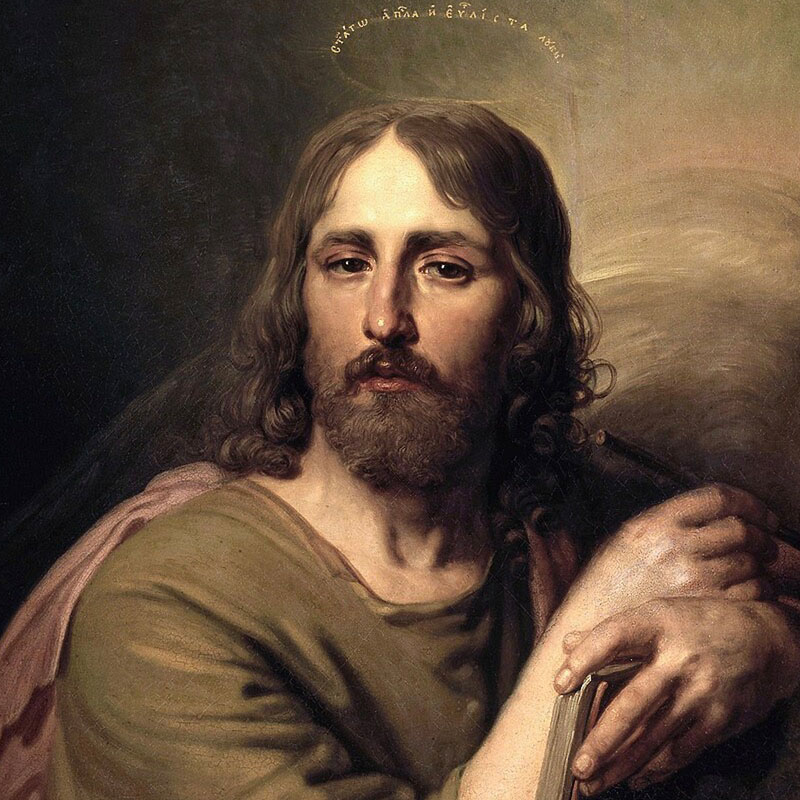
https://www.ap.church/saints/st--luke-the-evangelist
Why might a physician have written a Gospel?
First century A.D. · Companion of Paul
Among Christians, Luke is customarily regarded as the author of the Third Gospel and the Acts of the Apostles. A companion of the apostle Paul, he was the most literary of the New Testament writers. As with most early Christians, information about his life is scarce.
The Gospel · Acts
One author, two volumes
- Known for: Customarily regarded as the author of the Third Gospel and the Acts of the Apostles
- Style: The most literary of the New Testament writers
- Profession: Very likely a physician, given the medical terms in his writings and other sources
- Background: A Gentile
- With Paul: Intimately involved in Paul’s missions, and present during his imprisonment in Rome
Could a faith born among Jews be meant for everyone?
Hover or tap each idea to follow Luke’s answer
- To All NationsLuke was careful to stress the universality of the Christian faith.“That repentance and forgiveness of sins should be preached in his name to all nations.” (Luke 24:47)
- Christianity and RomeLuke was perhaps the first to connect Roman history and the Roman Empire with Christianity.
- Pilate’s VerdictLuke’s account does not place the blame for Christ’s death on the Romans. His Gospel notes on three occasions that Pilate did not find Jesus guilty.
- Open to All BelieversBy noting the ritual differences between Judaism and Christianity in the Acts of the Apostles, Luke made it clear that Christianity was open to all believers, not just to Jews.
- The Early ChurchThe Book of Acts is profoundly important for its account of early church history and its guidance on church matters such as the Eucharist and baptism.
Luke’s importance to the Christian tradition lies, fittingly, in his writings.
Through the Third Gospel and the Acts of the Apostles, Luke stressed that the faith was for all nations and recorded the history of the early church. In doing so, he helped provide the solid foundation the church would need when its members realized that the second coming was not imminent.
Where to read more about Luke, his Gospel and the Acts of the Apostles.
- 1960The Theology of St. LukeConzelmann, Hans · Harper & Row (reissued by Fortress Press, 1982)
- 1981The Gospel According to Luke I–IX and X–XXIV (Anchor Bible)Fitzmyer, Joseph A. · Doubleday, 1981 and 1985
- 1991The Gospel of Luke (Sacra Pagina)Johnson, Luke Timothy · Liturgical Press
- 1997The Gospel of Luke (New International Commentary on the New Testament)Green, Joel B. · Eerdmans
- 1998The Acts of the Apostles: A Socio-Rhetorical CommentaryWitherington, Ben, III · Eerdmans
- The Gospel of Luke and the Acts of the Apostles (King James Version)Both books, free from Project Gutenberg.LukeActs
- Codex VaticanusOne of the oldest nearly complete Greek Bibles, digitized by the Vatican Library.digi.vatlib.it
- Codex SinaiticusThe fourth-century manuscript, viewable online.codexsinaiticus.org
- Britannica: Saint LukeA short biography of Luke and overview of his writings.britannica.com
- Catholic Encyclopedia: Gospel of Saint LukeA detailed older survey of Luke’s life, authorship and Gospel.newadvent.org
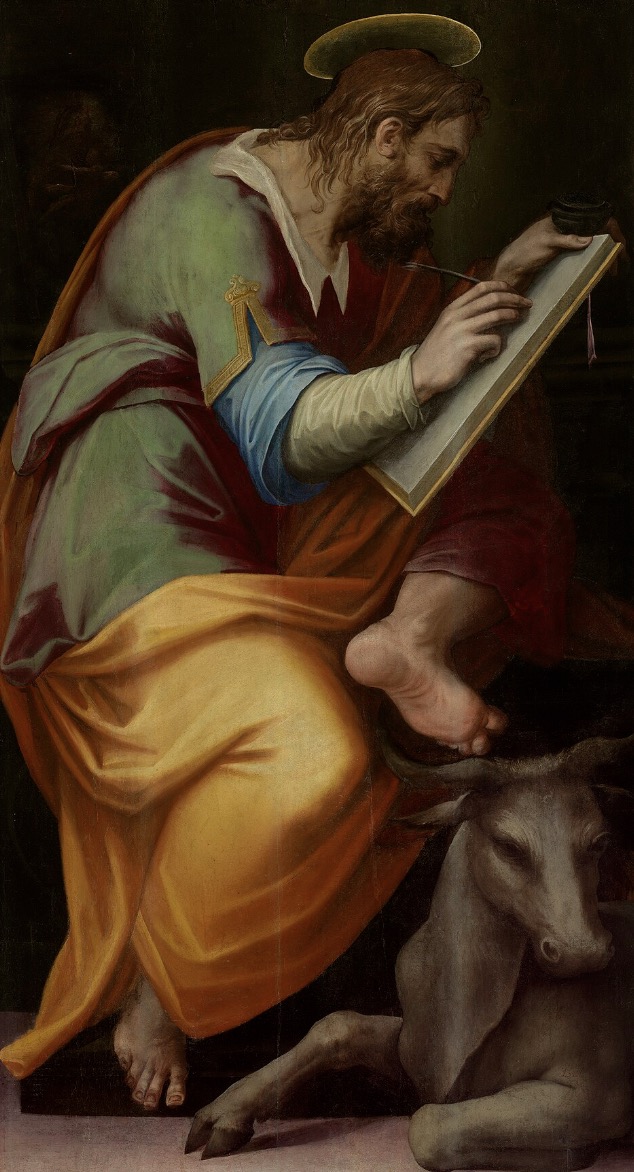
(Vasari, Giorgio. "Saint Luke." Oil on panel. 1570–1571. National Gallery of Art, Washington, D.C. Wikimedia Commons. https://commons.wikimedia.org/wiki/File:Saint_Luke_A20061.jpg.)
A 16th-century oil painting by Giorgio Vasari depicting Saint Luke the Evangelist with his traditional attributes of a winged ox and a book, portraying him as a scholarly healer.
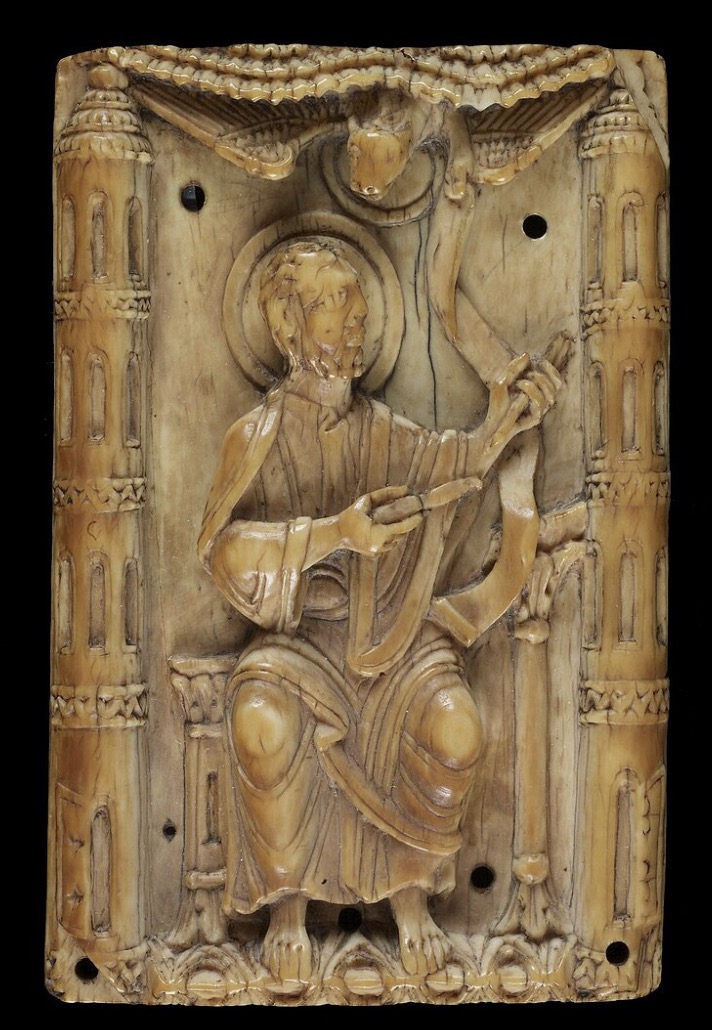
(Unknown German artist. "Saint Luke the Evangelist." Tempera on panel. 15th century. Walters Art Museum, Baltimore. Wikimedia Commons. https://commons.wikimedia.org/wiki/File:German_-_Saint_Luke_the_Evangelist_-_Walters_71139_(2).jpg.)
A medieval German panel painting of Saint Luke the Evangelist, emphasizing his role as physician and author with symbolic elements like the ox and medical tools.
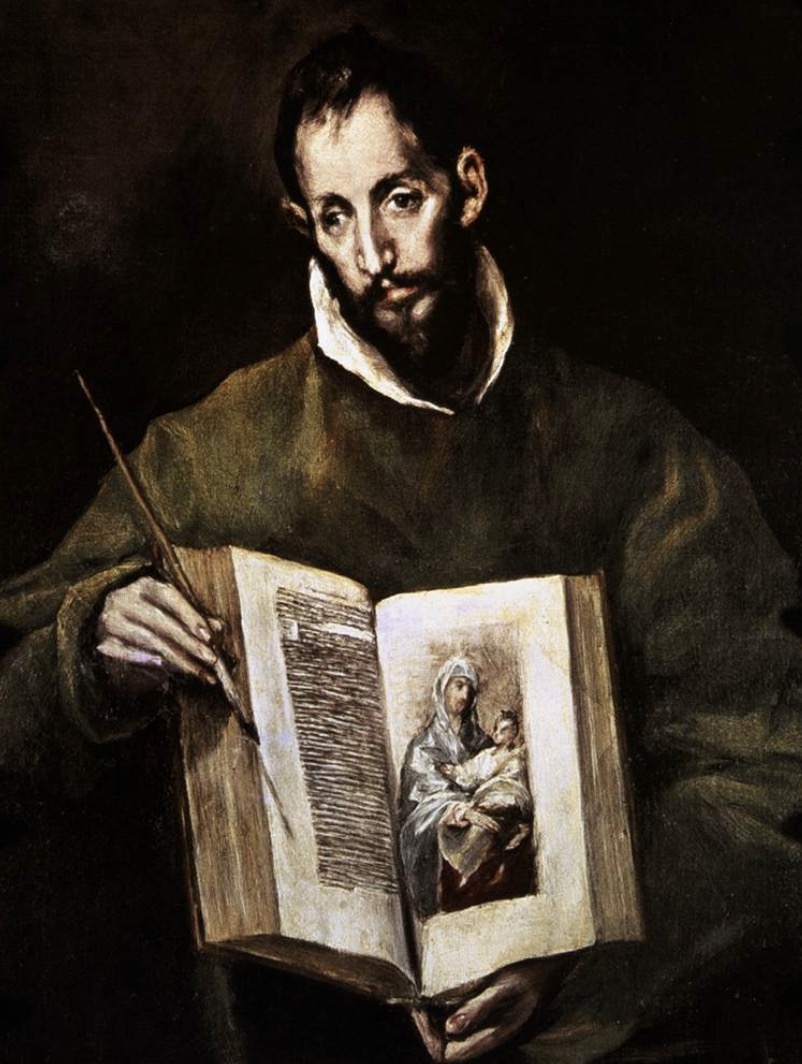
(El Greco. "Saint Luke the Evangelist." Oil on canvas. Circa 1605. Private collection. Wikimedia Commons. https://commons.wikimedia.org/wiki/File:El_Greco_-_St_Luke_-_WGA10577.jpg.)
An expressive Mannerist portrait by El Greco of Saint Luke, shown in dynamic pose with a pen and Gospel, capturing the intensity of his evangelistic mission.