
KANT
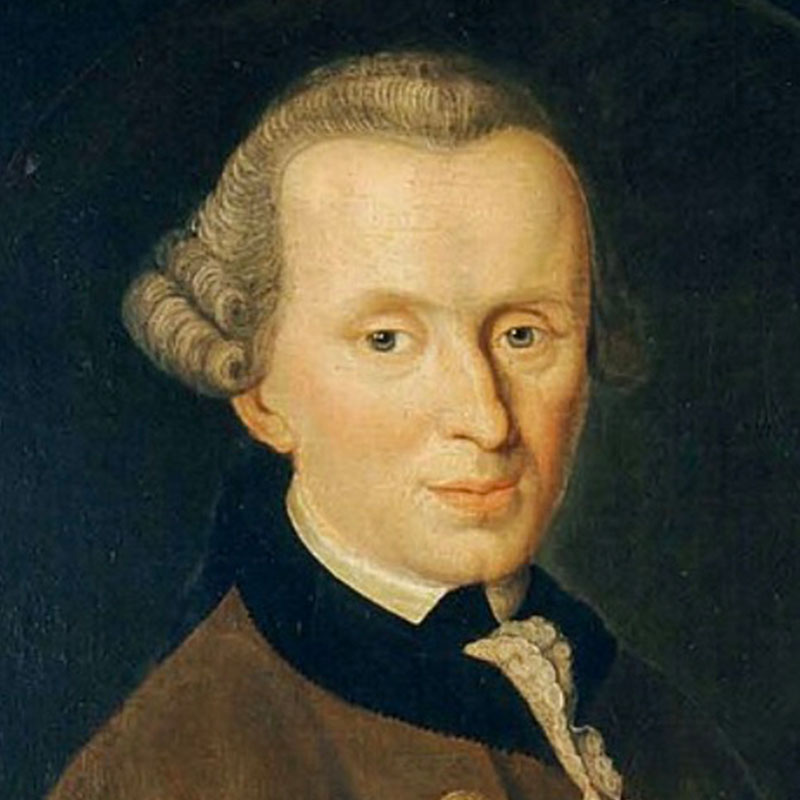
https://www.worldhistory.org/image/18360/immanuel-kant-1768/
Born: 1724, Königsberg, Prussia
Died: 1804, Königsberg, Prussia)
Notable
-
ranscendental Idealism: Argued that the mind actively structures experience through space, time, and categories.
-
Critique of Reason: Distinguished phenomena from noumena, defining the limits of human knowledge.
-
Synthetic A Priori: Identified necessary truths that organize experience, shaping modern philosophy.
1700–1800 AD works
Biography
Immanuel Kant (1724–1804) was a German philosopher who stands as one of the most important figures in Western philosophy. Born and raised in Königsberg, Prussia, he spent his entire life there, teaching, thinking, and writing.
Kant’s work bridged the gap between rationalist and empiricist traditions. With his Critique of Pure Reason, he changed the way philosophers think about knowledge, arguing that the human mind actively shapes our experience of the world. In ethics, he introduced the idea of the categorical imperative—a universal moral law based on reason and duty.
Kant’s ideas laid the groundwork for German Idealism and still shape debates in philosophy, ethics, political theory, and even cognitive science today.
Influences & Notable For
Notable For
Creating transcendental idealism, which explains how the mind structures experience.
Developing the categorical imperative, a rational standard for moral action.
Laying the foundation for modern epistemology and deontological ethics.
Bridging Enlightenment ideals with deep questions about freedom, morality, and human dignity.
Influencing nearly every major philosopher after him, including Hegel, Rawls, and Habermas.
Influences
Kant was influenced by both rationalists like Leibniz and empiricists like Hume. Hume’s skepticism about causation famously “awoke Kant from his dogmatic slumber.” In response, Kant argued that while all our knowledge begins with experience, it does not all arise from experience.
As a figure of the Enlightenment, he emphasized reason, autonomy, and moral law, but he also critiqued the limits of pure reason and the dangers of blind faith in it.
Famous quotes
- “Act only according to that maxim whereby you can at the same time will that it should become a universal law.” — Groundwork of the Metaphysics of Morals
- “Science is organized knowledge. Wisdom is organized life.”
- “Enlightenment is man’s emergence from his self-imposed immaturity.”
Legacy & Modern Significance
Kant’s influence is hard to overstate. He shaped nearly every major field in philosophy.
Ethics: Kantian ethics is a foundation for discussions on duty, rights, and justice.
Epistemology: He revolutionized how we understand perception and knowledge.
Politics: His ideas helped inspire concepts like cosmopolitanism and perpetual peace.
Education & Enlightenment: He defined enlightenment as thinking for oneself.
His work continues to inform philosophy, legal theory, cognitive science, and debates about autonomy and moral responsibility.
Modern Moments & Impact on 21st Century
Kant’s ethical framework underpins human rights law, bioethics, and AI ethics.
His view of the mind shapes cognitive science and theories of perception.
His notion of enlightenment guides ideas of civic education, freedom of thought, and democratic participation.
Philosophers, scientists, and policymakers alike turn to Kant for guidance on universal moral norms.
Studied in virtually every philosophy curriculum around the globe.
Suggested Reading and Resources
Secondary Literature
Paul Guyer – Kant (Routledge, 2006)
Henry E. Allison – Kant’s Transcendental Idealism (Yale University Press, 1983)
Allen W. Wood – Kantian Ethics (Cambridge University Press, 2008)
Archival and Online Resources
Stanford Encyclopedia of Philosophy – Kant
Internet Encyclopedia of Philosophy – Kant
Project Gutenberg – Kant’s Works
Kant on the Web (Princeton)
FATHER OF MODERN PHILOSOPHY
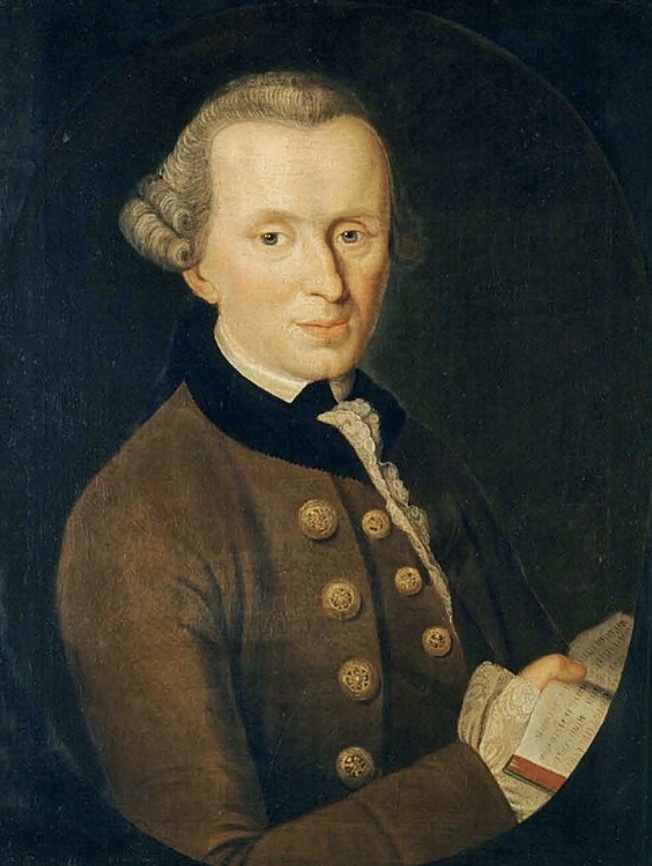
(Johann Gottlieb Becker. *Immanuel Kant (1724–1804)*. 1768. Oil on canvas. Schiller-Nationalmuseum, Marbach am Neckar, Germany. http://www.philosovieth.de/kant-bilder/bilddaten.html.)
This 1768 oil portrait by Johann Gottlieb Becker captures the philosopher Immanuel Kant at age 44, during his pre-critical period. Housed in the Schiller-Nationalmuseum in Marbach am Neckar, Germany, the painting offers a rare glimpse of the thinker whose later *Critique of Pure Reason* would redefine modern philosophy.
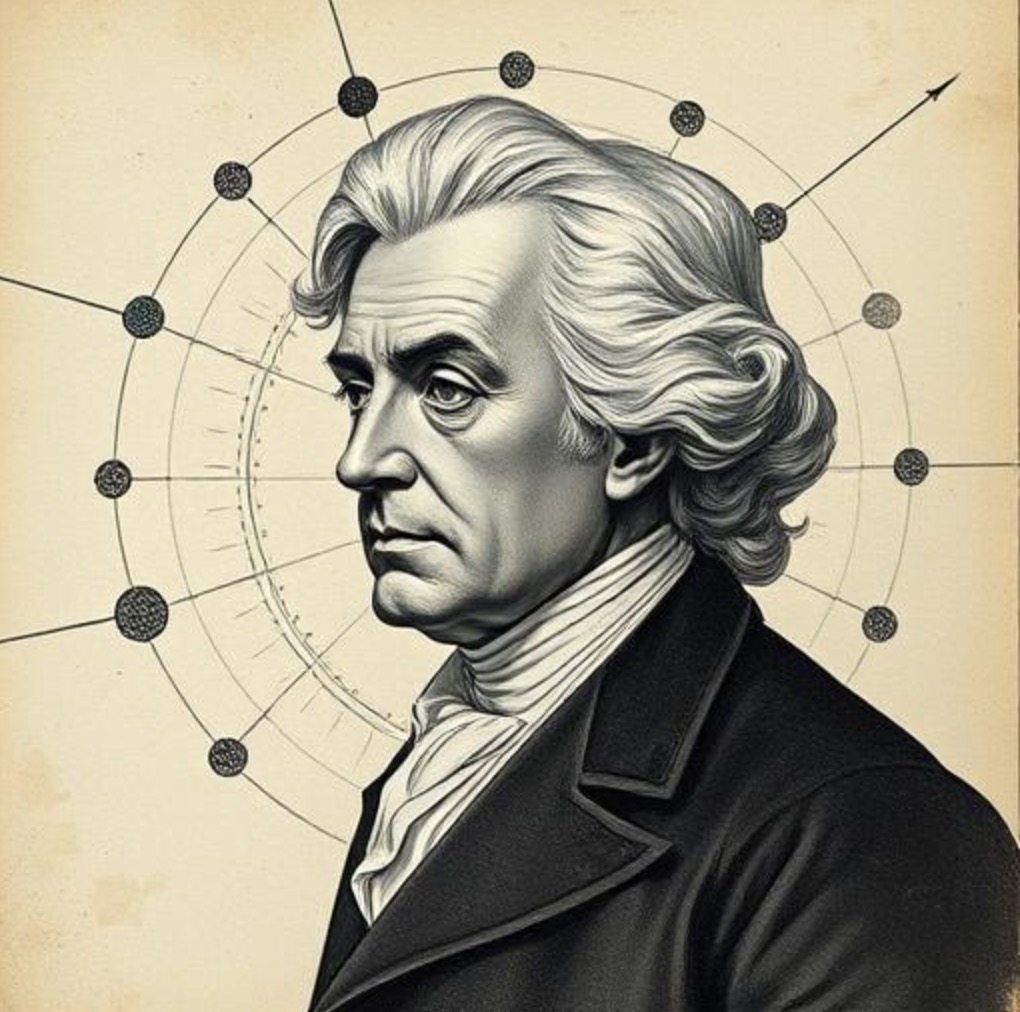
(AI-generated image)
Immanuel Kant (1724–1804), a key German Enlightenment thinker, bridged empiricism and rationalism through his Copernican revolution, asserting the mind structures reality. In Critique of Pure Reason (1781), he reconciled Newtonian science with skepticism, limiting knowledge to phenomena via synthetic a priori truths. His categorical imperative in Groundwork (1785) founded deontological ethics on universal reason. Works on perpetual peace (1795) influenced global institutions, and Critique of Judgment (1790) shaped Romanticism. Kant's critical philosophy propelled German Idealism, liberalism, and modern epistemology.
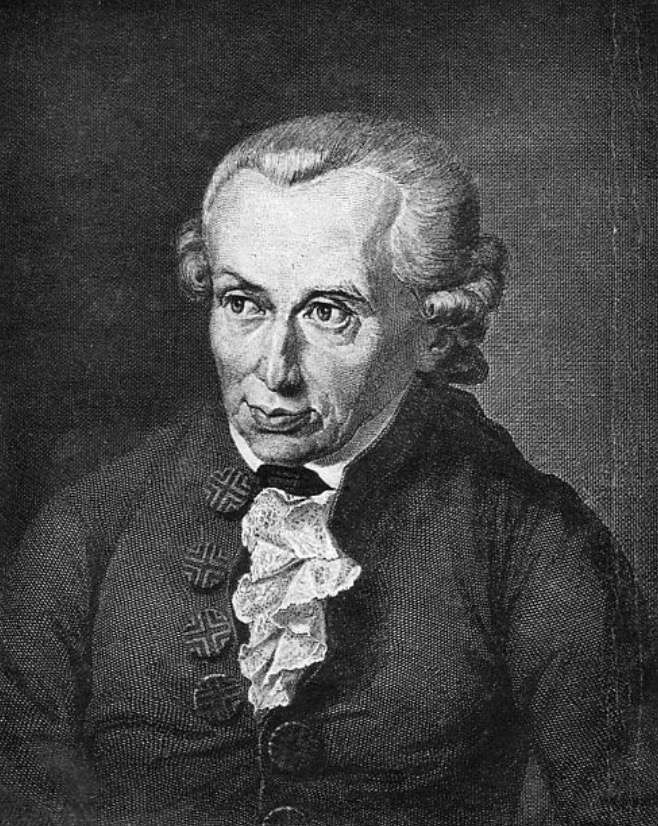
(J. L. Raab, after Döbler. Immanuel Kant. Before 1899. Steel engraving. https://web.archive.org/web/20060223123905/http://www.jhu.edu/~phil/kant-hegelconference/main.htm.)
This steel engraving by J. L. Raab, based on an earlier portrait by Döbler, presents a stern and contemplative Immanuel Kant. Produced before 1899, it reflects the enduring 19th-century fascination with the philosopher’s iconic image long after his death.