JOHN
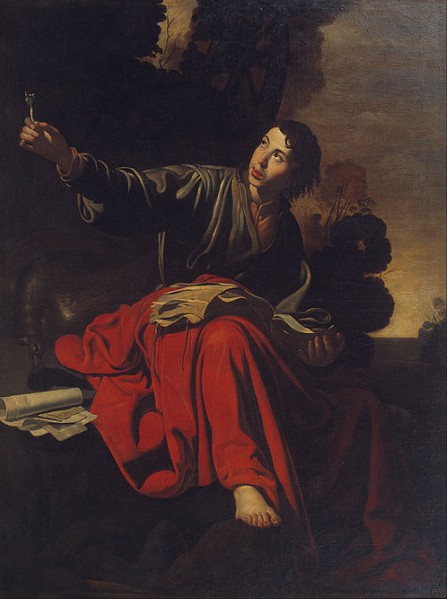
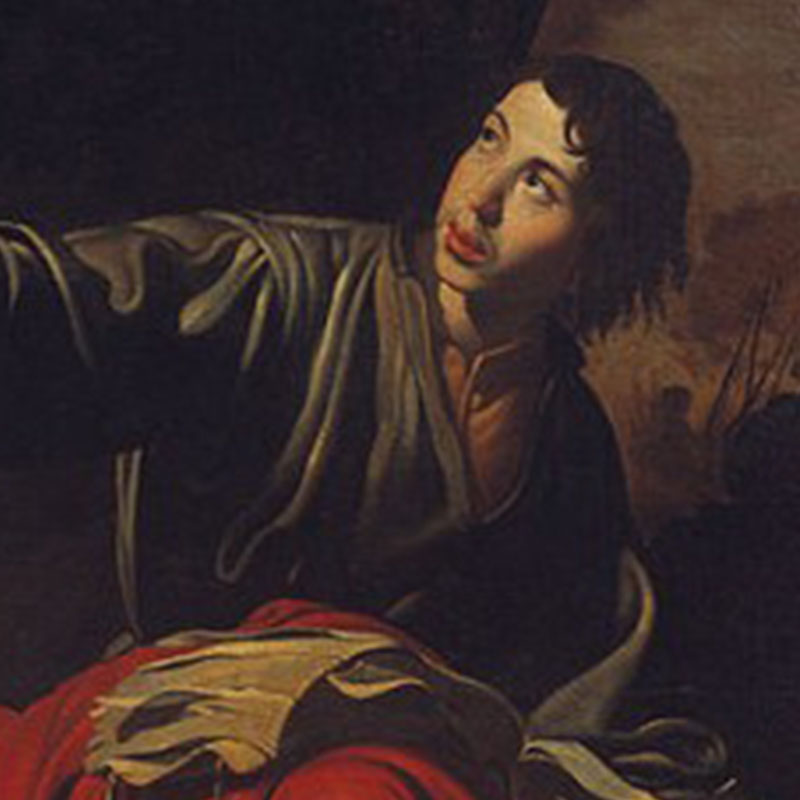
(Velyazator, Prokopiy Chirikov (attributed). Saint John the Evangelist at Patmos. Oil on canvas. 1695. State Tretyakov Gallery, Moscow. Wikimedia Commons. https://commons.wikimedia.org/wiki/File:Saint_John_the_Evangelist_at_Patmos_-_Google_Art_Project.jpg.)
Born: 6 AD in Bethsaida, Galilee during the Roman Empire
Died: 100 AD (at the age of 93)
Notable
-
Beloved Disciple: One of Jesus’ closest followers and part of His inner circle.
-
Witness to Key Events: Present at the Transfiguration, Gethsemane, and the Crucifixion.
-
Christian Writings: Traditionally credited with the Gospel of John, three letters, and Revelation.
-
Theological Legacy: Emphasized love, faith, and the divinity of Christ.
6 – 100 AD
Biography
John the Apostle, also known as Saint John the Beloved, was one of Jesus’ twelve disciples according to the New Testament. He is traditionally considered to be the author of the Gospel of John, three epistles, and the Book of Revelation. He was born in 6 AD at Bethsaida in Galilee during the Roman Empire. John was the son of Zebedee and Salome and is listed as the youngest apostle. He is the brother of James the Greater. John and James were brothers who worked as fishermen with their father. When Jesus called them to follow Him, they left their nets right away. He gave them the nickname “Sons of Thunder” because of their fiery temperament.
John became part of Jesus’ inner circle along with Peter and James, witnessing key events like the Transfiguration and Jesus’ agony in Gethsemane. He is traditionally identified as “the disciple whom Jesus loved,” mentioned in the Gospel of John, and was the only apostle present at the crucifixion, where Jesus entrusted His mother Mary to John’s care. After Jesus’ resurrection and ascension, John became a pillar of the early church in Jerusalem alongside Peter. According to tradition, he later moved to Ephesus in modern-day Turkey, where he led the Christian community and possibly wrote his gospel. During the persecution under Emperor Domitian, John was exiled to the island of Patmos, where he reportedly wrote Revelation. After Domitian’s death, he returned to Ephesus and died naturally around 100 AD, making him the only apostle not to die as a martyr. John’s writings emphasize love, light versus darkness, and the divine nature of Christ, profoundly shaping Christian theology. His symbol in Christian art is the eagle, representing the soaring, mystical nature of his gospel.
Bibliography & Major Works
The primary sources associated with John the Apostle are centered around his contributions to early Christian literature, particularly in the New Testament. These early gospels and his writings have left a profound impact on spirituality and Christian theology for centuries. Some of his primary key sources include the Gospel of John, the Letters of John, and the Book of Revelation.
His primary sources are considered foundational texts in the Western philosophical tradition, leaving a profound impact on spirituality and Christian theology. John’s primary sources are characterized by their clarity, rigor, and depth, making them essential reading for anyone interested in the history of Romans or the life of Christ. These texts have profoundly shaped Western Christianity and continue to inspire believers worldwide with their profound spiritual insights.
Influences & Notable For
John the Apostle is best known for his role as one of Jesus’ closest disciples and his significant contributions to early Christian literature. He is most renowned for being part of Jesus’ inner circle, witnessing key events such as the Transfiguration and Jesus’ prayer in Gethsemane. He is traditionally identified as “the disciple whom Jesus loved,” a title given in the Gospel of John, highlighting his close relationship with Jesus. John is best known for his writings, which include the Gospel of John, three letters (1 John, 2 John, 3 John), and the Book of Revelation. His presence at the crucifixion is notable, as he was the only apostle who stayed by Jesus’ side, and Jesus entrusted him with the care of His mother, Mary. John’s teachings and writings have had a lasting impact on Christian theology, emphasizing love, faith, and the divinity of Jesus Christ.
Famous quotes
“For God so loved the world that He gave His one and only Son, that whoever believes in Him shall not perish but have eternal life.” — John 3:16
“I am the way and the truth and the life. No one comes to the Father except through Me.” — John 14:6
“Peace I leave with you; My peace I give you. I do not give to you as the world gives. Do not let your hearts be troubled and do not be afraid.” — John 14:27
“God is love. Whoever lives in love lives in God, and God in them.” — 1 John 4:16
“If we confess our sins, He is faithful and just and will forgive us our sins and purify us from all unrighteousness.” — 1 John 1:9
“I am the Alpha and the Omega, the First and the Last, the Beginning and the End.” — Revelation 22:13
Major Works
The Gospel of John presents Jesus as the divine Son of God, focusing on His miracles, teachings, and the promise of eternal life to all who believe in Him. The First Epistle of John teaches about God’s love, encourages believers to live in truth and righteousness, and warns against false teachings. The Second Epistle of John is a brief letter urging believers to remain faithful to the teachings of Christ and to avoid welcoming false teachers. The Third Epistle of John is a short letter where John praises Gaius for his faithfulness and hospitality while warning against the selfish behavior of Diotrephes. The Book of Revelation is a prophetic vision full of symbols and imagery, revealing the final battle between good and evil and the promise of a new heaven and earth.
Legacy & Modern Significance
John’s legacy lies in his lasting impact on Christian theology and spiritual practice. His writings have been studied and cherished for their deep spiritual meaning and focus on God’s divine love, influencing religious teachers and everyday believers throughout history. John’s presentation of Jesus as the incarnate Word and his teaching on the Holy Spirit living in believers continue to shape how Christians understand their faith. His emphasis on love as the defining characteristic of God and the essential mark of discipleship remains at the heart of discussions about how to live as a Christian today.
In the modern world, John’s writings are still studied in seminaries and academic institutions, where his ideas are explored in relation to contemporary issues. His influence can be seen in theological discourse, biblical scholarship, and the study of early Christianity, ensuring that his legacy as an apostle, evangelist, and theologian lives on in the 21st century. His apocalyptic visions in Revelation continue to influence popular culture, environmental theology, and discussions about technology and human destiny.
Modern Moments & Impact on the 21st Century
In 2015, Hillsong’s “What a Beautiful Name,” based on John’s Christology, won Grammy Awards. In 2017, a new translation of John’s Gospel by David Bentley Hart was published, emphasizing his mystical Greek terminology for a contemporary audience. In 2021, a groundbreaking feminist commentary on the Johannine writings by Adeline Fehribach was published, highlighting women disciples in John’s community. In 2022, Latin American churches created liberation readings of John’s “abundant life” promises. In 2023, climate activists used Revelation’s creation imagery for environmental campaigns.
Influences & Intellectual Context
John the Apostle was influenced by Jewish, Hellenistic, and Roman cultures in the first century. He was born into a Jewish fishing family in Galilee, learning the Hebrew Scriptures and synagogue traditions. He also lived in a land influenced by Greek culture and ruled by Rome, so he likely heard Greek ideas and saw Roman power in daily life.
His writings show Jewish beliefs about the Messiah, but he used Greek words like Logos to explain the life of Jesus, making his message clear to both Jews and Greeks. Traditional texts say that he later lived in Ephesus, a large Roman city, where he encountered many different beliefs, including early false teachings about Jesus. His Gospel and letters combine his Jewish faith, Greek-style thinking, and care for Christian communities facing challenges.
Suggested Reading & Resources
Secondary Literature (Scholarship):
Robertson, A. T. Epochs in the Life of the Apostle John. United States: Fleming H. Revell, 1935.
Kok, Michael J. The Beloved Apostle? The Transformation of the Apostle John Into the Fourth Evangelist. United States: Cascade Books, 2017.
Hewit, Augustine Francis. The Teaching of St. John the Apostle to the Churches of Asia and the World. United States: Catholic Book Exchange, 1895.
Thomas, William Henry Griffith. The Apostle John. Studies in His Life and Writings. N.p.: Outlook Verlag, 2024.
Gore, Charles. The Epistles of St. John. United Kingdom: J. Murray, 1920.
APOSTLE OF LOVE AND LIGHT
(Velyazator, Prokopiy Chirikov (attributed). Saint John the Evangelist at Patmos. Oil on canvas. 1695. State Tretyakov Gallery, Moscow. Wikimedia Commons. https://commons.wikimedia.org/wiki/File:Saint_John_the_Evangelist_at_Patmos_-_Google_Art_Project.jpg.)
Velyazator’s 17th-century painting illustrates Saint John the Evangelist on the island of Patmos, gazing heavenward with a chalice and scroll, surrounded by dramatic clouds and rocks, symbolizing his apocalyptic visions in the Book of Revelation.
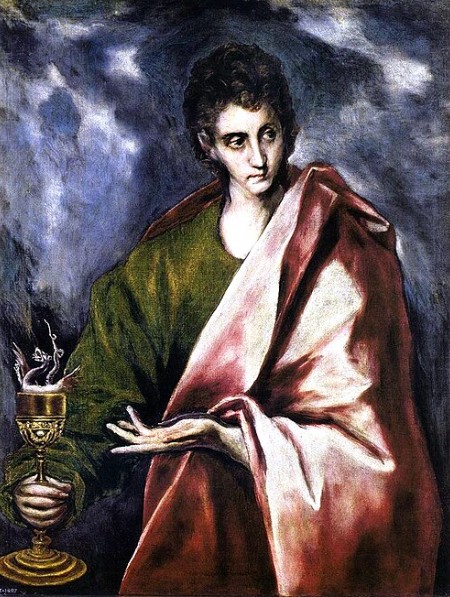
(El Greco. St. John the Evangelist. Oil on canvas. ca. 1600. Museo de Santa Cruz, Toledo. Wikimedia Commons. https://commons.wikimedia.org/wiki/File:El_Greco_-_St_John_the_Evangelist_-_WGA10511.jpg.)
A poisoned chalice with a serpent, in swirling green and red robes against stormy skies, capturing his mystical theology and endurance of persecution.
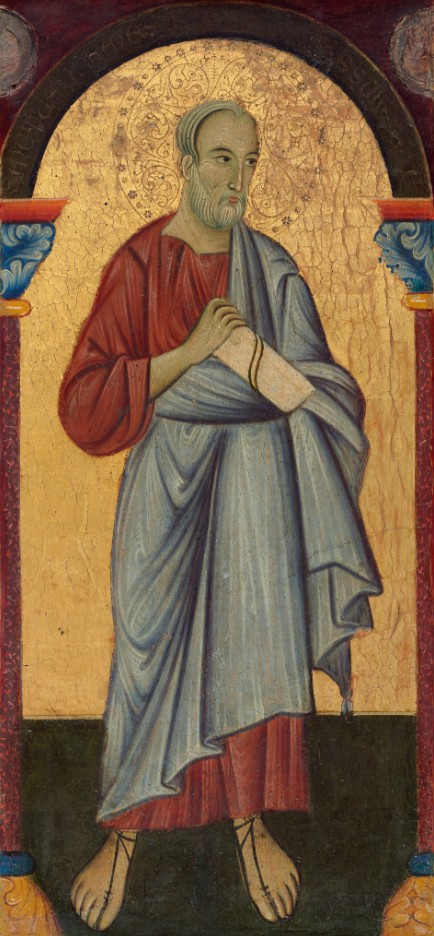
(Master of Saint Francis. Saint John the Evangelist. Tempera on panel. ca. 1270–1280. National Gallery of Art, Washington, D.C. Wikimedia Commons. https://commons.wikimedia.org/wiki/File:Saint_John_the_Evangelist_(Master_of_Saint_Francis).jpg.)
A 14th-century Italian tempera panel by the Master of Saint Francis depicts Saint John the Evangelist standing in red and blue robes, holding a scroll under a Gothic arch, with gold leaf halo, emphasizing his authorship of the Gospel and epistles.