HESIOD
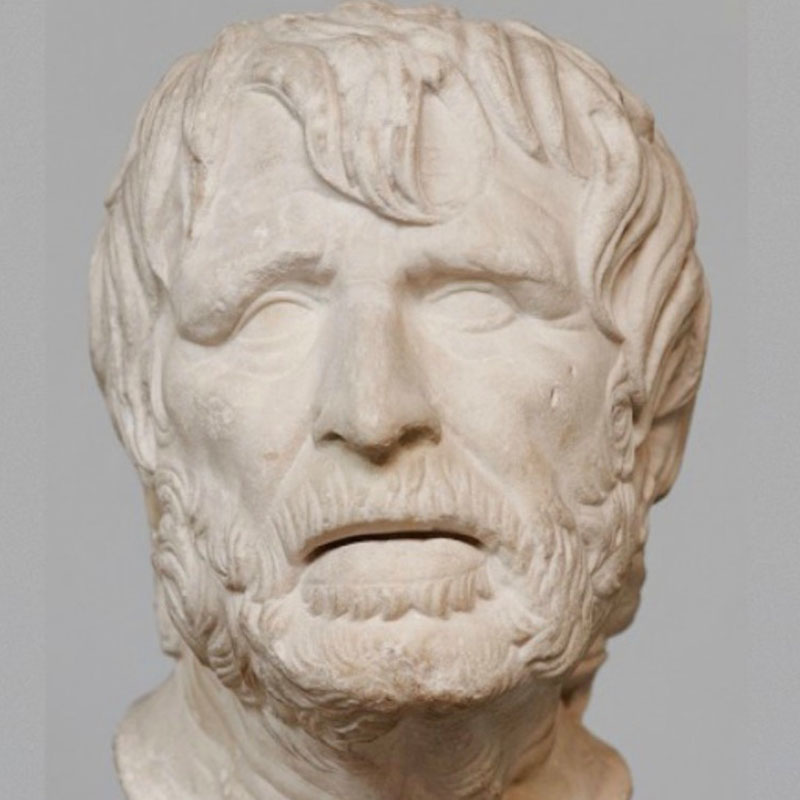
AI Rendering Adobe Firefly Unknown. Naples-Type Hesiod. Date unknown. Marble. National Archaeological Museum, Naples. Link: https://history-biography.com/wp-content/uploads/2019/04/hhh.jpg
Born: Circa 1200 BCE, Boeotia, Ancient Greece
Died: Circa 1150 BCE (approximate, based on traditional dating of his active period)
Notable
- Founder of Didactic Poetry: Established a foundational tradition of Greek literature, pioneering works like Theogony and Works and Days that advocate for understanding the cosmos, justice, and human labor.
- Doctrine of Divine Justice: Promoted the idea of a moral order governed by the gods, challenging human hubris and emphasizing retribution and balance, as seen in the myth of Pandora.
1200-1150 BCE
Biography
Hesiod was an ancient Greek poet of the late 8th or early 7th century BCE. He is one of the earliest Greek poets (around the same time as Homer) whose work has survived in its entirety, providing insights into the agricultural practices, religious beliefs, and moral values of ancient Greece.
Hesiod himself worked as a shepherd and farmer, which was very different from Homer, the other great early Greek poet, who told stories about kings and heroes. The information and historical sources available about Hesiod’s life are limited. His most famous works, Works and Days and Theogony, offer a mix of practical advice for farmers and descriptions of the origin of genealogy (study of family trees) and struggles of the Greek gods. His writings reflect the transition from a primarily oral tradition to a more structured literary form, influencing later poets such as Virgil and Ovid.
Unlike Homer’s exciting adventure stories, Hesiod wrote about everyday life and moral lessons. Hesiod’s poetry often explores themes of justice, order, and the relationship between gods and mortals. Hesiod’s writing gives us valuable information about his legacy and his contribution to the development of epic poetry, Greek religion, folklore, and farming life. His work influenced many later writers and thinkers in ancient Greece and beyond. While his exact place in Greek literature is debated, his impact on subsequent writers and thinkers is undeniable.
Bibliography & Major Works
Hesiod. Works and Days. Project Gutenberg, http://www.gutenberg.org/ebooks/348.
West, M. L. “Hesiod.” The Homeric Hymns and Homerica, https://www.cambridge.org/core/books/homeric-hymns-and-homerica/hesiod/6383C4CD5C69DFB65F12D0BC7A0F7CAB.
West, M. L. “Hesiod.” Encyclopaedia Britannica, https://www.britannica.com/biography/Hesiod-Greek-poet.
Most, Glenn W. “Hesiod.” The Stanford Encyclopedia of Philosophy, https://plato.stanford.edu/entries/hesiod/.
Clay, Jenny Strauss. “Hesiod.” Oxford Bibliographies, https://www.oxfordbibliographies.com/view/document/obo-9780195389661/obo-9780195389661-0038.xml.
Hesiod. The Poems of Hesiod: Theogony, Works and Days, and The Shield of Herakles. United States: University of California Press, 2017.
Clay, Jenny Strauss. “Hesiod.” Oxford Bibliographies, https://www.oxfordbibliographies.com/view/document/obo-9780195389661/obo-9780195389661-0038.xml.
Influences & Notable For
Notable / Best-Known For
Hesiod is best known for his poems Works and Days and Theogony, which offer valuable insights into ancient Greek agriculture, mythology, and morality.
Works and Days provides practical advice on farming and living a just life and includes the famous myths of Pandora’s Box and the Five Ages of Man.
Theogony explores the genealogy and struggles of the Greek gods, explaining how the universe began with Chaos and detailing the family tree of all the Greek gods.
Hesiod’s works are considered to be the voice of common people. Unlike Homer, who focused on heroes and kings, Hesiod was the first Greek poet to write about the lives of ordinary farmers and workers in a poetic way.
His writings and poems, among the earliest surviving Greek literature, laid the foundation for the entire Western literary tradition, influencing later poets and thinkers.
Influences / Intellectual Context
Hesiod’s writings were influenced by the oral poetic tradition of ancient Greece, which emphasized the retelling of myths and genealogies. His works, particularly Theogony, reflect a deep engagement with the religious beliefs and cultural practices of his time. Hesiod drew inspiration from earlier poets such as Homer, whose epic poems laid the foundation for Greek literature.
In terms of intellectual context, Hesiod’s emphasis on justice, order, and the relationship between gods and mortals aligns with the philosophical inquiries of his era. His works offer a unique perspective on the divine hierarchy and the role of humanity within the cosmos. Hesiod’s influence on subsequent writers and thinkers underscores the enduring significance of his poetry in shaping Western thought.
Famous quotes
- “Observe due measure, for right timing is in all things the most important factor.” — Works and Days, line 694
- “Work is no disgrace; it is idleness which is a disgrace.” — Works and Days, line 311
- “Observe due measure, for right timing is in all things the most important factor.” — Works and Days, line 694
- “For the gods keep hidden from men the means of life.” — Works and Days, lines 42–43
Legacy & Modern Significance
Historical Significance: Hesiod fundamentally shaped ancient Greek literature by establishing epic poetry beyond the tradition of Homer. His Theogony and Works and Days became the authoritative sources for Greek mythology and religious understanding, preserving divine genealogies and cosmic order for future generations. His exploration of justice, labor, and divine hierarchy influenced Greek philosophical thought for centuries, while his didactic approach created a new literary tradition that inspired countless ancient poets and thinkers.
Modern Significance: Hesiod’s themes remain strikingly relevant today. His reflections on work ethics, social justice, and the human condition continue to resonate with contemporary audiences, offering timeless insights into fundamental human experiences. His works serve as essential resources for scholars across multiple disciplines—from classical studies to philosophy—while his narrative techniques still influence modern literature. By addressing universal questions about divine will, justice, labor, human agency, and moral values, Hesiod bridges the ancient and modern worlds, making his poetry both a historical document and a living text for contemporary reflection.
Modern Moments & Impact on 21st Century
-
The 2018 release of the blockbuster video game God of War drew directly from Hesiod’s Theogony for its pantheon structure and divine conflicts.
-
In 2019, a new translation of Hesiod’s Works and Days by Stephanie Nelson was published, bringing the poet’s timeless wisdom to a contemporary audience.
-
The 2020 digital release of an annotated edition of Theogony by a team of classical scholars sparked renewed interest in Hesiod’s portrayal of the Greek gods and their myths.
-
Academic conferences in 2021 focused on Hesiod’s influence on early Greek literature and his relevance in the modern study of epic poetry, attracting scholars from around the world.
-
In 2023, the rise of AI and ChatGPT gave Hesiod’s Prometheus myth new meaning as humanity grappled with creating intelligence that might surpass its makers.
Suggested Reading and Resources
West, M. L. “Hesiod.” Encyclopaedia Britannica, https://www.britannica.com/biography/Hesiod-Greek-poet.
West, M. L. “Hesiod.” The Homeric Hymns and Homerica, https://www.cambridge.org/core/books/homeric-hymns-and-homerica/hesiod/6383C4CD5C69DFB65F12D0BC7A0F7CAB.
Clay, Jenny Strauss. “Hesiod.” Oxford Bibliographies, https://www.oxfordbibliographies.com/display/document/obo-9780195389661/obo-9780195389661-0019.xml?rskey=lLQar2&result=1&q=hesiod#firstMatch.
Hesiod: Theogony, Works and Days, Testimonia. United Kingdom: Harvard University Press, 2006.
Hesiod. The Poems of Hesiod: Theogony, Works and Days, and The Shield of Herakles. United States: University of California Press, 2017.
Hesiod. Works and Days and Theogony, trans. Stanley Lombardo (Indianapolis: Hackett Publishing, 1993).
“Hesiod.” Encyclopaedia Britannica, accessed June 2025, https://www.britannica.com/biography/Hesiod.
Nelson, Stephanie. Works and Days Translation, Amazon, https://www.amazon.com/Works-Days-Oxford-Worlds-Classics/dp/0199540655.
Academic Conference. “Hesiod and Early Greek Literature” Conference Website, University of Cambridge, https://www.classics.cam.ac.uk/events/hesiod-and-early-greek-literature.
POET OF EARTHLY TOIL
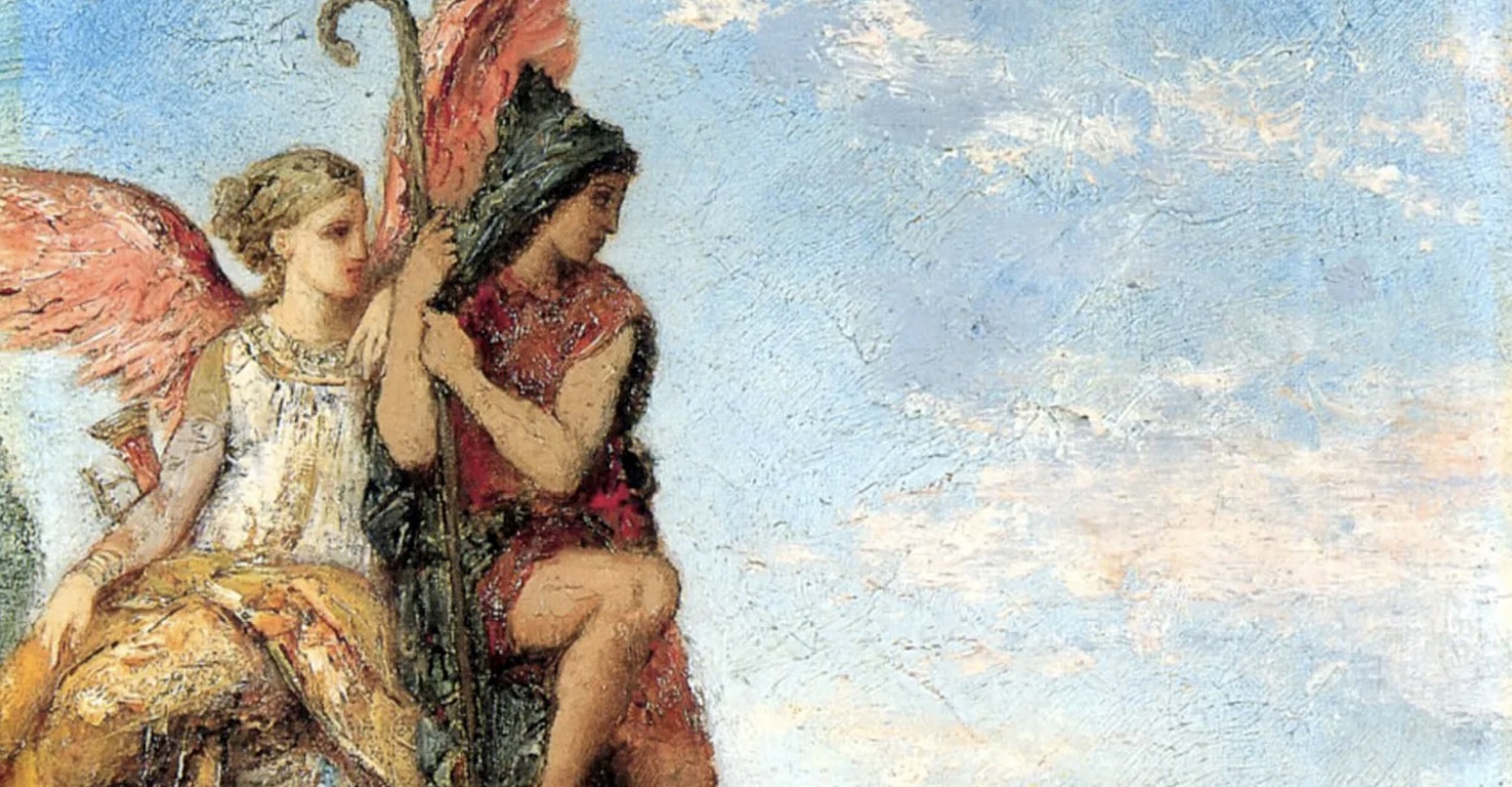
(Moreau, Gustave. Hesiod and the Muse. 1891. Oil on canvas. Musée d’Orsay, Paris. Link: https://i0.wp.com/thehistorianshut.com/wp-content/uploads/2019/12/social-media-crop-Hesiod-and-the-Muse-painted-by-Gustave-Moreau-1826%E2%80%931898-Public-Domain-via-Creative-Commons.jpg?fit=1500%2C785&ssl=1)
In this Symbolist painting, Hesiod appears as a humble shepherd receiving poetic inspiration from a Muse on Mount Helicon, rendered in vibrant, dreamlike colors.
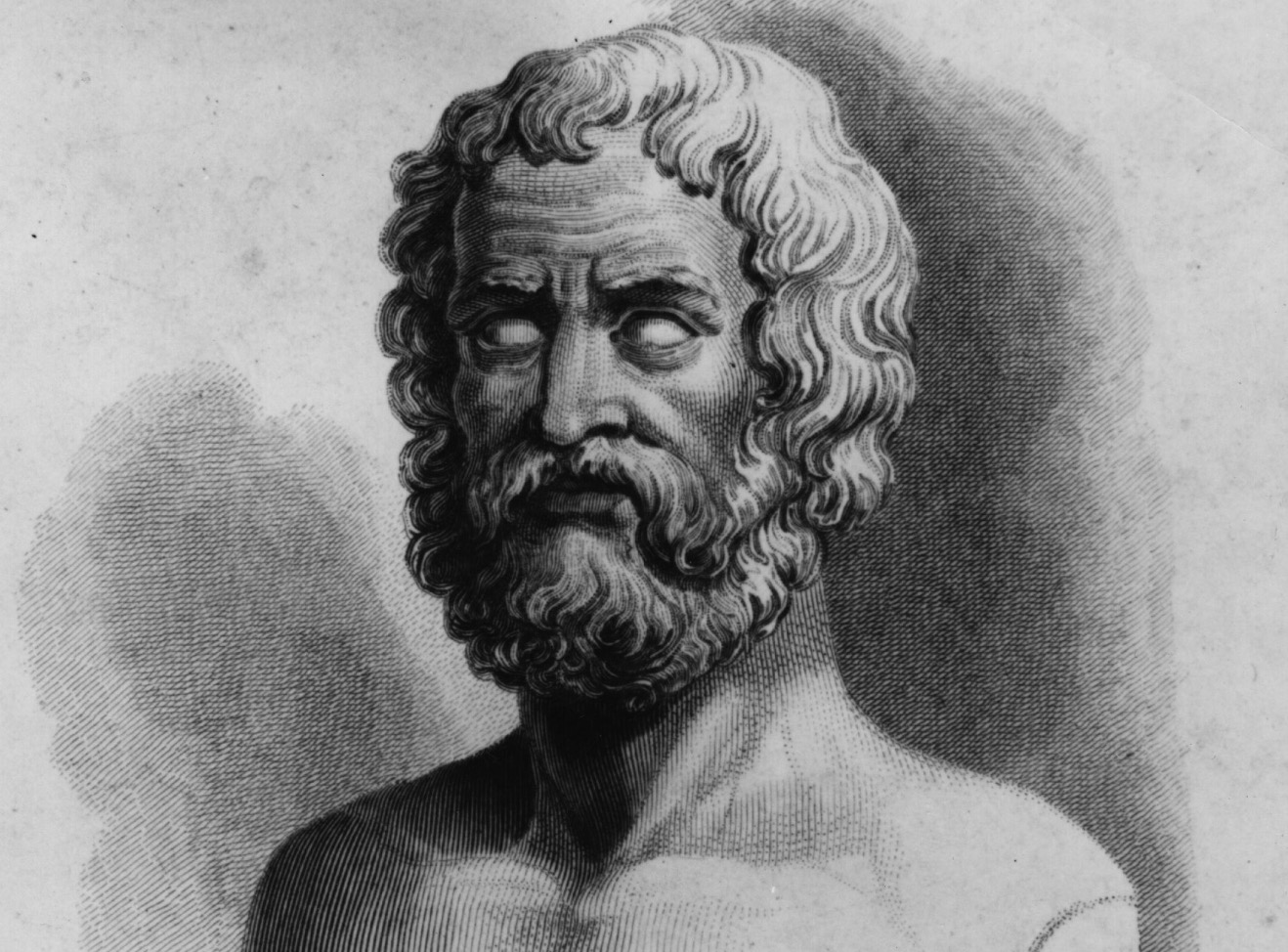
(Unknown. Bust of Hesiod. Ca. 2nd century CE. Marble. Location unknown (photograph via Getty Images). Link: https://media.npr.org/assets/img/2020/08/14/gettyimages-2663306-c0378a5655defbbbe54c39c1f1c59e5ef382a453.jpg)
A classical marble bust capturing Hesiod with wavy hair, a beard, and a contemplative expression, representative of Roman copies of Greek originals honoring the poet.
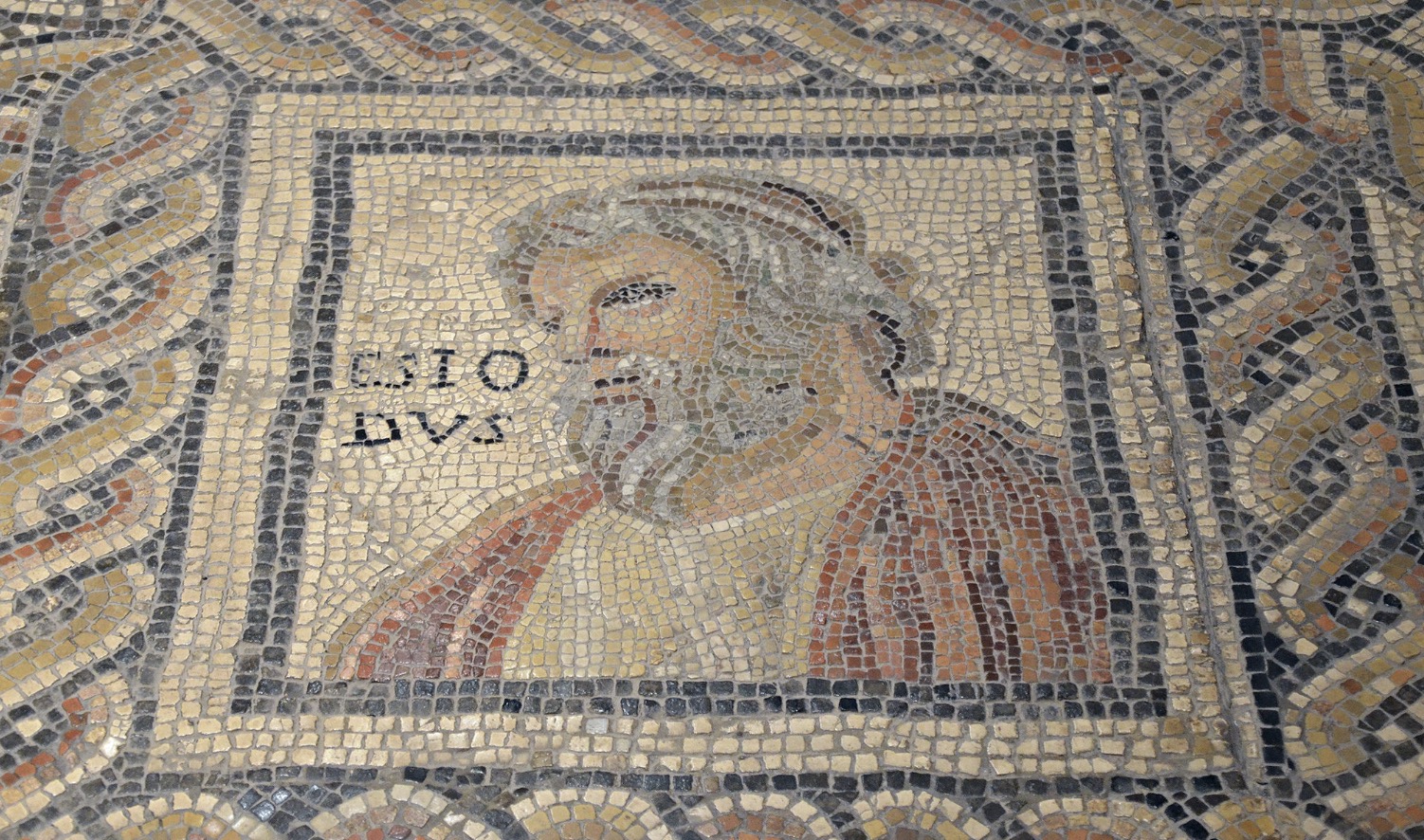
(Unknown. Portrait of Hesiod. Ca. 3rd century CE. Mosaic. Rheinisches Landesmuseum, Trier. Link: https://www.worldhistory.org/uploads/images/5835.jpg)
This ancient mosaic depicts Hesiod as an elderly, dignified figure in three-quarter profile, wearing a fillet, tunic, and mantle, inscribed with “ESIODVS,” representing one of the few authenticated ancient portraits of the poet.