
HAMMURABI CODE
("https://cdli.earth/artifacts/464358/reader/213152")
What does the most complete record of ancient law in existence reveal?
Reigned 1792–1750 B.C. · Babylon
The Code of Hammurabi, the most complete and perfect surviving collection of Babylonian laws, was developed during the reign of Hammurabi of the first dynasty of Babylon. It consists of his legal decisions, collected toward the end of his reign and inscribed on a diorite stele set up in Babylon’s Temple of Marduk.
Inscribed on a diorite stele
- Also spelled: Hammurapi
- Ruler: Hammurabi of the first dynasty of Babylon, reigned 1792–1750 B.C.
- Source: Hammurabi’s own legal decisions, collected toward the end of his reign
- Displayed in: The Temple of Marduk, named for the national god of Babylon
- Language: Survives only in the Semitic Akkadian tongue
What did 282 case laws cover in ancient Babylon?
Hover or tap each area of law to look closer
- Economic ProvisionsThe code set rules for prices, tariffs, trade, and commercial regulations.
- Family LawIt addressed family matters, including marriage and divorce.
- Criminal LawIt included provisions dealing with crimes such as assault and theft.
- Civil LawIt also covered civil matters, including slavery and debt.
- Penalties That VariedPenalties for breaking the laws varied according to the status of the offender and the circumstances of the offense.
- Two Peoples, One CodeThe code survives only in the Semitic Akkadian tongue, but it was clearly meant to apply to the non-Semitic Sumerians as well, integrating the traditions of both peoples.
The most complete record of ancient law in existence.
The Code of Hammurabi is the most complete and perfect surviving collection of Babylonian laws. Though written in Akkadian, it was meant to apply to the Sumerians as well, representing an integration of the traditions of both peoples.
Secondary Literature (Scholarship)
Roth, Martha T. Law Collections from Mesopotamia and Asia Minor. Scholars Press, 1997. ISBN: 9781589832652
Driver, G.R., and Miles, J.C. The Babylonian Laws. Oxford University Press, 1952.
Meek, Theophile J. The Code of Hammurabi. Translated edition, University of Chicago Press.
Van De Mieroop, Marc. King Hammurabi of Babylon: A Biography. Blackwell, 2005. ISBN: 9781405126591
Archival or Online Sources
The Louvre Museum Collection: https://www.louvre.fr/en
UNESCO Memory of the World Register – Hammurabi: https://en.unesco.org/programme/mow
The Avalon Project – Yale Law School: https://avalon.law.yale.edu/ancient/hamframe.asp
("Code of Hammurabi: Laws & Facts | HISTORY." Photograph, 2000s.)
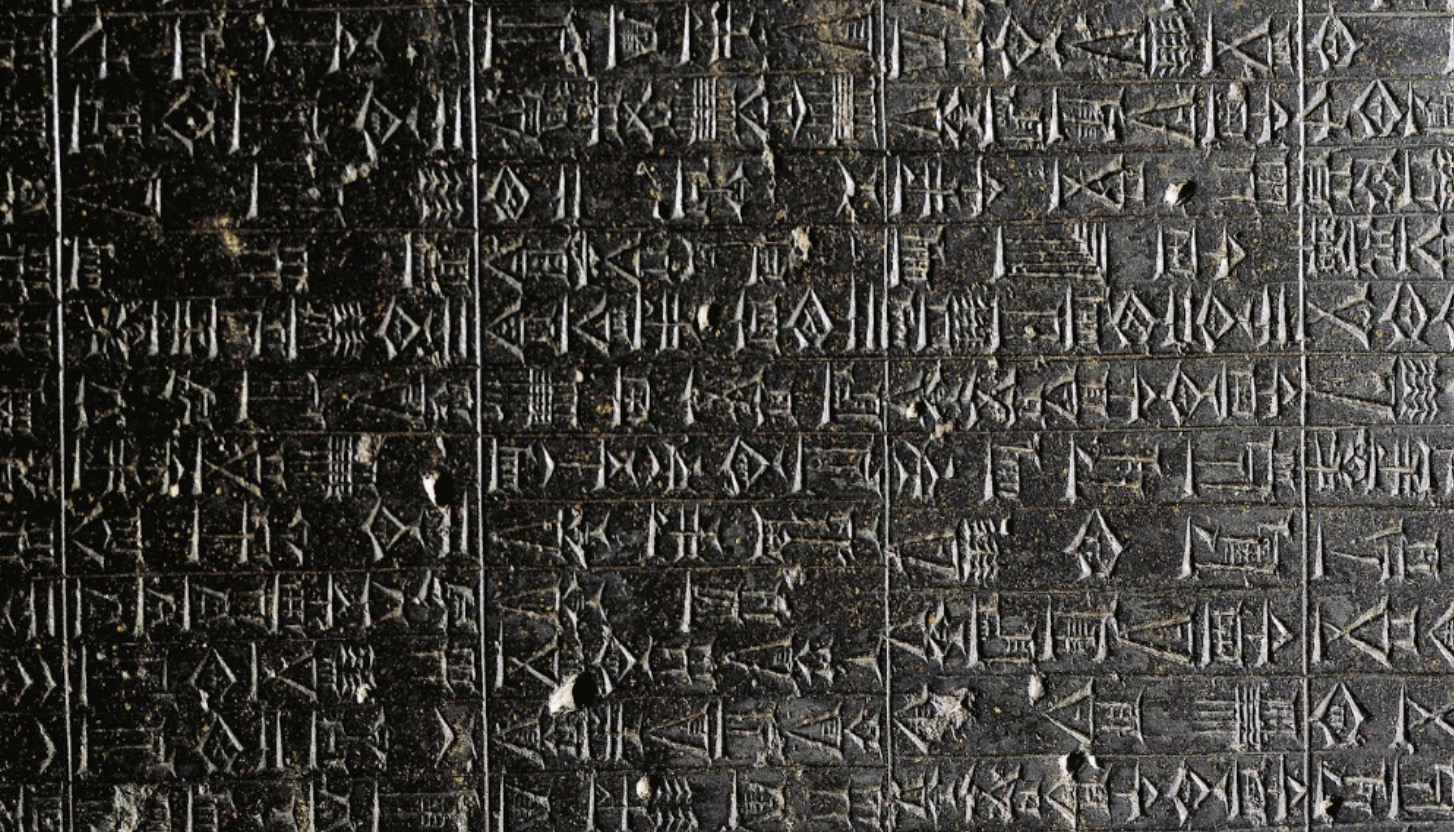
A close-up texture of dark stone inscribed with dense columns of cuneiform script, showing wear, scratches, and small holes.
("Hammurabi - Wikipedia." Photograph, 2000s. https://en.wikipedia.org/wiki/Hammurabi (accessed October 4, 2025).)
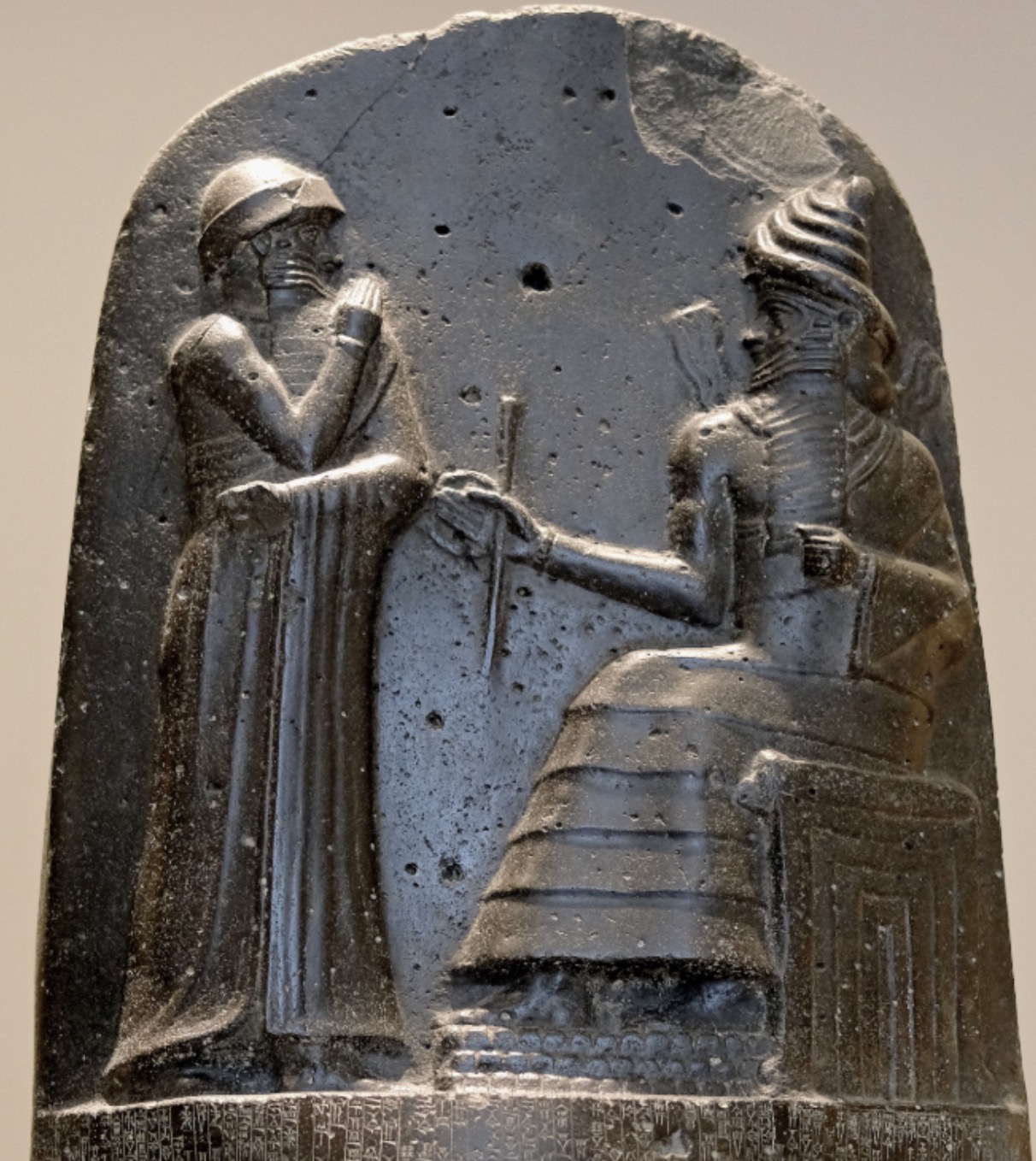
A stone relief at the top of a stele showing two figures: a standing man in a robe facing a seated deity with a horned crown, extending a rod.
("Hammurabi Code, Babylonian legal stele composed during 1755–1750 BC..." Photograph, 2020s)
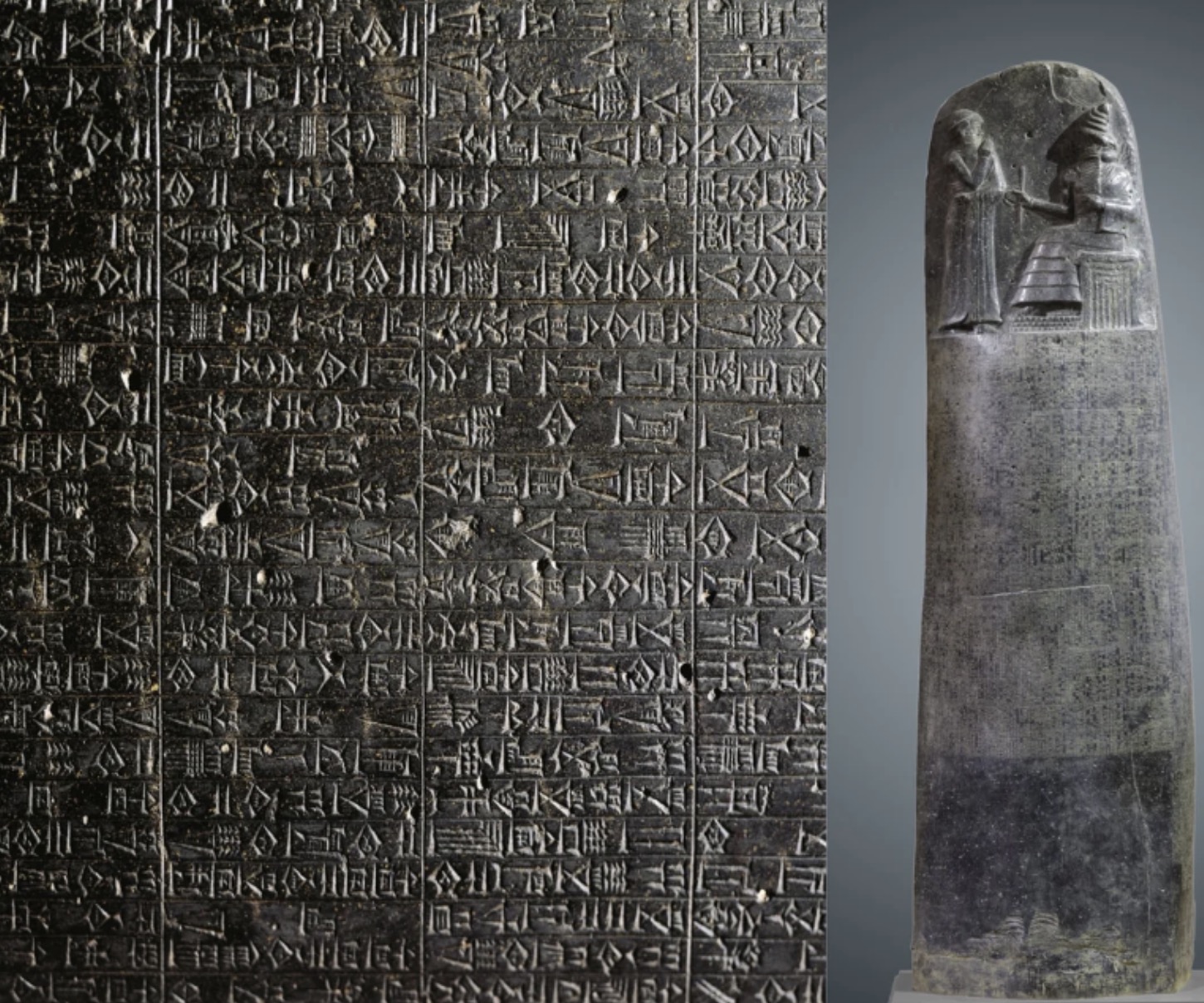
A composite image: left side shows close-up cuneiform text on dark stone; right side depicts the full tall stele with relief at top and inscriptions below.