
GALILEO
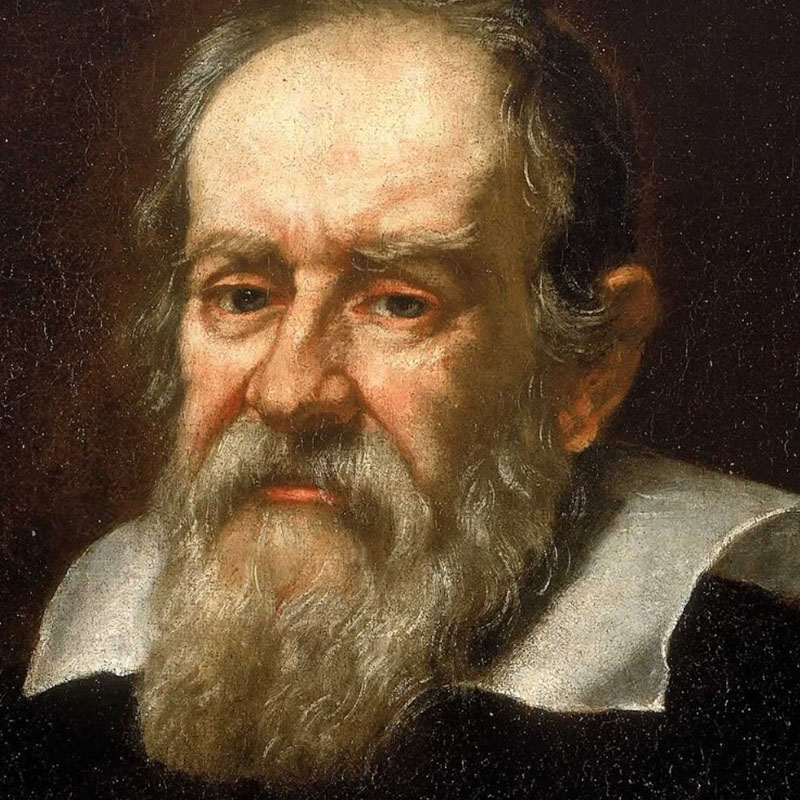
(Sartorio, Aristide. Bust of Galileo Galilei. Bronze sculpture. 1883. W https://upload.wikimedia.org/wikipedia/commons/thumb/c/cc/Galileo.arp.300pix.jpg/960px-Galileo.arp.300pix.jpg)
Born: February 15, 1564, Pisa, Italy
Died: January 8, 1642, Arcetri, near Florence, Italy
Notable
-
Physics: Laid foundations for the laws of motion and falling bodies.
-
Astronomy: Used the telescope to discover Jupiter’s moons, lunar features, and Venus’s phases.
-
Heliocentrism: Defended the Copernican system against Church doctrine.
-
Scientific Method: Advanced observation, hypothesis, and experimentation.
1500–1600 AD works
Biography
Galileo Galilei (b. February 15, 1564, Pisa, Italy – d. January 8, 1642, Arcetri, near Florence) was an Italian natural philosopher, astronomer, physicist, and mathematician. Born to Vincenzo Galilei, a musician, Galileo originally studied medicine at the University of Pisa but shifted to mathematics and philosophy. He became a professor at Pisa and later at the University of Padua. Galileo was known for his experiments on motion and his pioneering use of the telescope for astronomical observations. His support for Copernican heliocentrism brought him into conflict with the Roman Catholic Church, culminating in his 1633 trial and lifelong house arrest. Despite this, his writings changed the course of science, and he is often called the “father of modern science.”
Influences & Notable For
Foundational work on the laws of motion and falling bodies.
First use of the telescope for astronomical purposes, discovering Jupiter’s major moons, lunar craters, and the phases of Venus.
Championing heliocentrism (Copernican system) against Church orthodoxy.
Advocating for the scientific method: observation, hypothesis, and experimentation.
Famous quotes
“In questions of science, the authority of a thousand is not worth the humble reasoning of a single individual.” (Dialogue Concerning the Two Chief World Systems, 1632)
“And yet it moves.” (“E pur si muove.” Purportedly muttered after his recantation, though not documented in printed works.)
“The Bible shows the way to go to heaven, not the way the heavens go.” (Letter to Grand Duchess Christina, 1615)
Legacy & Modern Significance
Known as the “father of modern science”; transformed natural philosophy into mathematical, experiment-based science.
The scientific method codified by Galileo is foundational to modern scientific inquiry.
His telescopic discoveries led to advances in astronomy and reinforced heliocentrism, influencing Newton and others.
Symbol of intellectual courage — willingness to challenge authority for the sake of scientific truth.
Ongoing discussions in philosophy, science, theology, and education about the relationship between faith and reason, science and tradition.
Modern Moments & Impact on the 21st Century
1992: Pope John Paul II publicly acknowledges errors in the Church’s treatment of Galileo and formally "rehabilitates" him.
Ongoing: Galileo’s writings featured in STEM curricula and global history courses.
2020s: Telescopic discoveries celebrated in museum exhibitions and public astronomy campaigns.
Digital Editions: Sidereus Nuncius, Dialogue, and Discourses freely available on Archive.org, Project Gutenberg, and university sites.
Influences & Intellectual Context
Renaissance humanism and classical mathematics (inspired by Archimedes and Euclid).
Interactions with leading Italian scientists and philosophers.
Influenced by Nicolaus Copernicus's heliocentric model.
Intellectual disputes with Aristotelian philosophers dominant in his time.
Suggested Reading & Resources
Secondary Literature (Scholarship)
“Galileo’s Letter to Grand Duchess Christina,” Stanford Encyclopedia of Philosophy
https://plato.stanford.edu/entries/galileo/#Bib
THE DAWN OF SCIENTIFIC TRUTH
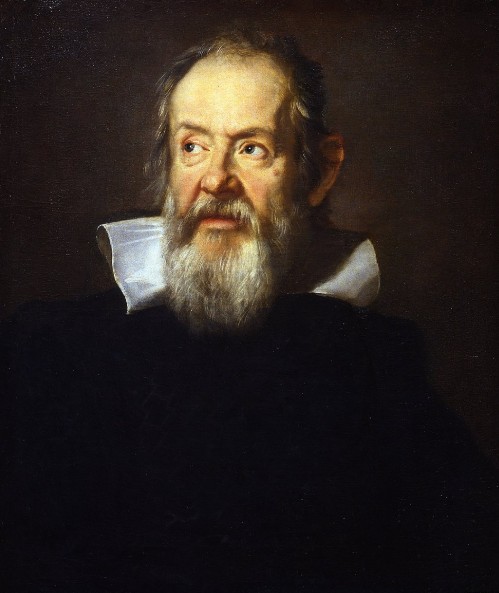
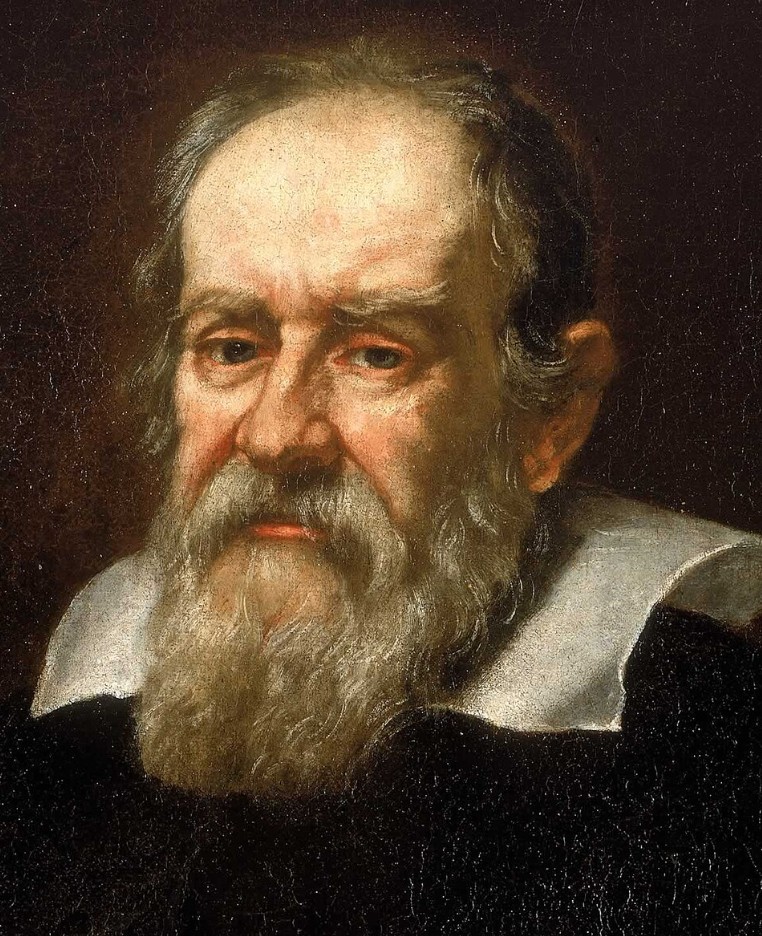
(Sustermans, Justus. Portrait of Galileo Galilei. Oil on canvas. 1636. Uffizi Gallery, Florence. Wikimedia Commons. https://commons.wikimedia.org/wiki/File:Justus_Sustermans_-_Portrait_of_Galileo_Galilei_(Uffizi).jpg.)
.jpg)
Justus Sustermans' 1636 oil portrait of Galileo Galilei in the Uffizi Gallery shows the astronomer with a telescope and compass, his bearded face conveying determination, commemorating his support for heliocentrism and scientific method.
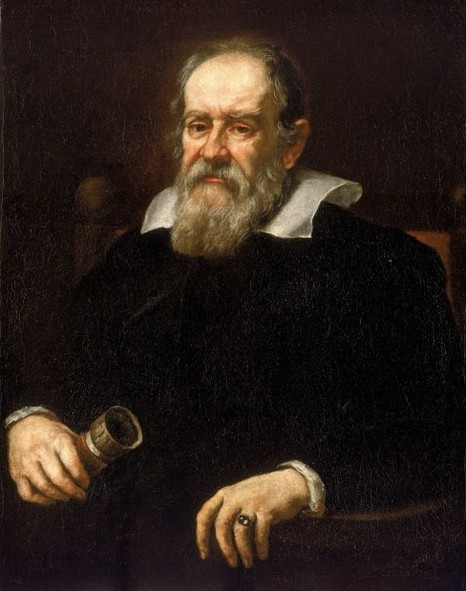
(Unknown. Galileo Galilei. Engraving. ca. 1800. Royal Museums Greenwich. Wikimedia Commons. https://commons.wikimedia.org/wiki/File:Galileo_Galilei_(1564-1642)_RMG_BHC2700.tiff.)
A 19th-century engraving of Galileo Galilei from the Royal Museums Greenwich collection depicts him with a telescope, capturing his 1610 discovery of Jupiter's moons that challenged geocentric views.
(Sartorio, Aristide. Bust of Galileo Galilei. Bronze sculpture. 1883. W https://upload.wikimedia.org/wikipedia/commons/thumb/c/cc/Galileo.arp.300pix.jpg/960px-Galileo.arp.300pix.jpg)
A public domain photograph of a bronze bust of Galileo Galilei by Aristide Sartorio, showing the scientist in classical style with flowing hair and beard, representing his enduring legacy in physics and astronomy.