
FRANCIS OF ASSISI
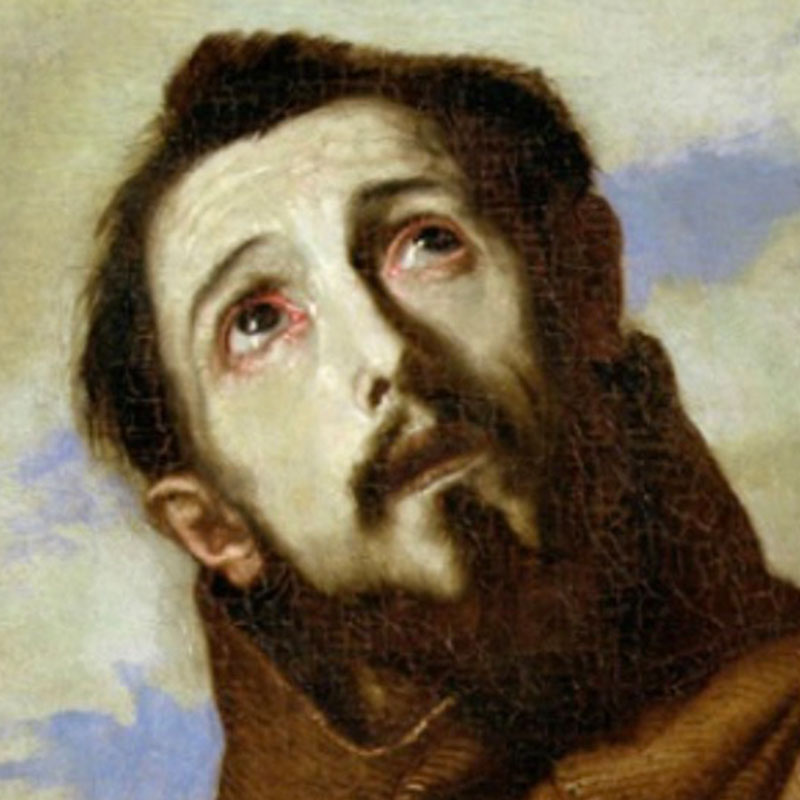
(Ribera, Jusepe de. Saint Francis of Assisi. Oil on canvas. 1642. Museo del Prado, Madrid. Wikimedia Commons. https://commons.wikimedia.org/wiki/File:Saint_Francis_of_Assisi_by_Jusepe_de_Ribera.jpg.)

Born: c. 1181 CE, Assisi, Umbria, Italy
Died: c. 1226 CE, Assisi, Umbria, Italy
Notable
-
Founder of the Franciscan Order: Established a transformative spiritual movement advocating for poverty, humility, and love for all creation.
-
Doctrine of Universal Brotherhood: Promoted impartial care and compassion for all people and nature, challenging societal hierarchies and materialism.
-
Practical Spirituality: Emphasized living simply and serving others, evaluating actions by their benefit to the community and the marginalized
1200–1300 AD works
Biography
Francis of Assisi (c. 1181–1226 CE) was a preacher and mystic whose life and legacy have made him one of Christianity’s most cherished saints. Born Giovanni di Pietro di Bernardone in the town of Assisi, he was raised in affluence as the son of a wealthy cloth merchant. He grew up in a wealthy family and had an early life of indulgence — until a spiritual awakening transformed his path entirely.
Abandoning material wealth and social status, Francis committed himself to a life of absolute poverty, compassion, and devotion to Christ. Around 1209, he founded the Order of Friars Minor (commonly known as the Franciscans), dedicated to preaching, aiding the poor, and embodying the humility of Christ. He also inspired the creation of the Poor Clares for women and a lay branch known as the Third Order.
Francis is remembered for his profound bond with the natural world, the stigmata he bore later in life, and his poetic Canticle of the Creatures, a song glorifying God through all aspects of creation. Canonized just two years after his passing, he endures as a symbol of peace, simplicity, and reverence for the environment.
Influences & Notable For
Notable For
Founding the Franciscan Order, which profoundly shaped Catholic spirituality.
Embracing radical poverty and humility as living expressions of the Gospel.
Becoming the first known person to receive the stigmata — marks of Christ’s Passion.
Composing the Canticle of the Creatures, one of the earliest pieces of vernacular Italian poetry.
Being named the patron saint of animals, ecology, and peace.
Seeking peace during the Crusades by meeting with Sultan al-Kamil in a bold act of interreligious outreach.
Influences
Francis drew his deepest inspiration from the Gospels, especially the teachings of Jesus in the Sermon on the Mount. He embodied the ideals of the emerging mendicant movement, which responded to increasing urbanization and the wealth of the medieval Church with a call to simplicity and direct service.
Living in an age marked by the rise of scholasticism and theological formalism, Francis stood apart by modeling a lived theology — one rooted not in academic debate but in joyful, sacrificial action.
Famous quotes
- “Lord, make me an instrument of your peace. Where there is hatred, let me sow love.” — Peace Prayer of St. Francis
- “Preach the Gospel at all times. When necessary, use words.” — Commonly attributed, though not found in his original writings
- “What you are before God, that you are and nothing more.” — Admonitions
- “Be praised, my Lord, through all your creatures, especially through my lord Brother Sun.” — Canticle of the Creatures
Legacy & Modern Significance
Francis’s life continues to inspire movements centered on peace, social justice, and environmental care. His order — the Franciscans — remains active across the globe in education, humanitarian work, and pastoral care.
His influence is reflected in the papal name chosen by Pope Francis in 2013, highlighting a renewed emphasis on humility and care for creation. In 1979, Pope John Paul II officially named Francis the patron saint of ecology, recognizing his prophetic voice in today’s ecological crisis.
Francis is celebrated not just for his spiritual discipline but for the joy, creativity, and humanity that permeated his life.
Modern Moments & Impact on 21st Century
Environmental Advocacy:
Francis is frequently invoked in conversations around ecological ethics and Christian responsibility for the planet.
Papal Leadership:
The 2015 encyclical Laudato Si’, titled after Francis’s Canticle, calls for global ecological conversion in his spirit.
Interfaith Relations:
His historic dialogue with Sultan al-Kamil serves as a powerful model for respectful, peaceful engagement across religious boundaries.
Peace and Nonviolence:
He is widely cited in pacifist and social justice circles, influencing both religious and secular efforts for global harmony.
Cultural Influence:
Francis’s story has been retold in literature, visual arts, music, and cinema — most notably in Franco Zeffirelli’s film Brother Sun, Sister Moon.
Suggested Reading and Resources
Secondary Literature
Chesterton, G. K. Saint Francis of Assisi. Image Books, 1957.
Armstrong, Regis J. (ed.). Francis of Assisi: Early Documents (3 vols). New City Press, 1999–2001.
Short, William J. Poverty and Joy: The Franciscan Tradition. Orbis Books, 1999.
Delio, Ilia. A Franciscan View of Creation: Learning to Live in a Sacramental World. Franciscan Media, 2003.
Archival and Online Resources
Franciscan Media: https://www.franciscanmedia.org
Assisi Official Pilgrimage Site: https://www.sanfrancescoassisi.org
Catholic Encyclopedia: https://www.newadvent.org/cathen/06221a.html
Project Gutenberg: https://www.gutenberg.org/ebooks/search/?query=Francis+of+Assisi
Vatican Archives: https://www.vatican.va
STEWARD OF CREATION
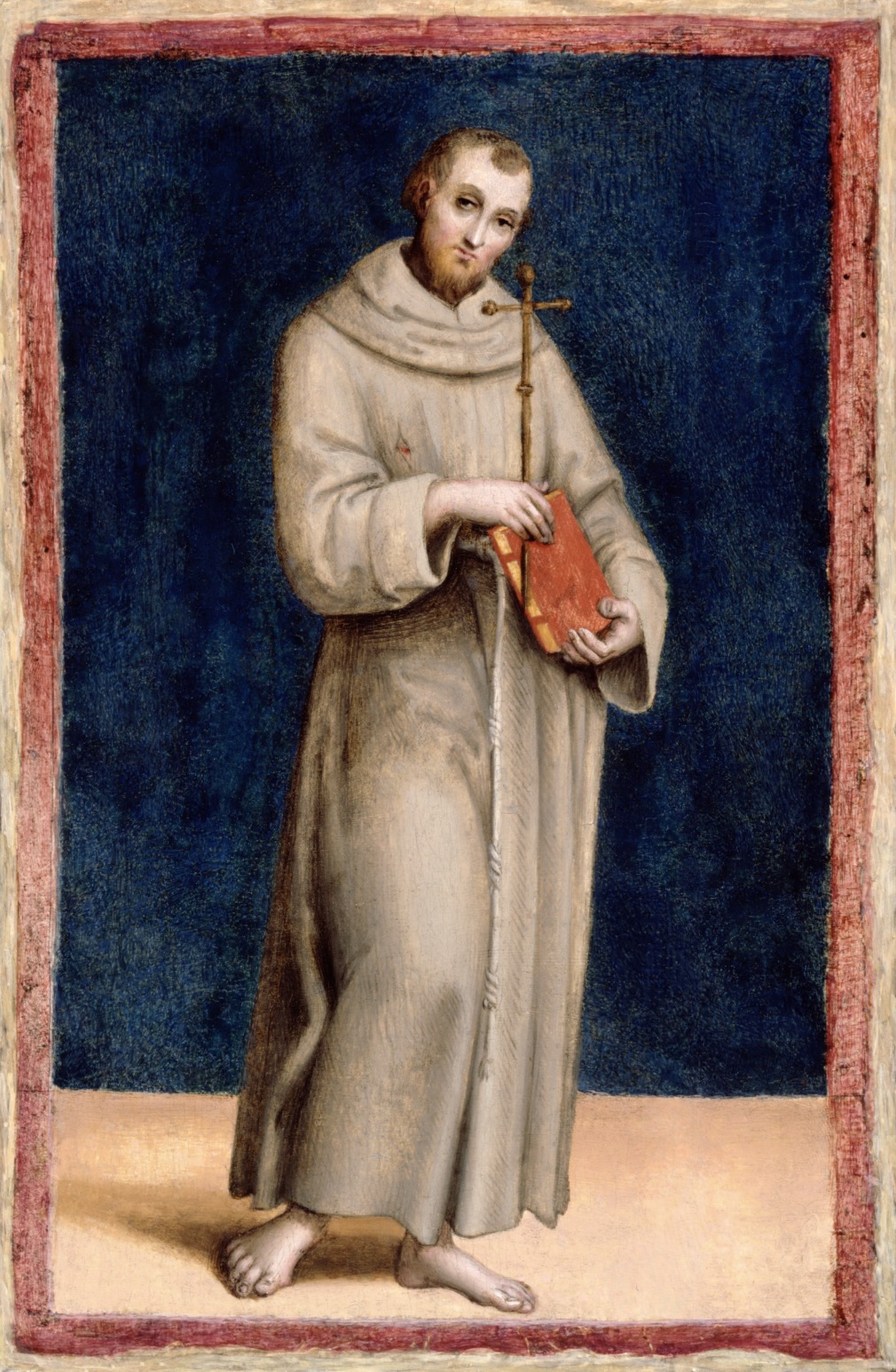
(Raphael. Saint Francis of Assisi. Oil on panel. ca. 1502. Dulwich Picture Gallery, London. Wikimedia Commons. https://commons.wikimedia.org/wiki/File:Raphael_-_Saint_Francis_of_Assisi_-_Google_Art_Project.jpg.)

Raphael's Renaissance oil painting portrays Saint Francis of Assisi in a contemplative pose, gazing upward with hands clasped in prayer, set against a landscape with a distant city, emphasizing his spiritual devotion and harmony with nature.
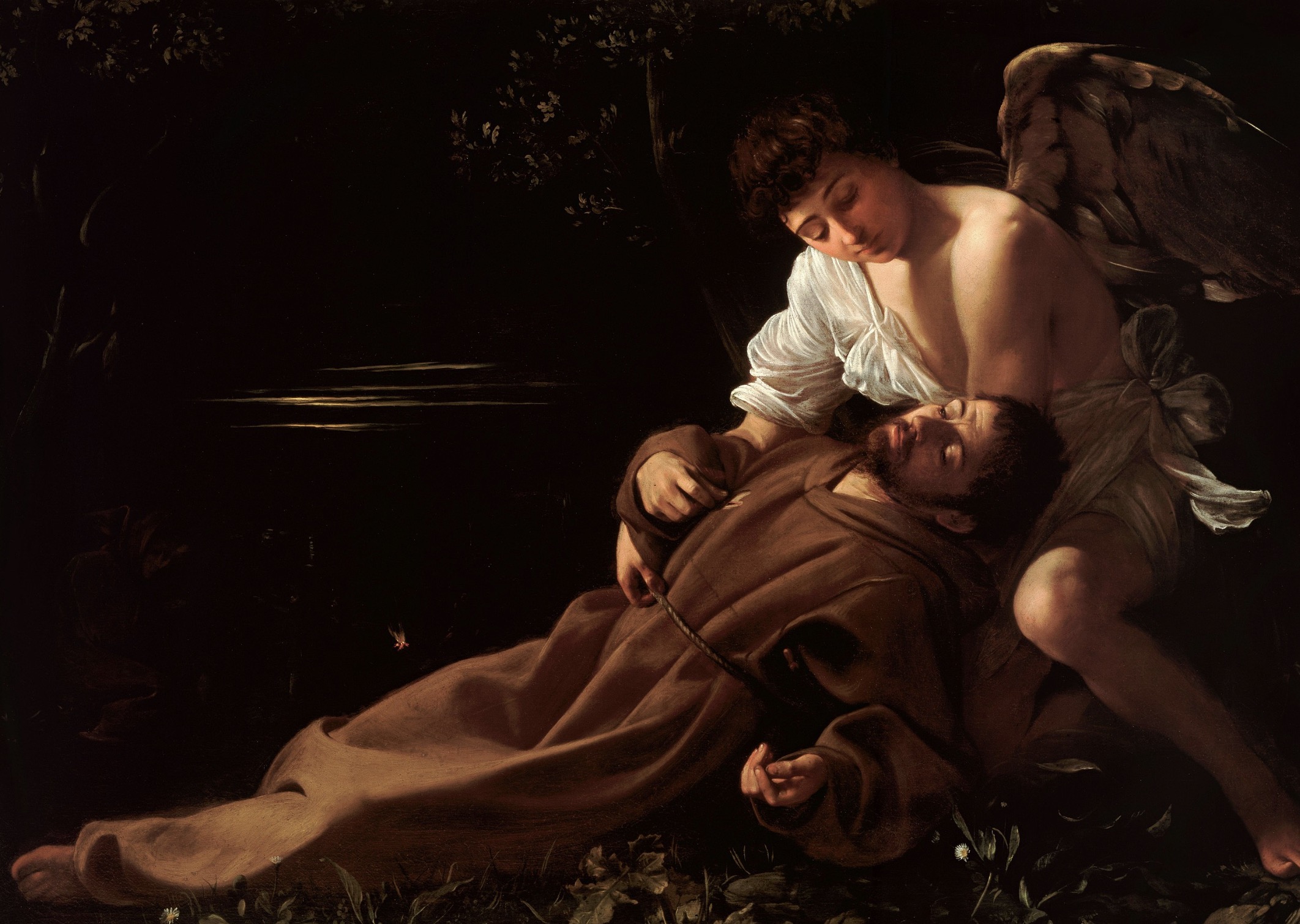
(Michelangelo Merisi da Caravaggio, Saint Francis of Assisi in Ecstasy, oil on canvas, 92.5 × 127.8 cm, ca. 1595, Wadsworth Atheneum, Hartford, CT, https://en.wikipedia.org/wiki/Saint_Francis_of_Assisi_in_Ecstasy_(Caravaggio)#/media/File:Saint_Francis_of_Assisi_in_Ecstasy-Caravaggio_(c.1595).jpg.)
#/media/File:Saint_Francis_of_Assisi_in_Ecstasy-Caravaggio_(c.1595).jpg)
Caravaggio's Saint Francis of Assisi in Ecstasy (ca. 1595) depicts the saint in divine rapture, receiving the stigmata from an angel amid dramatic tenebrism, showcasing his innovative use of light and shadow to convey spiritual depth in this early Baroque masterpiece.
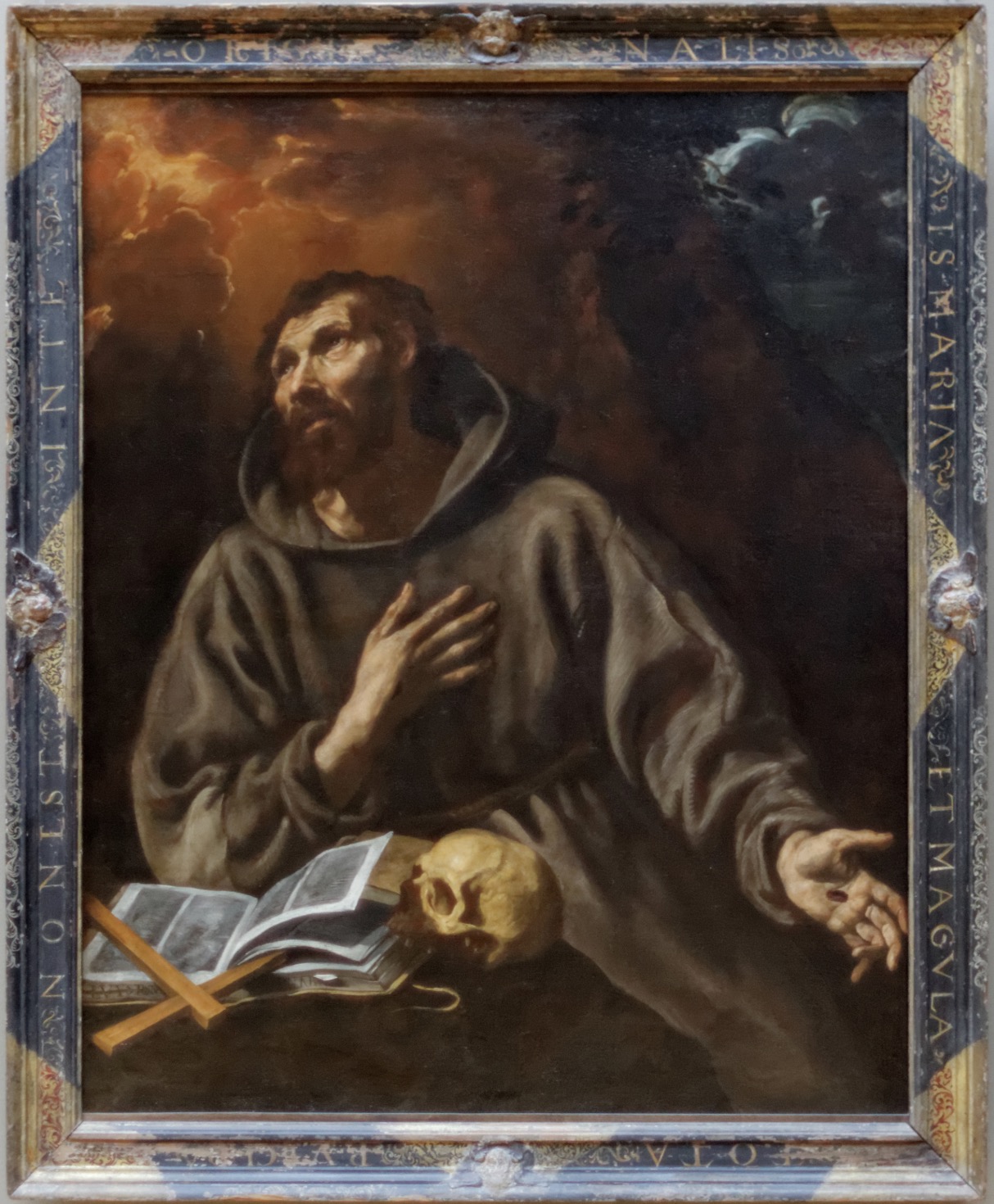
(Tristán, Luis. Vision of St. Francis of Assisi. Oil on canvas. 17th century. Louvre Museum, Paris. Wikimedia Commons. https://commons.wikimedia.org/wiki/File:Vision_of_St_Francis_of_Assisi,_Tristan_(Louvre_RF_240)_01.jpg.)
_01.jpg)
Luis Tristán's 17th-century oil painting illustrates the Vision of Saint Francis of Assisi, showing him kneeling in ecstasy with arms outstretched toward a seraphic figure, capturing the moment of receiving the stigmata in a dramatic, ethereal composition.