
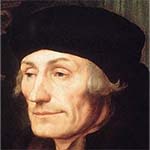
ERASMUS
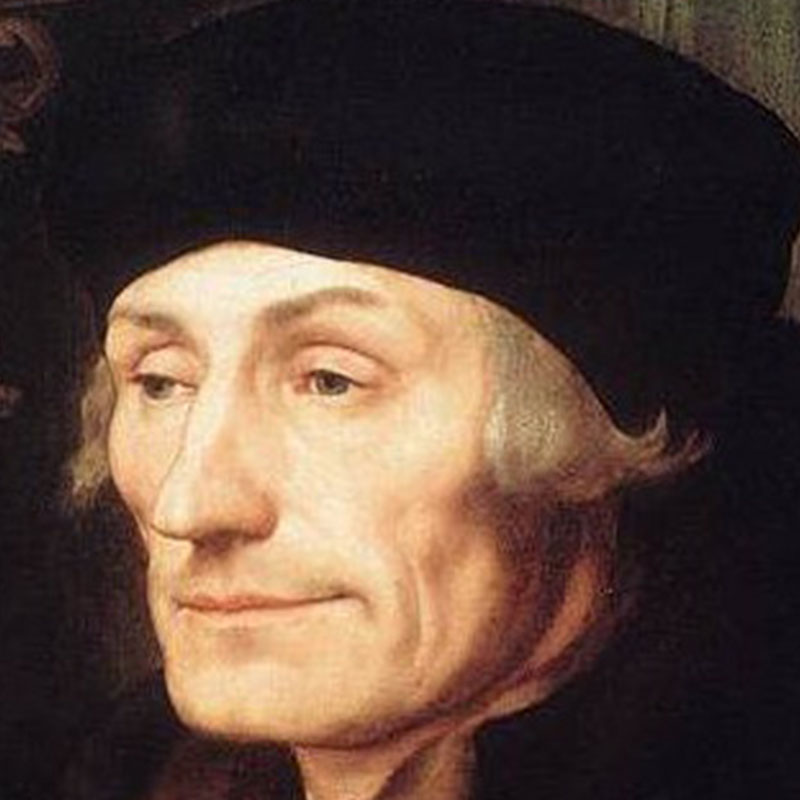
(Holbein the Younger, Hans. Erasmus of Rotterdam. Black and colored chalks on paper. ca. 1523. Kunstmuseum Basel. Wikimedia Commons. https://commons.wikimedia.org/wiki/File:Erasmus_rotterdam.JPG.)

Born: October 28, 1466, in Rotterdam, Netherlands, during the Holy Roman Empire
Died: July 12, 1536 (at the age of 69), in Basel, Switzerland.
Notable
-
Renaissance Humanist: Leading thinker who promoted reason, morality, and classical learning.
-
Church Critic: Challenged abuses in the Catholic Church while seeking internal reform.
-
Reform Influence: Helped shape ideas that influenced the Protestant Reformation.
Biography
Desiderius Erasmus (1466–1536) was a Dutch scholar, writer, and priest who is known for his works that laid the foundation for the Protestant Reformation. Born in Rotterdam and orphaned young, he reluctantly became an Augustinian monk before obtaining permission to study abroad. As a wandering scholar, he lived across Europe, supporting himself through teaching, patronage, and his extraordinarily popular writings. His mastery of classical Latin and Greek, combined with his wit and learning, made him one of the most famous thinkers of the Renaissance. Erasmus believed in using learning and education to improve both the Church and society. He studied the Bible and classical texts, wanting people to return to simple Christian faith rather than focus on ceremonies and superstitions.
He wrote many books, including In Praise of Folly, which humorously criticized the problems he saw in the Church and in human behavior. He also produced a new Latin and Greek edition of the New Testament, which became very influential. Erasmus did not break away from the Catholic Church like Martin Luther, but he also criticized abuses and called for reform. He is remembered as a “Prince of the Humanists” for his learning, wit, and efforts to bring together faith and reason.
Influences & Notable For
Erasmus is best known for his critical views on the Catholic Church and his promotion of humanist ideals. He played a significant role in the intellectual movement of the Renaissance and had a profound impact on the Protestant Reformation. Erasmus's works challenged traditional beliefs and practices, advocating for a return to the original teachings of Christianity based on reason and morality.
Famous quotes
"War is delightful to those who have had no experience of it."
"Give light, and the darkness will disappear of itself."
"The chief happiness for a man is to be what he is."
Legacy & Modern Significance
Erasmus's legacy lies in his promotion of intellectual freedom, critical thinking, and humanist values. His works continue to influence scholarship in the fields of theology, philosophy, and education. Erasmus's ideas on religious tolerance and the importance of individual conscience have played a significant role in shaping modern debates on ethics and morality.
Modern Moments & Impact on the 21st Century
In 2016, the 500th anniversary of Erasmus's The Praise of Folly was celebrated with exhibitions and academic conferences.
The Erasmus Program, a European Union initiative promoting international student exchange, is named in his honor.
Digital archives and scholarly editions of Erasmus's works have made his writings more accessible to contemporary readers.
Influences & Intellectual Context
Erasmus was influenced by the humanist movement of the Renaissance, which emphasized the importance of classical learning and the individual pursuit of knowledge. He engaged with prominent thinkers such as Thomas More and Martin Luther, shaping his views on theology and philosophy. Erasmus's works were also influenced by the teachings of the early Church Fathers and the writings of classical authors like Cicero and Plato.
Suggested Reading & Resources
Erasmus of Rotterdam by Stefan Zweig (Project Gutenberg) – https://www.gutenberg.org/ebooks/40226
EVANGELIST OF ACTION AND FAITH
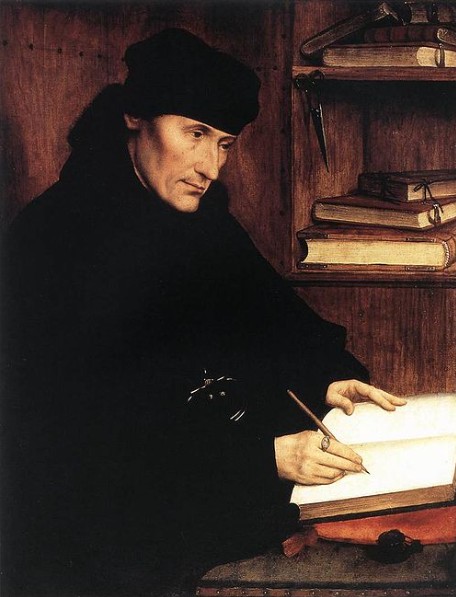
(Matsys, Quentin. Erasmus of Rotterdam. Oil on panel. 1517. National Gallery, London. Wikimedia Commons. https://commons.wikimedia.org/wiki/File:Quentin_Massys-_Erasmus_of_Rotterdam.JPG.)

Quentin Matsys's 16th-century oil portrait depicts Desiderius Erasmus of Rotterdam seated at a desk with books and a quill, his fur-lined robe and thoughtful expression highlighting his humanist scholarship and satirical writings.
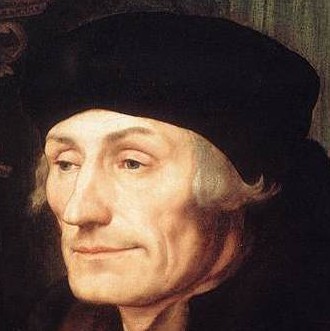
(Holbein the Younger, Hans. Erasmus of Rotterdam. Black and colored chalks on paper. ca. 1523. Kunstmuseum Basel. Wikimedia Commons. https://commons.wikimedia.org/wiki/File:Erasmus_rotterdam.JPG.)
Hans Holbein the Younger's chalk drawing captures Erasmus in left profile, with detailed facial features and a fur collar, prepared as a study for painted portraits sent to his European correspondents.
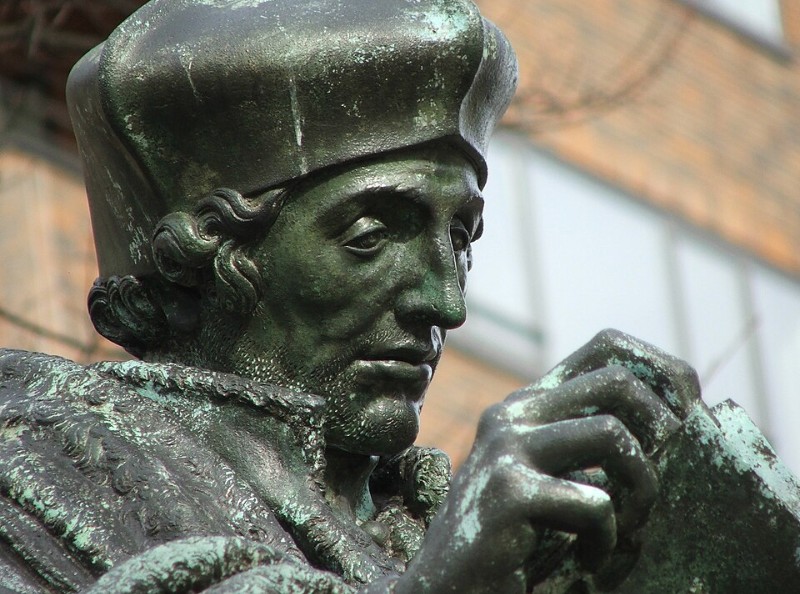
(De Keyzer, Hendrick. Statue of Erasmus of Rotterdam. Bronze sculpture. 1622. Rotterdam, Netherlands. Wikimedia Commons. https://commons.wikimedia.org/wiki/File:Erasmus-of-Rotterdam.JPG.)

A photograph of the 1622 bronze statue of Erasmus in Rotterdam by Hendrick de Keyzer, showing the scholar in robes with a book, the first public statue of a non-royal figure in Europe, celebrating his legacy as a prince of humanists.