
BHAGAVADGITA
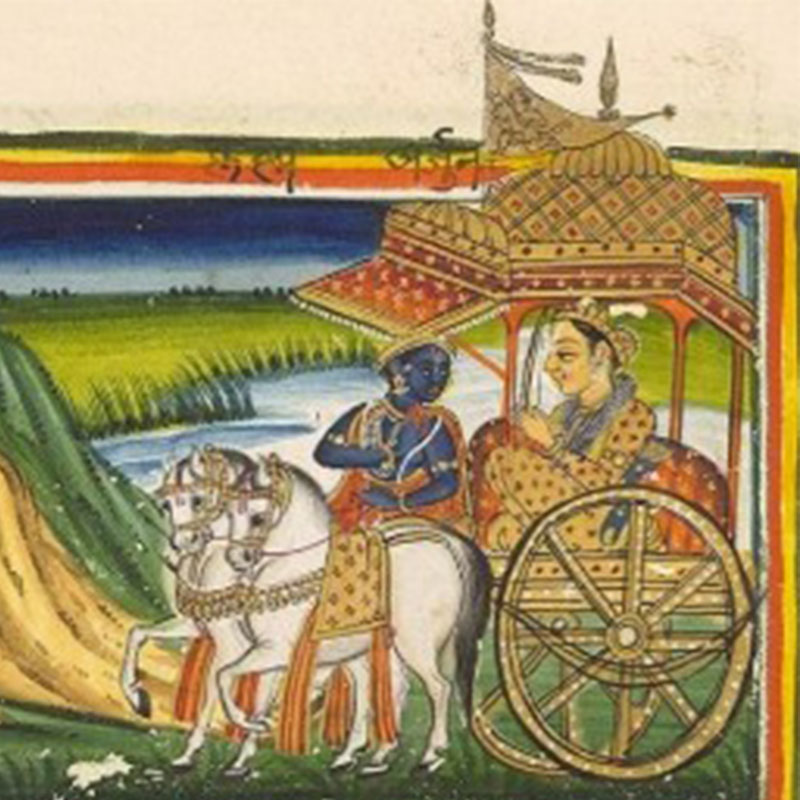

Should a warrior lay down his weapons to stop the killing?
First or second century A.D. · India
The Bhagavadgita, or Song of the Lord, perhaps the greatest and most beautiful of the Hindu scriptures, is the fourth part of the Mahabharata. It is mainly a dialogue between the warrior Prince Arjuna and his friend Krishna, the earthly incarnation of the god Vishnu.
A dialogue on duty and the divine
- The name: Song of the Lord
- Part of: The Mahabharata, as its fourth part
- Composed: Around the first or second century A.D., among the epic’s more recent parts
- Form: A dialogue between Prince Arjuna and Krishna
- Krishna: The earthly incarnation of the god Vishnu
What does duty demand when a war is just but brutal?
Hover or tap each idea to look closer
- Arjuna’s DilemmaEngaged in a brutal but just war, Prince Arjuna contemplates throwing down his weapons and giving up his own life in order to avert more bloodshed.
- The Call to DutyKrishna recalls Arjuna to his sense of responsibility and reminds him that he must discharge his duty as a warrior:“But if thou doest not this lawful battle, then thou wilt fail thy duty and glory and will incur sin.”
- A Need for CertaintyThe conversation reveals not only Arjuna’s moral dilemma about the battle, but also a deeper need for certainty about matters spiritual.
- Krishna RevealedNoting this need to understand, Krishna reveals himself as the god Vishnu.
- God, the Soul, and ImmortalityTheir dialogue then examines ethical questions, the nature of God, the nature of the soul, and the ways in which man might best serve God and achieve immortality.
Perhaps the greatest and most beautiful of the Hindu scriptures.
Set within the Mahabharata, the Bhagavadgita turns one warrior’s dilemma on the battlefield into a dialogue on duty, the nature of God and the soul, and the ways in which man might best serve God and achieve immortality.
Where to read more about the Bhagavadgita.
- 1948The Bhagavadgītā: With an Introductory Essay, Sanskrit Text, English Translation and NotesRadhakrishnan, Sarvepalli · George Allen & Unwin
- 1969The Bhagavad-Gītā: With a Commentary Based on the Original SourcesZaehner, R. C. · Oxford University Press
- 1972Bhagavad-gītā As It IsPrabhupāda, A. C. Bhaktivedanta Swami · Macmillan · complete edition
- 1984The Bhagavad GītāSargeant, Winthrop, trans. · SUNY PressA scholarly translation with the Sanskrit text.
- 1985The Bhagavad GitaEaswaran, Eknath, trans. · Nilgiri Press
- 2000Bhagavad Gita: A New TranslationMitchell, Stephen · Harmony Books
- 2011The Bhagavad-Gītā: A New TranslationFeuerstein, Georg, with Brenda Feuerstein · Shambhala
- The Bhagavad GitaSanskrit text with English translations and commentary.Sacred Text Archive (Arnold translation)bhagavad-gita.orgholy-bhagavad-gita.org
- The MahabharataThe full epic in Kisari Mohan Ganguli’s English translation.Sacred Text Archive
- The Gita in Gandhi’s Writingsmkgandhi.org
- Encyclopaedia Britannica: Bhagavadgitabritannica.com
- Wikipedia: Bhagavad Gitaen.wikipedia.org
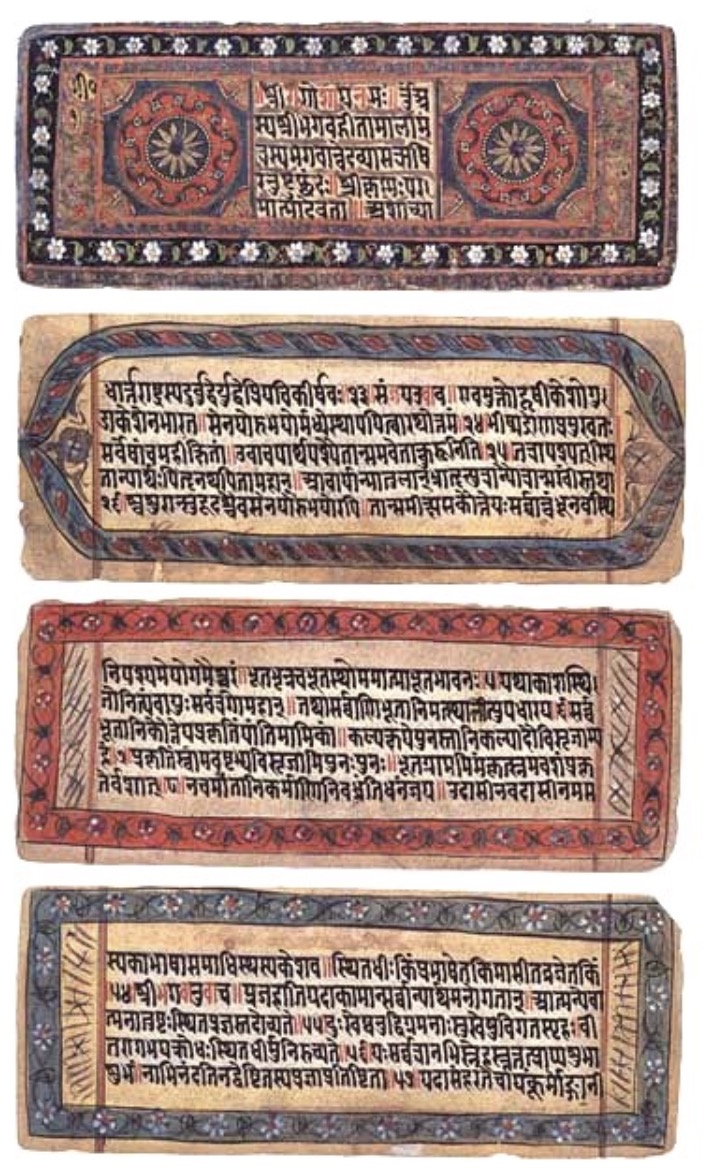
https://commons.wikimedia.org/wiki/File:Bhagavad_Gita,_a_19th_century_manuscript.jpg
A beautifully decorated 19th-century manuscript page from North India, featuring Sanskrit verses of the Bhagavad Gita with ornate floral borders and gold accents.
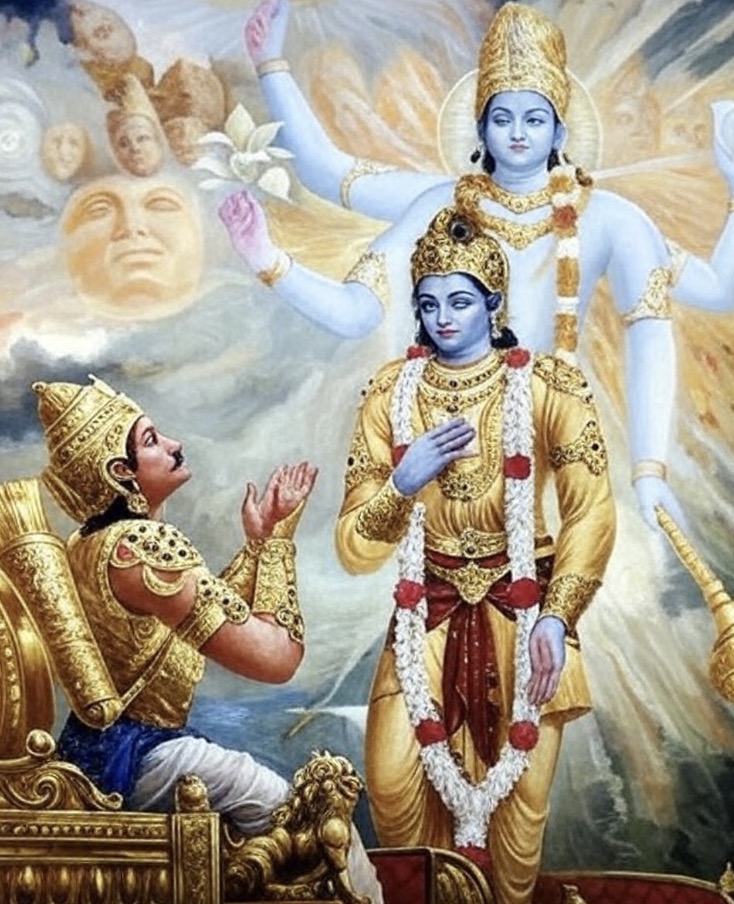
(AI-generated image)
The Bhagavad Gita, a timeless spiritual masterpiece from the Mahabharata, offers profound wisdom on duty, devotion, and liberation through the divine dialogue between Krishna and Arjuna, shaping spiritual and philosophical thought across millennia.
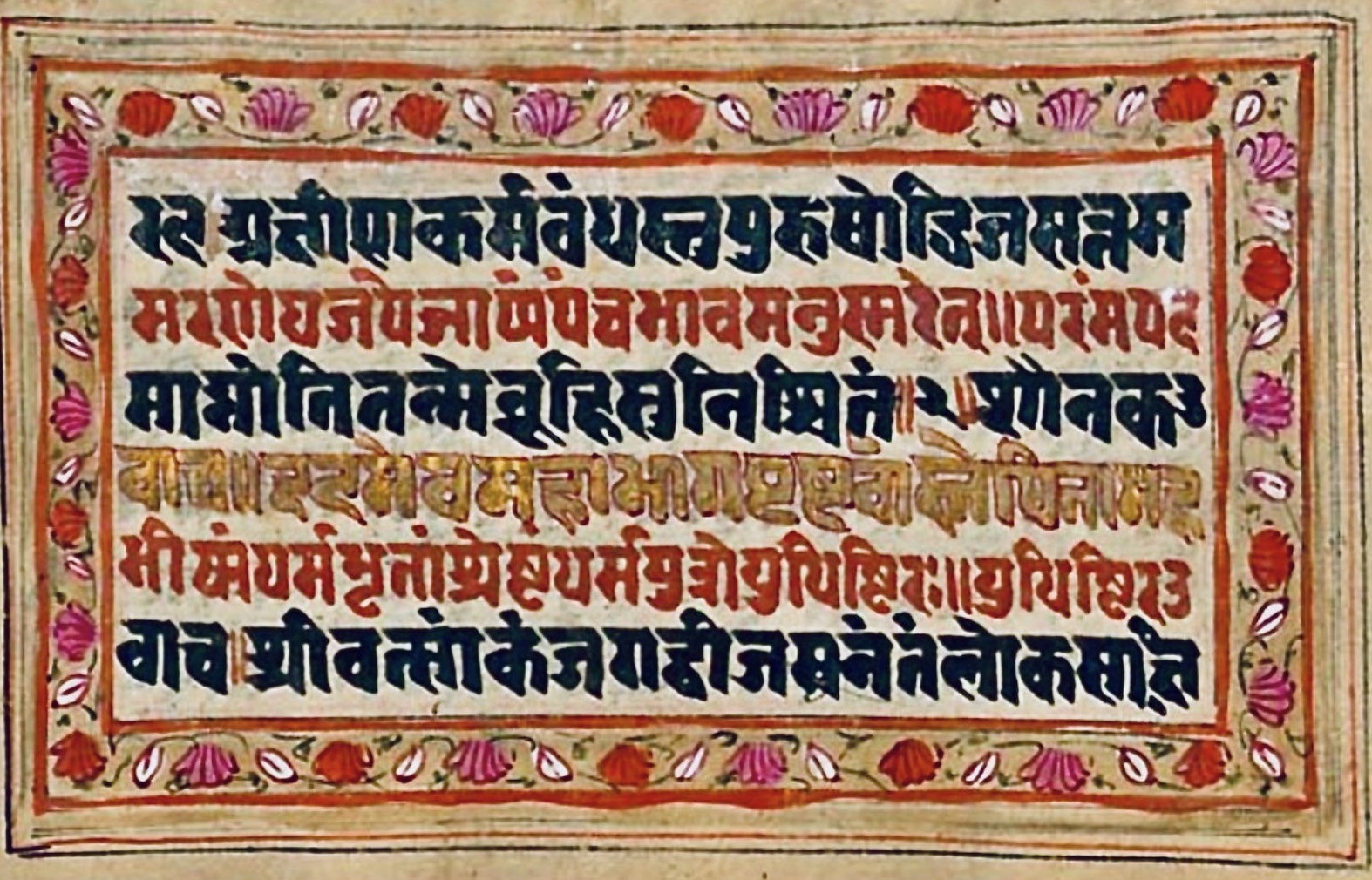
https://commons.wikimedia.org/wiki/File:1800_CE_manuscript_copy,_2nd_century_BCE_Bhagavad_Gita,_Schoyen_Collection_Norway.jpg
An 1800 CE manuscript copy of the 2nd-century BCE Bhagavad Gita from the Schøyen Collection in Norway, showcasing ancient script on aged paper with devotional motifs.