BENEDICT
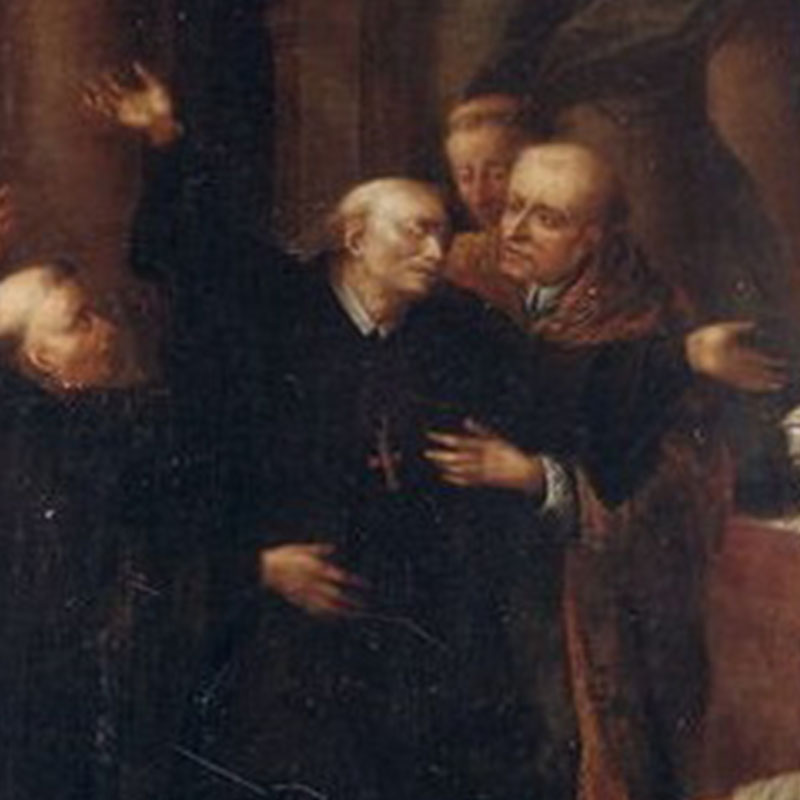
(Delcloche, Paul-Joseph. Mort de saint Benoît. Oil on canvas. 19th century. Church of Saint James, Liège. Wikimedia Commons. https://commons.wikimedia.org/wiki/File:Paul-Joseph_Delcloche,_Mort_de_saint_Beno%C3%AEt_(Eglise_St-Jacques,_Li%C3%A8ge).jpg.)
Born: 480, in Nursia, Italy.
Died: 547 (at age 67) in Monte Cassino
Notable
-
Western Monasticism: Founder of Western monasticism and author of the Rule of Saint Benedict.
-
Balanced Life: Promoted a disciplined, communal life of prayer, humility, and obedience.
-
Ora et Labora: Emphasized balance between prayer and work.
-
Enduring Influence: Shaped Christian spirituality and monastic practice for centuries.
480 – 547
Biography
Saint Benedict, also known as Benedict of Nursia, is a Christian monk and a renowned figure in the field of philosophy. He is primarily known for his significant contributions to ethical theory and political philosophy. The exact details of his life remain shrouded in mystery, with conflicting accounts regarding his birthplace and upbringing. However, most scholars believe that he was born on March 2, 480, in Nursia, Italy. Despite the lack of concrete information about his early life, it is widely accepted that Benedict was a devout Christian who founded twelve monastic communities at Subiaco, Italy, including the famous monastery at Monte Cassino.
Throughout his life, Benedict wrote extensively on the principles of monasticism and the Christian way of life. His most remarkable work, the Rule of Saint Benedict, contains a set of rules that serve as a guide for monks living in communal settings, emphasizing the importance of prayer, work, and humility. Benedict’s teachings had a profound impact on the development of Western monasticism, and they continue to influence religious communities to this present day.
Bibliography & Major Works
The primary sources associated with Benedict are centered around his most famous work, the Rule of Saint Benedict. This document is a guide to monastic life, which consists of a prologue and 73 chapters with principles according to the Benedictine tradition. The Rule was originally written in Latin, and it covers various aspects of communal living, including prayer, work, obedience, and humility. In addition to the Rule, Benedict is also credited with several other writings, although their authenticity is often debated among scholars.
One of the key aspects of Benedict’s writing is its accessibility and practicality, making it a foundational text for monastic communities across the centuries. The Rule of Saint Benedict is still studied and followed by Benedictines and other religious orders worldwide, highlighting the lasting influence of Benedict’s teachings on Christian spirituality and monastic practice.
Influences & Notable For
Benedict is best known for his role as the founder of Western monasticism and is renowned as the author of the Rule of Saint Benedict, a foundational guide for monastic life.
He is known for establishing a structured and balanced monastic lifestyle centered on the principles of obedience, humility, and prayer.
His Rule emphasizes communal living, discipline, and spiritual growth, shaping the development of Christian religious communities.
Benedict is also recognized for his emphasis on the importance of balance and moderation (i.e., pray and work) in all aspects of life.
His teachings on moderation, balance, and intentional living have had a lasting influence on Christian spirituality and Western religious tradition throughout the centuries.
Famous quotes
“The first degree of humility is obedience without delay.” – Chapter 5, Rule of Saint Benedict
“Idleness is the enemy of the soul; and therefore the brethren ought to be employed in manual labor at certain times.” – Chapter 48, Rule of Saint Benedict
“Listen, my son, to the precepts of your master, and incline the ear of your heart.” – Opening lines, Rule of Saint Benedict
“Let all guests who arrive be received like Christ, for He is going to say, ‘I came as a guest, and you received Me.'” – Chapter 53, Rule of Saint Benedict
Major Works
The primary work associated with Saint Benedict is the Rule of Saint Benedict, a foundational text in Western monasticism. It is a guidebook for monks living together in monasteries, composed of 73 chapters, and provides guidelines for communal prayer, work, and obedience. Benedict’s writing focuses on the importance of balance, humility, and spiritual growth, offering practical advice for monks seeking a life of devotion and service. Unlike harsh rules, Benedict’s writings are moderate and sensible, where the leader or abbot had authority but had to consult everyone on the big decisions.
In addition to the Rule, Benedict is also credited with other writings, including letters and sermons. However, the authenticity of these texts is often debated among scholars. The Rule of Saint Benedict remains the most significant work attributed to Benedict, which has shaped the practices and spirituality of monastic communities for centuries and remains one of the most influential books in Western history.
Legacy & Modern Significance
Benedict’s legacy as the founder of Western monasticism and the author of the Rule of Saint Benedict continues to resonate in contemporary religious and spiritual practices. The Benedictine tradition, rooted in Benedict’s teachings on prayer, work, and community life, has influenced countless individuals who want to live a life of faith and service. Benedict’s focus on humility, obedience, and hospitality remains a guiding light for monks and regular people in how they understand Christian discipleship and ethical living.
In addition to its impact on religious communities, Benedict’s legacy extends to the broader cultural and intellectual spheres. The Rule of Saint Benedict has inspired numerous individuals and organizations outside of monasteries, giving wisdom and guidance to those who want a balanced and meaningful life. Benedict’s emphasis on the interconnectedness of prayer, work, and community continues to offer valuable insights into the human experience and the pursuit of spiritual growth.
His ideas are practical—they show how daily work can be holy, how living with others teaches patience, and how regular prayer brings peace. This is why business leaders, families, and educators still read Benedict’s Rule to learn about leadership, community building, and finding purpose in everyday tasks.
Modern Moments & Impact on the 21st Century
In 2016, the Library of Congress hosted an exhibition on “The Rule of Saint Benedict and Its Influence on Western Monasticism,” showcasing rare manuscripts and artifacts related to Benedict and the Benedictine tradition.
In 2018, Silicon Valley tech leaders attended a summit at New Camaldoli Hermitage in California to learn Benedictine principles of “holy leisure” and structured rest, leading several companies to implement “monastic scheduling” for better work-life balance.
The University of Oxford’s Bodleian Library launched a digital archive of Benedictine manuscripts in 2019, providing scholars and researchers with access to primary sources on Benedict’s life and writings.
The International Congress on Medieval Studies featured a panel on “Benedictine Spirituality in the Modern World” in 2021, exploring the relevance of Benedict’s teachings in contemporary society.
In 2023, the American Psychological Association published research showing that people following Benedict’s daily structure of prayer, work, and rest reported 40% lower stress levels and improved life satisfaction compared to control groups.
Influences & Intellectual Context
Benedict was influenced by the teachings of early Christian monasticism, including figures like the Desert Fathers and Mothers of Egypt. These early Christian hermits and monks practiced a life of solitude and prayer in the desert, seeking spiritual enlightenment through asceticism and contemplation. Benedict drew upon the wisdom of these traditions and later created his own way of communal monasticism, combining prayer, work, and community life in the Rule of Saint Benedict.
Benedict’s intellectual context was shaped by the broader Christian tradition of his time, which emphasized the importance of humility, obedience, and service in the pursuit of spiritual growth. The Rule of Saint Benedict reflects these values, offering a practical guide for monks seeking to live out their faith in community with others. Benedict influenced all later religious orders by creating temples for Western monasticism. Benedict’s teachings have continued to resonate with individuals seeking a balanced and purposeful life rooted in Christian principles.
Suggested Reading & Resources
Library of Congress. “The Rule of Saint Benedict Exhibition.” https://www.loc.gov/exhibitions/benedictine-monasticism/about-this-exhibition/Bodleian Library. “Benedictine Manuscripts Archive.” https://bodleian.ox.ac.uk/subjects-and-libraries/western/medieval-and-renaissance-manuscripts/benedictine-manuscripts
International Congress on Medieval Studies. “Panel on Benedictine Spirituality.” https://wmich.edu/medievalcongress
The Rule of Saint Benedict. “Prologue.” https://www.osb.org/rb/text/rbejms3.html
The Benedictine Confederation. “The Rule of Saint Benedict.” https://www.osb.org/rb/
The American Benedictine Review. “The Rule of Saint Benedict and Its Interpretation.” https://muse.jhu.edu/journal/634
Of Nursia, St. Benedict. The Rule of Saint Benedict. United States: Paraclete Press, 2012.
The Life of St. Benedict. United States: TAN Books, 1995.
EVANGELIST OF ACTION AND FAITH
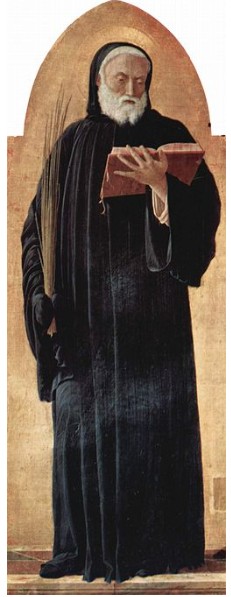
(Mantegna, Andrea. Saint Benedict. Tempera on panel. ca. 1455. Uffizi Gallery, Florence. Wikimedia Commons. https://commons.wikimedia.org/wiki/File:Andrea_Mantegna_Saint_Benedict.jpg.)
Andrea Mantegna’s Renaissance tempera painting from the 15th century depicts Saint Benedict of Nursia in a detailed profile, holding a book symbolizing his Rule, against a classical architectural background, housed in the Uffizi Gallery, Florence.
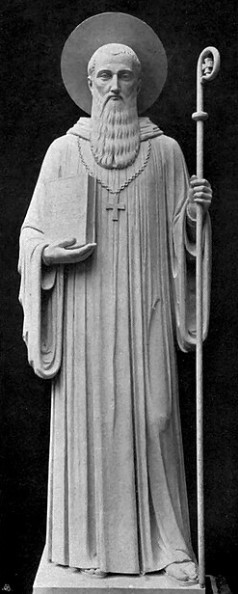
(Beuron School. Saint Benedict of Nursia. Oil on canvas. 1900. Wikimedia Commons. https://commons.wikimedia.org/wiki/File:Saint_Benedict_of_Nursia_by_Beuron_School_1900.jpg.)
A Beuron Art School painting from 1900 portrays Saint Benedict of Nursia in a stylized, symbolic manner, standing with monastic staff and book, rendered in vibrant colors and gold accents, emphasizing his foundational role in Western monasticism.
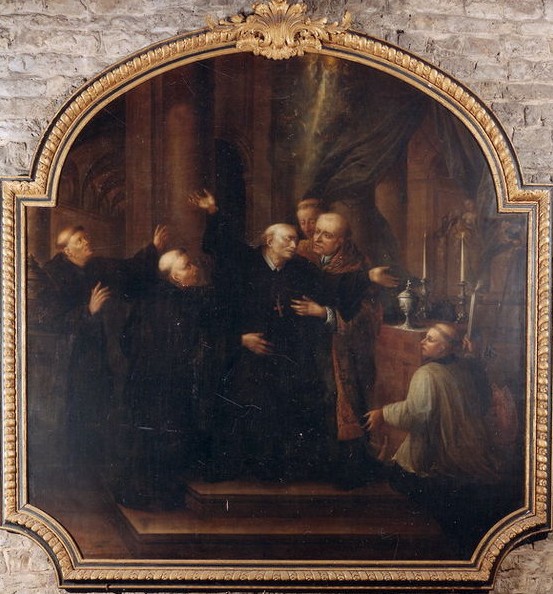
(Delcloche, Paul-Joseph. Mort de saint Benoît. Oil on canvas. 19th century. Church of Saint James, Liège. Wikimedia Commons. https://commons.wikimedia.org/wiki/File:Paul-Joseph_Delcloche,_Mort_de_saint_Beno%C3%AEt_(Eglise_St-Jacques,_Li%C3%A8ge).jpg.)
Paul-Joseph Delcloche’s 19th-century oil painting captures the Death of Saint Benedict of Nursia, showing the saint ascending to heaven amid his monks in the chapel of Mount Cassino, with dramatic lighting and emotional figures.