Augustine

AUGUSTINE

Augustine
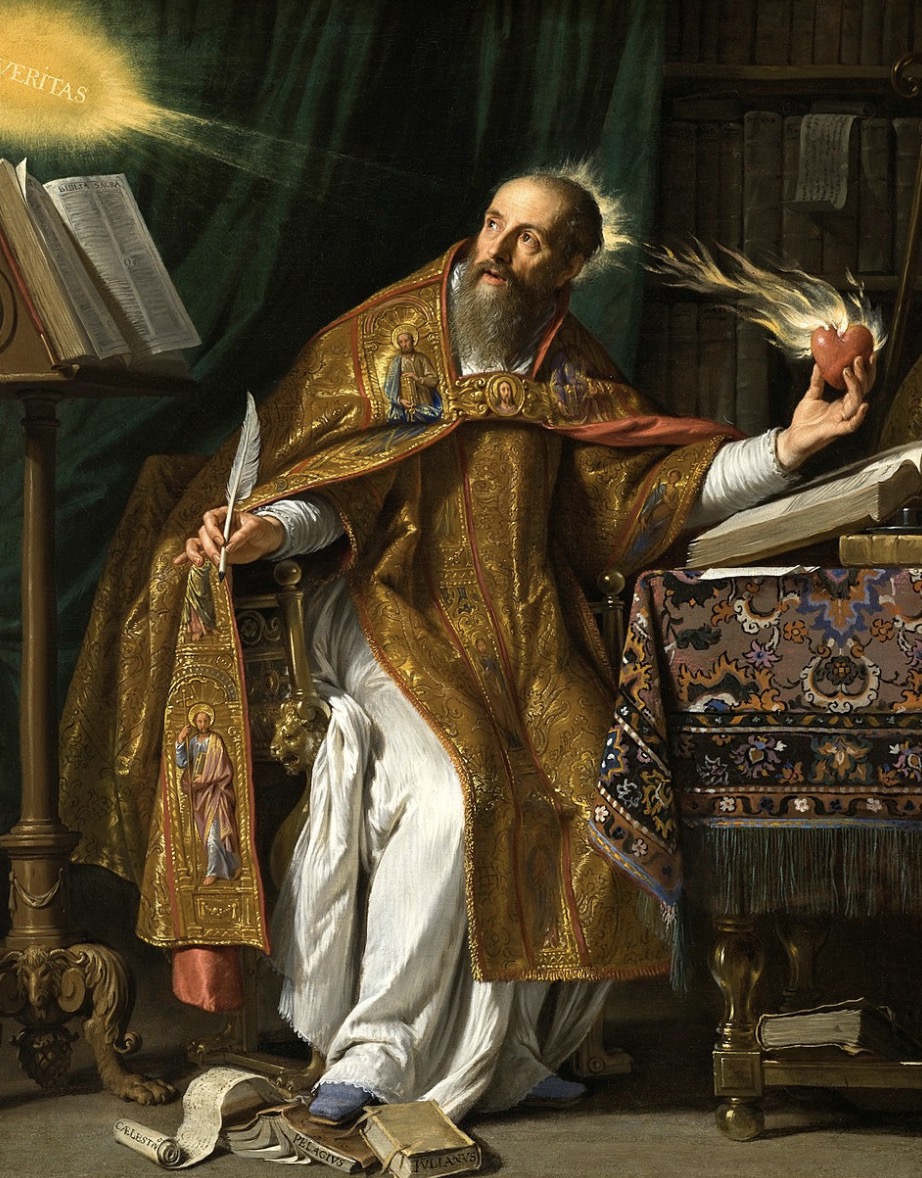
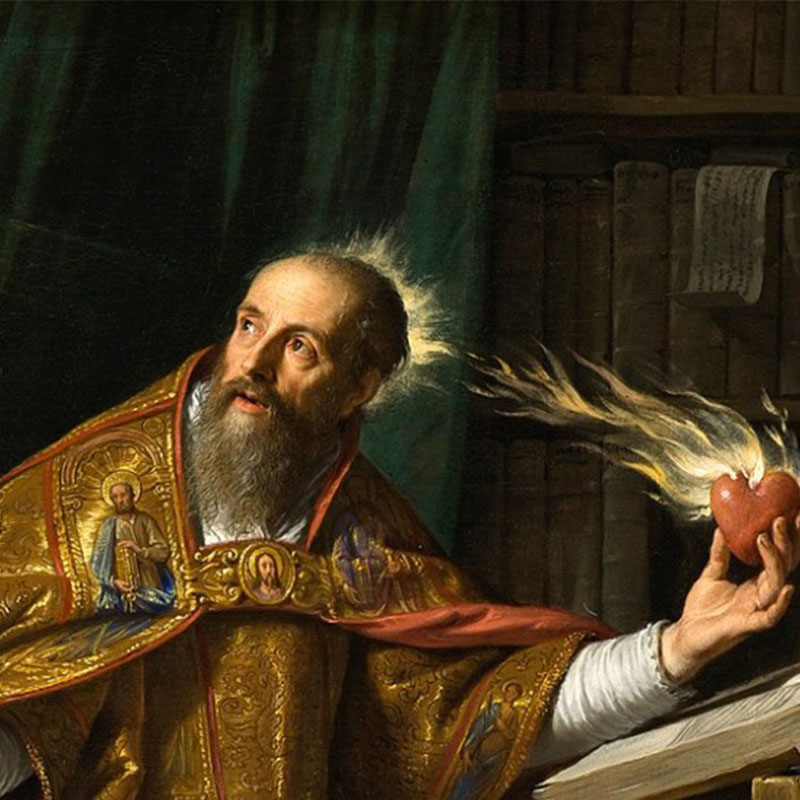
(Citation: Champaigne, Philippe de. Saint Augustine. Oil on canvas. ca. 1645–1650. Wikimedia Commons. https://commons.wikimedia.org/wiki/File:Saint_Augustine_by_Philippe_de_Champaigne.jpg.)

Born: 354 CE, Thagaste, Numidia (modern Algeria)

Died: 430 CE, Hippo Regius, North Africa

Notable

  • Architect of Christian Theology: Merged Platonic philosophy with biblical revelation, establishing doctrines of original sin, grace, and the City of God against pagan critiques.
  • Confessions (397–400 CE): Pioneered introspective autobiography, tracing his conversion from Manichaeism and hedonism to Catholicism through restless seeking and divine illumination.
  • Principle of Restless Heart: Argued that human will is inclined toward evil without grace, yet the soul finds peace only in God, transforming time, memory, and evil into narratives of redemption.

354-430 CE

Biography

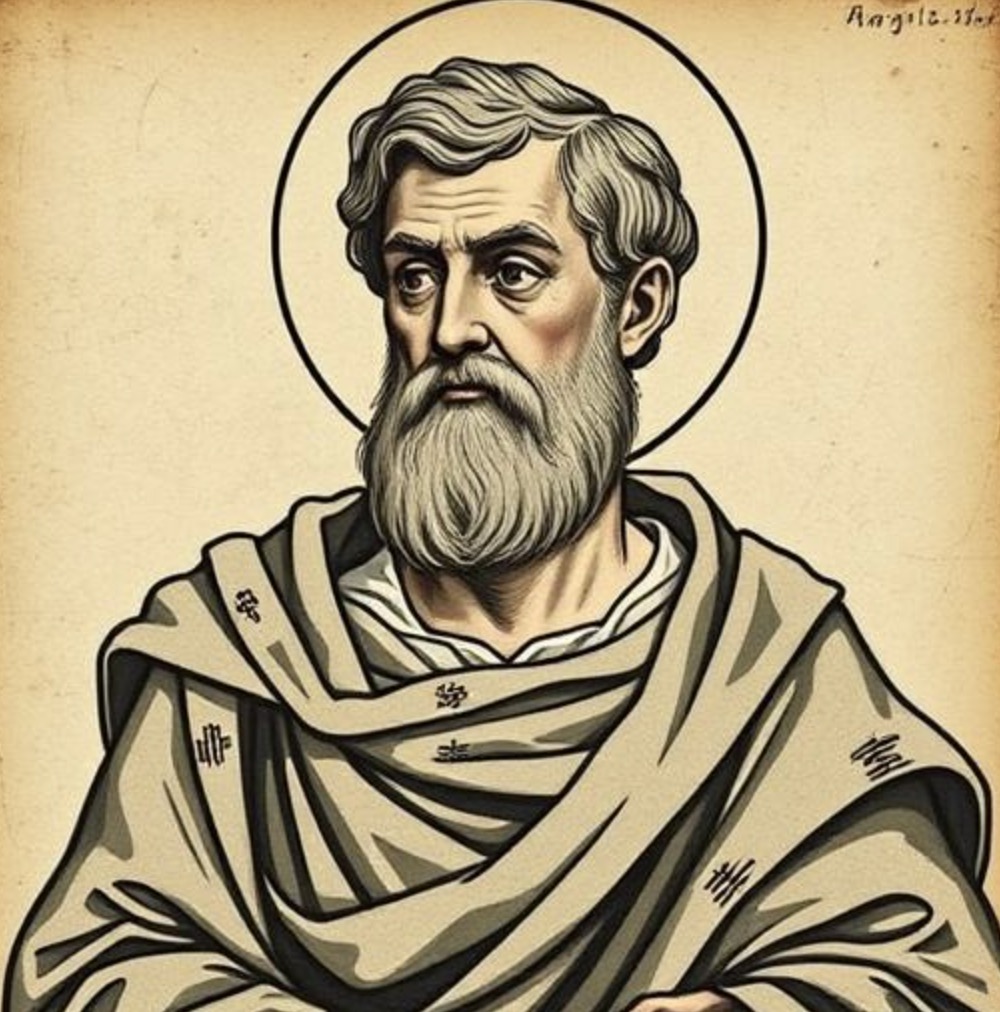
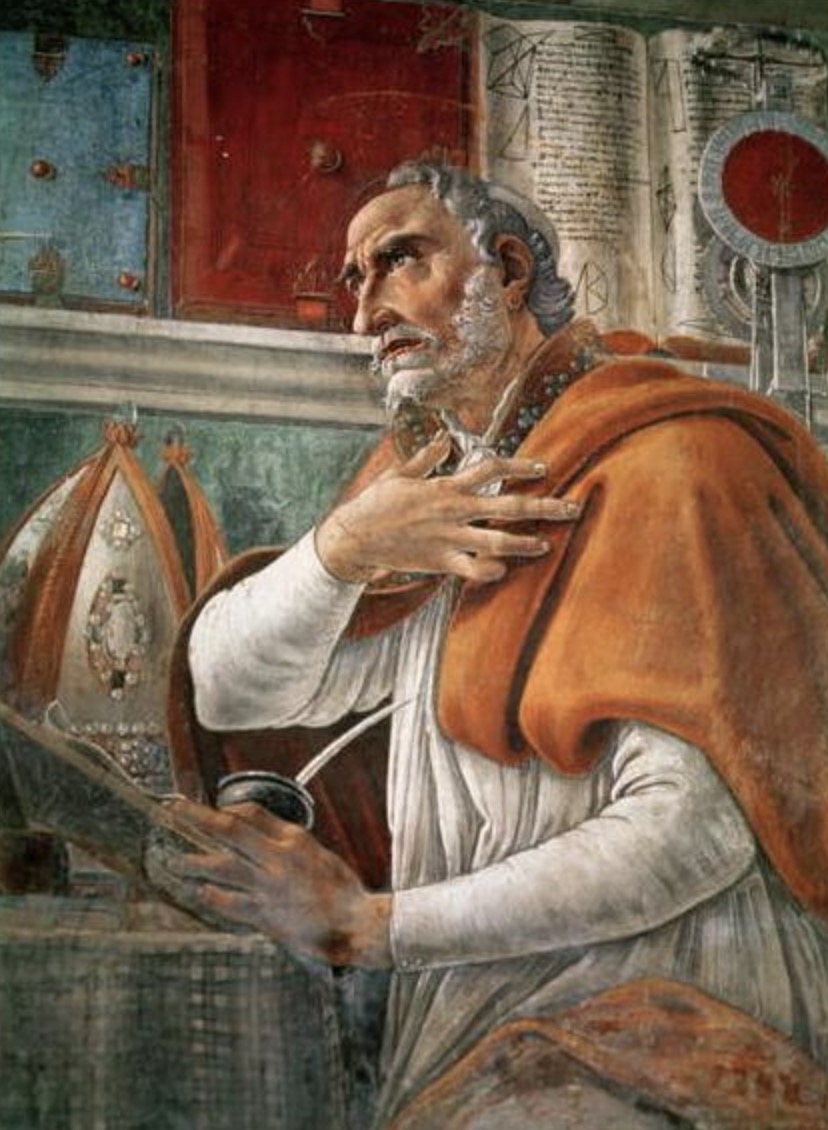
Augustine (Aurelius Augustinus, 354–430 CE) was a North African theologian, philosopher, and bishop whose writings shaped Western Christianity and Latin thought. Born in Thagaste (present-day Souk Ahras, Algeria), Augustine received a classical education in rhetoric at Carthage, taught in Rome and Milan, and converted to Christianity in 386 under Ambrose’s influence. After returning to Africa, he became bishop of Hippo Regius (Annaba, Algeria) in 395, leading a monastic community while combating Manichaeism, Donatism, and Pelagianism. His vast corpus—sermons, letters, treatises, and autobiographical Confessions—blended Neoplatonic metaphysics with biblical exegesis. Augustine’s followers formed no formal school, but his authority dominated medieval theology and scholasticism.

Augustine’s thought has been interpreted by modern scholars as a synthesis of faith and reason, interiority and grace, with proto-existential and psychological depth. His emphasis on original sin, predestination, and the City of God contrasted with Pelagian optimism and classical civic virtue. Augustine’s work eclipsed earlier Latin fathers (Tertullian, Cyprian) and endured through Carolingian, medieval, and Reformation revivals.


Bibliography & Major Works

Major Published Works:

Confessions (Confessiones)

Composed c. 397–400 CE.

Survives in 13 books, an autobiographical prayer tracing sin, conversion, and divine grace.

Original language: Latin.

City of God (De civitate Dei)

Composed c. 413–426 CE.

Survives in 22 books, a Christian philosophy of history against pagan critics after Rome’s 410 sack.

On Christian Doctrine (De doctrina Christiana)

Composed c. 396–427 CE.

Survives in 4 books, a hermeneutical manual for scriptural interpretation and preaching.

On the Trinity (De Trinitate)

Composed c. 399–419 CE.

Survives in 15 books, exploring psychological analogies for the Triune God.

Key Manuscripts and Editions:

Corpus Scriptorum Ecclesiasticorum Latinorum (CSEL): Critical editions of Augustine’s works – https://www.oeaw.ac.at/ksbm/forschung/csel

Loeb Classical Library: Confessions (trans. Carolyn J.-B. Hammond) – https://www.hup.harvard.edu/catalog.php?isbn=9780674996936

New City Press: The Works of Saint Augustine: A Translation for the 21st Century (50+ vols., ongoing) – https://www.newcitypress.com

Patrologia Latina (Migne): Full Latin texts – https://patristica.net/latina

Influences & Notable For

Notable For

Author of Confessions: First spiritual autobiography in Western literature; model of introspective writing.

Doctrine of Original Sin: Humans inherit guilt and concupiscence from Adam; grace alone enables virtue.

Two Cities Theology: Earthly city (self-love) vs. City of God (love of God); framework for Christian political theory.

Just War Theory: Early criteria for legitimate warfare (authority, cause, intention).

Influences

Manichaeism: Early adherence (373–382); later refuted dualism.

Neoplatonism: Plotinus and Porphyry via Victorinus; enabled intellectual conversion.

Pauline Theology: Romans 7–9 shaped grace and predestination.

Latin Fathers: Ambrose, Cyprian, Tertullian; rhetorical and pastoral models.


Famous quotes
  • “Tu excitas ut laudare te delectet, quia fecisti nos ad te et inquietum est cor nostrum donec requiescat in te.” (“You arouse us to take joy in praising you, for you have made us for yourself, and our heart is restless until it rests in you.”) – Augustine, Confessions 1.1.1 (New City Press – https://www.newcitypress.com)
  • “Da mihi castitatem et continentiam, sed noli modo.” (“Grant me chastity and continence, but not yet.”) – Augustine, Confessions 8.7.17
  • “Dilige et quod vis fac.” (“Love, and do what you will.”) – Augustine, In epistulam Joannis ad Parthos 7.8
Legacy & Modern Significance

Historical Dominance: Official theologian of Western Church; cited in councils (Orange 529, Trent).

Medieval Synthesis: Anselm, Aquinas, Bonaventure built on Augustinian illumination and voluntarism.

Reformation Divide: Luther (Augustinian monk) and Calvin amplified grace; countered by Jesuit Molinism.

Modern Reappraisal: Existential (Kierkegaard), psychological (Freud), linguistic (Wittgenstein), political (Arendt).

Sources:

Taylor, Charles. Sources of the Self (Harvard, 1989)

Elshtain, Jean Bethke. Augustine and the Limits of Politics (Notre Dame, 1995)

Modern Moments & Impact on 21st Century

1967–2000: Peter Brown’s Augustine of Hippo (new ed. 2000) revolutionized biographical and social-contextual study (UC Press – https://www.ucpress.edu/book/9780520227576).

1991–Present: New City Press launched 50-volume modern English translation, completed major phases by 2020s.

Ongoing (2000s–Present): Full Latin texts and translations digitized via Library of Latin Texts (Brepols) and Patrologia Latina Database.

Ongoing (2010s–Present): Augustine mandatory in theology, philosophy, and great-books curricula (e.g., Oxford, Notre Dame, Toronto).

Ongoing (2000s–Present): Stanford and Internet Encyclopedias of Philosophy maintain comprehensive, peer-reviewed entries (https://plato.stanford.edu/entries/augustine/, https://iep.utm.edu/augustine/).

2010: Vatican sponsored International Augustine Congress in Rome; proceedings published by Institutum Patristicum Augustinianum.

Ongoing (2020s): Augustinian themes of memory, time, and evil cited in cognitive science, AI ethics, and post-secular theory (e.g., APA panels, Royal Institute of Philosophy).

Suggested Reading and Resources

Secondary Literature (Scholarship)

Brown, Peter. Augustine of Hippo: A Biography (new ed.). University of California Press, 2000 – https://www.ucpress.edu/book/9780520227576

O’Donnell, James J. Augustine: Confessions (3-vol. commentary). Oxford University Press, 1992.

Van Fleteren, Frederick, ed. Augustine Through the Ages: An Encyclopedia. Eerdmans, 1999.

Harrison, Carol. Augustine: Christian Truth and Fractured Humanity. Oxford University Press, 2000.

Mathews, Gareth B. Augustine (Blackwell Great Minds). Wiley-Blackwell, 2005.

Archival or Online Sources

New City Press: Works of Saint Augustine (full catalog) – https://www.newcitypress.com

Patrologia Latina Database (via Brepols) – https://www.brepolsonline.net/series/pl

Augustinian Studies Journal (Villanova) – https://www.augustinianstudies.org

Internet Encyclopedia of Philosophy: Augustine – https://iep.utm.edu/augustine/

Stanford Encyclopedia of Philosophy: Augustine – https://plato.stanford.edu/entries/augustine/