Aeschylus

AESCHYLUS

Aeschylus
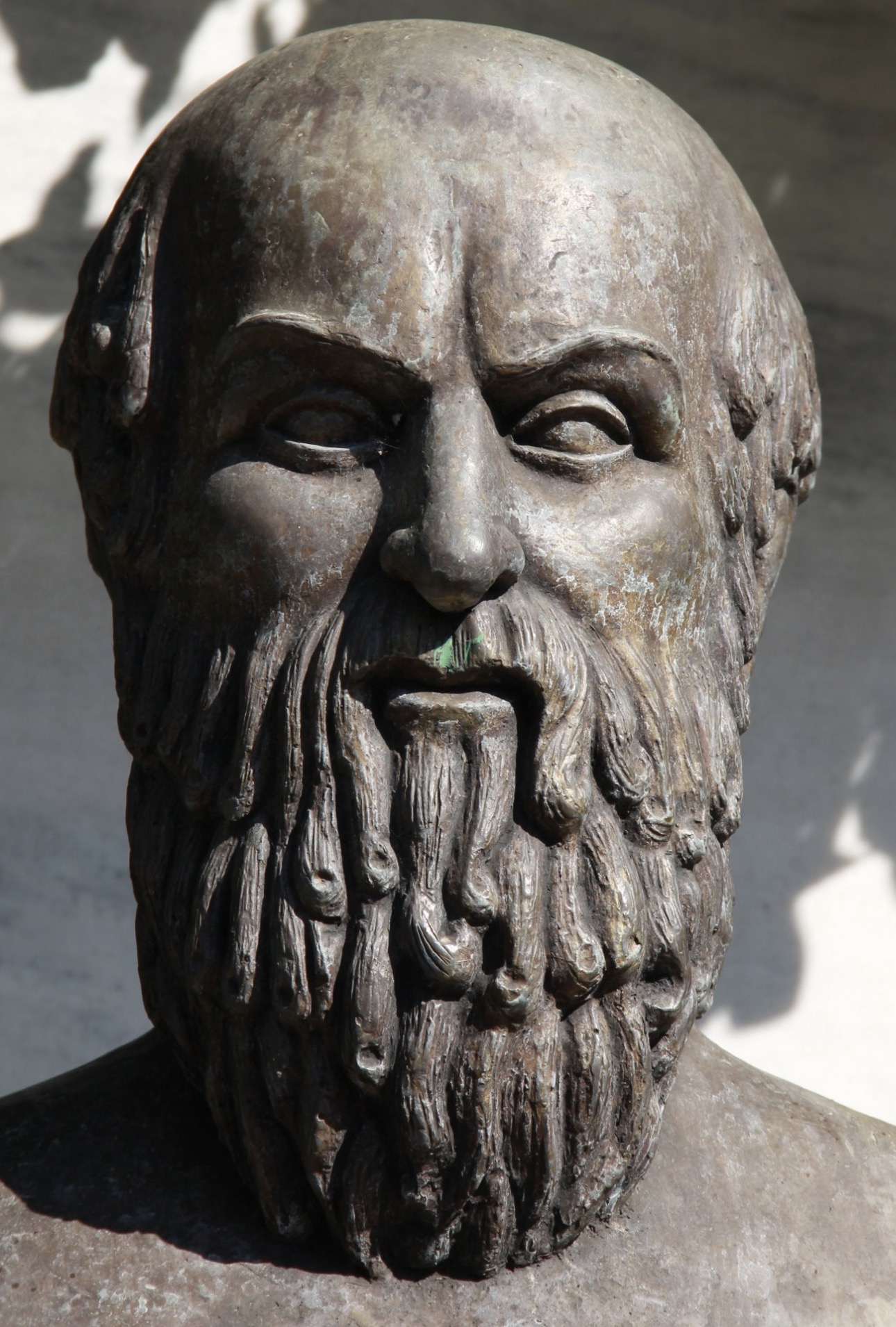
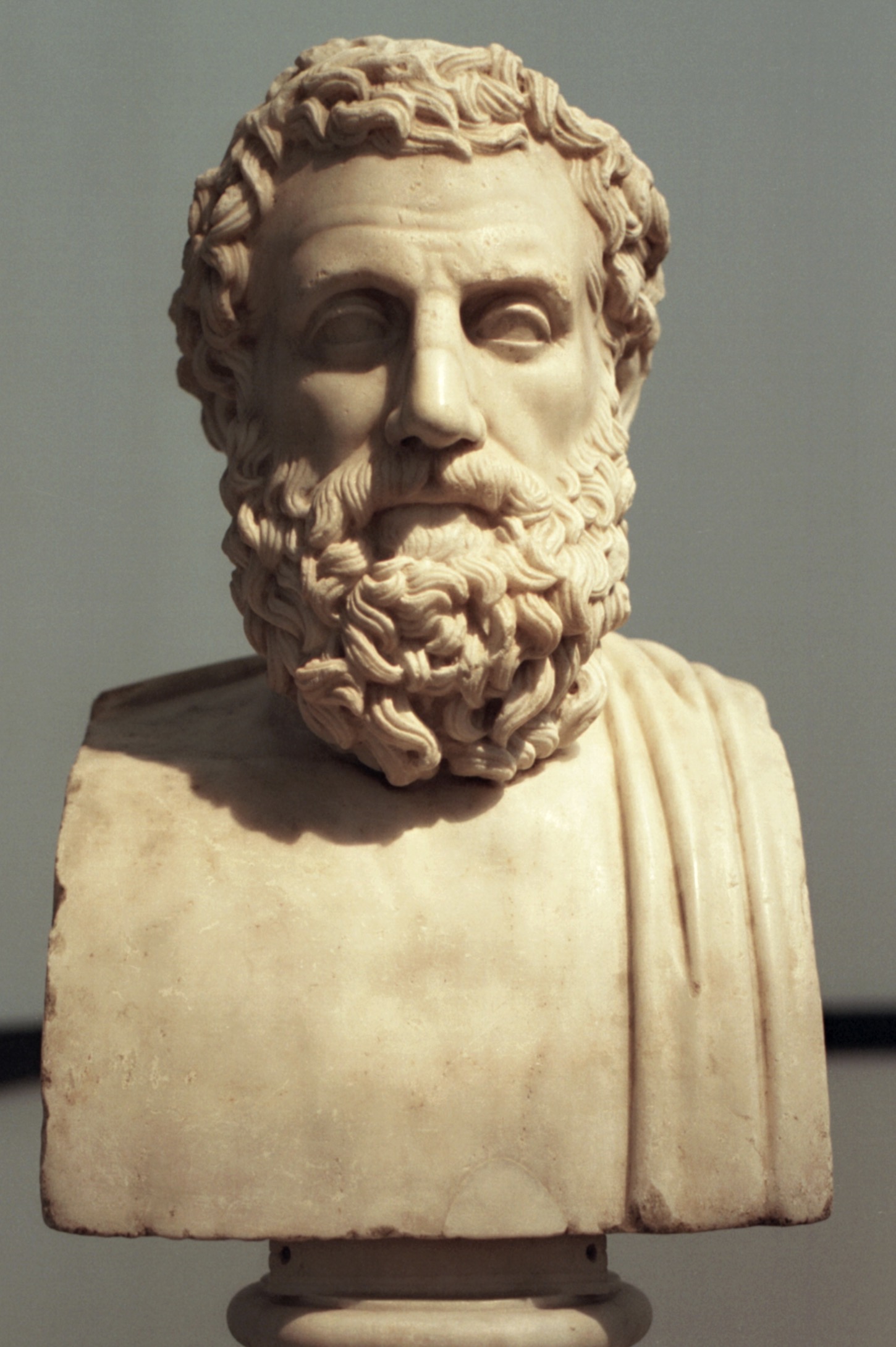
(Unknown. Bust of Aeschylus. Bronze. 20th century. Wikimedia Commons. https://commons.wikimedia.org/wiki/File:Aeschylusathens.jpg.)

Born: circa 525 BCE, Eleusis, Ancient Greece

Died: circa 456 BCE, Gela, Sicily

Notable Achievements:

  • Father of Greek Tragedy: Pioneered the development of tragic drama by introducing a second actor, enhancing dialogue and dramatic complexity in works like The Oresteia.
  • Innovative Theatrical Structure: Expanded the scope of Greek theater with complex plots and themes of justice, fate, and divine retribution, as seen in Prometheus Bound.
  • Moral and Philosophical Depth: Explored profound ethical dilemmas and human struggles, influencing Western literature through tragedies that questioned divine and human authority.
  • Critique of Traditional Myths: Reinterpreted mythological narratives to address contemporary Athenian concerns, emphasizing civic responsibility and moral consequences.
Biography

Aeschylus was an ancient Greek playwright known for writing powerful tragedies. He is often referred to as the “father of tragedy” for his transformative contributions to the development of Greek theater, particularly in the area of tragedy. Aeschylus was born around 525 BCE in Eleusis, a small town near Athens.

Aeschylus participated in the Great Dionysia, a major Athenian festival dedicated to the god Dionysus, where he competed against other playwrights, including his contemporary Sophocles, and won first prize with his play The Persians. He is believed to have written over 70 plays, but only seven surviving tragedies can be attributed to him with certainty. He was the first dramatist to present plays (for example, Oresteia) as a trilogy. One of his plays (The Persians) was influenced by the Persians’ second invasion of Greece, which remains one of the few classical Greek tragedies concerned with contemporary events.

Aeschylus was a highly respected figure in ancient Athens, and his works continue to be studied and performed to this day.

    Bibliography & Major Works

    Aeschylus’s primary sources include his surviving plays, which are The Persians (472 BCE), Seven Against Thebes (467 BCE), The Suppliants (463 BCE), the Oresteia trilogy (458 BCE): Agamemnon, The Libation Bearers, and The Eumenides, and Prometheus Bound (date disputed, c. 460–415 BCE; authorship debated among scholars).

    The Oresteia, his masterpiece, is the only complete Greek trilogy we possess today, which explores themes such as fate, justice, and the conflict between gods and mortals. Aeschylus’s works were influential in shaping the conventions of Greek tragedy and had a lasting impact on Western literature and the world.

    Surviving Complete Tragedies

    • The Persians (Persai, 472 BCE) — The earliest surviving Greek tragedy, based on the historical Battle of Salamis.
    • Seven Against Thebes (Hepta epi Thēbas, 467 BCE) — Final play of the Oedipus trilogy.
    • The Suppliants (Hiketides, c. 463 BCE) — First play of the Danaid trilogy.
    • The Oresteia trilogy (458 BCE) — The only complete surviving ancient Greek trilogy:
      • Agamemnon
      • The Libation Bearers (Choēphoroi)
      • The Eumenides (The Furies)
    • Prometheus Bound (Promētheus Desmōtēs, date uncertain) — Authorship is disputed among modern scholars.

    Lost Plays

    • Achilleis trilogy (on Achilles and the Trojan War): Myrmidons, Nereids, Phrygians (or The Ransoming of Hector)
    • Prometheus trilogy (following Prometheus Bound): Prometheus Unbound, Prometheus the Fire-Bringer
    • Danaid trilogy (following The Suppliants): The Egyptians, The Danaids (satyr play: Amymone)
    • Oedipus trilogy (preceding Seven Against Thebes): Laius, Oedipus (satyr play: The Sphinx)
    • Other notable lost plays: The Net-Draggers (Diktyoulkoi), Niobe, Memnon, The Bassarae, Pentheus, Lycurgus, The Edonians, Glaucus of Pontus, Hypsipyle, Philoctetes, Proteus (satyr play), and many more (full ancient catalogues list around 80 titles total).


    Explore Resources

    Access these Loeb Classical Library editions (translated by Herbert Weir Smyth, 1926) through the Perseus Digital Library:

    • Aeschylus. Agamemnon. Translated by Herbert Weir Smyth. Cambridge, MA: Harvard University Press, 1926.
      Perseus Digital Library
    • Aeschylus. Eumenides. Translated by Herbert Weir Smyth. Cambridge, MA: Harvard University Press, 1926.
      Perseus Digital Library
    • Aeschylus. Persians. Translated by Herbert Weir Smyth. Cambridge, MA: Harvard University Press, 1926.
      Perseus Digital Library
    • Aeschylus. Suppliant Women. Translated by Herbert Weir Smyth. Cambridge, MA: Harvard University Press, 1926.
      Perseus Digital Library

    Note: These are public-domain translations freely available for scholarly use via the Perseus Digital Library.

    Influences & Notable For

    Notable For

    Aeschylus is best known for his pioneering work in the development of Greek tragedy, hence known as the “Father of Tragedy.” He transformed Greek theater by introducing a second actor to the stage for more complex interactions between characters.

    Aeschylus’s plays often dealt with weighty themes such as justice, fate, and the nature of the divine. The Oresteia, his masterful trilogy consisting of Agamemnon, The Libation Bearers, and The Eumenides, is considered one of his greatest achievements. The Oresteia explores the themes of revenge, justice, and the transformation of the Greek legal system. This play greatly influenced Western society’s ideas about justice and democracy.

    Aeschylus was renowned for his rich poetry and enhanced visual theatrical production with costume masks and scenic effects, making tragedy an immersive experience.

    Influences 

    Aeschylus was influenced by various intellectual and cultural factors of his time, including the religious beliefs of ancient Greece, particularly the worship of the gods and the concept of fate; the Persian Wars (Marathon, Salamis), in which he fought, providing firsthand experience of the conflict between Greek freedom and Eastern tyranny; the political and social turmoil in Athens, which shaped the themes of justice and power in his plays; and the works of earlier playwrights such as Thespis and Phrynichus, who laid the foundation for Greek drama.


    Famous quotes
    • “Only when man’s life comes to its end in prosperity can one call that man happy.”
      —Aeschylus (Agamemnon, lines 928–929)
    • “He who learns must suffer. And even in our sleep, pain that cannot forget falls drop by drop upon the heart, and in our own despair, against our will, comes wisdom to us by the awful grace of God.”
      —Aeschylus (Agamemnon, translation)
    • “Obedience is the mother of good success.”
      —Aeschylus (Seven Against Thebes, lines 224–225)
    • “Whoever is just willingly and without compulsion will not lack happiness; he will never be utterly destroyed.”
      —Aeschylus (Eumenides, lines 550–552)
    • “It is in the character of very few men to honor without envy a friend who has prospered.”
      —Aeschylus (Agamemnon, lines 832–833)
    • “Good fortune is a god among men, and more than a god.”
      —Aeschylus (The Libation Bearers, line 59)
    Legacy & Modern Significance

    Historical Significance:
    Aeschylus transformed Greek theater by introducing the second actor, which established the foundation for the development of Western literature and drama. His plays served as civic education for Athenian democracy, exploring themes of justice and vengeance and establishing tragedy as a major art equal to epic poetry through The Oresteia. Aeschylus set the standard that shaped all subsequent Western drama through his successors Sophocles and Euripides.

    Modern Significance:
    Aeschylus’s innovations in theatrical techniques and exploration of philosophical and ethical themes have continued to inspire playwrights and scholars for centuries. His plays are studied in universities around the world and are regularly performed in theaters, demonstrating the enduring relevance of his work. Aeschylus’s influence can be seen in the broader cultural and intellectual spheres, where his themes of justice, fate, and the human condition continue to resonate with contemporary audiences.

    Modern Moments & Impact on 21st Century

    In 2019, a new translation of Aeschylus’s Prometheus Bound by Bryan Doerries was published, bringing the ancient play to a modern audience. The 2,500th anniversary of Aeschylus’s birth was commemorated in 2025 with academic conferences and exhibitions dedicated to his life and works. Digital resources such as online databases and scholarly editions of Aeschylus’s plays have made his work more accessible to contemporary readers and researchers.

    Suggested Reading and Resources

    Aeschylus, A. The Complete Aeschylus: Volume I: The Oresteia. United Kingdom: Oxford University Press, 2011.
    Hogan, James C. A Commentary on The Complete Greek Tragedies. Aeschylus. United Kingdom: University of Chicago Press, 1984.
    Aeschylus. The Complete Aeschylus: Volume II: Persians and Other Plays. United Kingdom: Oxford University Press, USA, 2009.
    Aeschylus, Sophocles, Euripides. The Complete Greek Tragedies. United States: University of Chicago Press, 1974.

    Additional Sources:
    The Guardian. “New Translation of Aeschylus’s Prometheus Bound.
    The Journal of Modern Literature. “Aeschylus’s 2,500th Anniversary.”
    The Ancient Greek Drama Database. “Aeschylus in the Digital Age.”
    The Classical Quarterly. “Aeschylus and Ethics.”
    The Journal of Hellenic Studies. “Aeschylus and Modern Interpretations.”
    The Journal of Aesthetics and Art Criticism. “Aeschylus Reimagined.”
    The Classical Journal. “Aeschylus and Modern Drama.”
    The Norton Anthology of Drama. “Aeschylus’s Influence.”