
REFORMATION CHORALE
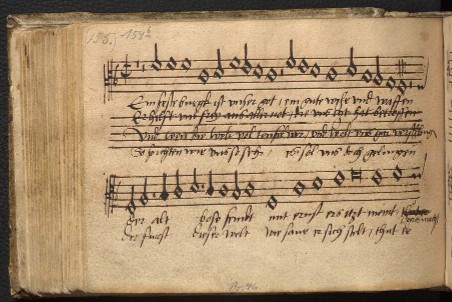
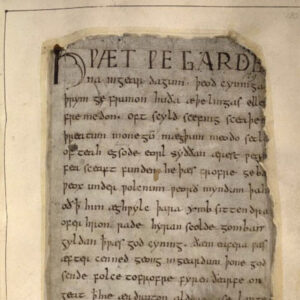
(“https://upload.wikimedia.org/wikipedia/commons/thumb/7/79/Walter_Ein_feste_manuscript_folio_154v.jpg/960px-Walter_Ein_feste_manuscript_folio_154v.jpg?20230114183533”)
Composition began: 1520
Notable
-
Protestant Worship: Shaped Reformation-era worship by encouraging congregational participation through accessible, theologically rich hymns.
-
Community and Identity: Strengthened shared belief and identity within the Protestant movement.
-
Enduring Influence: Remains central to Protestant hymnody and Christian worship worldwide.
Biography
Reformation Chorale is a seminal collection of hymns and songs that emerged during the Protestant Reformation in the 16th century. Comprising a wide array of musical compositions, the Reformation Chorale played a significant role in the spread of Protestant ideas and theology through congregational singing. This musical tradition, rooted in the principles of sola scriptura and congregational participation, was a key component of the reformers’ efforts to promote religious education and devotion among the masses. The Reformation Chorale reflected the theological beliefs of Protestant leaders such as Martin Luther, John Calvin, and Ulrich Zwingli, who saw music as a powerful tool for conveying biblical truths and fostering spiritual unity among believers.
The Reformation Chorale encompassed a diverse range of musical styles, from simple melodies to complex harmonies, and featured texts that were often drawn directly from scripture or written by prominent theologians of the Reformation era. This body of music continues to be sung in Protestant churches around the world, serving as a link to the historical roots of the Reformation and a source of inspiration for contemporary worship practices. The enduring legacy of the Reformation Chorale underscores its enduring significance in the history of Christian music and worship.
Bibliography & Major Works
The primary sources related to the Reformation Chorale include hymnals, songbooks, and musical manuscripts from the 16th century that feature the music and texts of the chorales. These sources provide valuable insights into the composition, performance, and dissemination of the Reformation Chorale during the Protestant Reformation. Key primary sources include:
Eyn geystlich Gesangk Buchleyn, compiled by Michael Weisse in 1531, which contains early Lutheran hymns and chorales.
Genevan Psalter, a collection of psalms set to music by John Calvin and others in Geneva in the mid-16th century.
Achtliederbuch, published by Valentin Schumann in 1524, which includes hymns by Martin Luther and other reformers.
Influences & Notable For
The Reformation Chorale is best known for its role in shaping Protestant worship practices and fostering a sense of community and identity among believers during the Protestant Reformation. These hymns and songs, characterized by their accessible melodies and theological richness, provided a means for congregations to actively participate in worship and internalize key tenets of the Reformation. The Reformation Chorale also served as a vehicle for expressing the theological convictions and spiritual experiences of the reformers, offering believers a sense of connection to the broader movement for reform within the Church.
One of the most notable aspects of the Reformation Chorale is its enduring popularity and influence in the centuries following the Reformation. Many of the chorales composed during this period have become staples of Protestant hymnody and continue to be sung in churches around the world. The adaptability and universality of the Reformation Chorale have contributed to its lasting impact on Christian worship and music.
Famous quotes
“Ein feste Burg ist unser Gott.” (A Mighty Fortress Is Our God) – Martin Luther
“Nun freut euch, liebe Christeng’mein.” (Now Rejoice, Beloved Christians) – Johann Sebastian Bach
“Vater unser im Himmelreich.” (Our Father in Heaven Above) – Valentin Schumann
“Freu dich sehr, o meine Seele.” (O Lord, How Shall I Meet You) – Paul Gerhardt
“Wachet auf, ruft uns die Stimme.” (Wake, Awake, for Night Is Flying) – Philipp Nicolai
Major Works
The Reformation Chorale includes a wide range of major works and textual contents that have played a significant role in Protestant worship and music. These compositions, often based on biblical texts or theological themes, reflect the core beliefs and values of the Protestant Reformation. Some of the major works and textual contents of the Reformation Chorale include:
“Ein feste Burg ist unser Gott” (A Mighty Fortress Is Our God) by Martin Luther
“Nun komm, der Heiden Heiland” (Savior of the Nations, Come) by Martin Luther
“Wachet auf, ruft uns die Stimme” (Wake, Awake, for Night Is Flying) by Philipp Nicolai
“Christ lag in Todesbanden” (Christ Lay in Death’s Bonds) by Martin Luther
“Aus tiefer Not schrei ich zu dir” (Out of the Depths I Cry to You) by Martin Luther
These works, characterized by their theological depth and musical richness, continue to be cherished by believers and musicians alike for their enduring beauty and spiritual significance.
Legacy & Modern Significance
The legacy of the Reformation Chorale is profound and enduring, with its impact extending far beyond the 16th century. These hymns and songs continue to be sung in Protestant churches worldwide, serving as a link to the historical roots of the Reformation and a source of inspiration for contemporary worship practices. The Reformation Chorale remains a powerful symbol of Protestant identity and theology, embodying the core principles of sola scriptura, congregational participation, and the priesthood of all believers.
In addition to its historical significance, the Reformation Chorale has left a lasting imprint on the development of Western music and hymnody. Many of the melodies and harmonizations composed during the Reformation era have become iconic in the realm of sacred music, influencing generations of composers and musicians. The continued popularity and relevance of the Reformation Chorale in the modern era attest to its enduring legacy and significance in the history of Christian music.
Modern Moments & Impact on the 21st Century
In 2017, the 500th anniversary of the Protestant Reformation was celebrated with various events and exhibitions around the world, featuring performances of Reformation Chorale music.
Digital resources such as online hymnals and recordings of Reformation Chorale compositions have made this music more accessible to contemporary audiences.
Academic conferences and symposia continue to explore the legacy and significance of the Reformation Chorale in the context of modern worship practices and musical scholarship.
Influences & Intellectual Context
The Reformation Chorale was influenced by a variety of intellectual and cultural currents of the 16th century, including the theological teachings of key reformers such as Martin Luther, John Calvin, and Ulrich Zwingli. These reformers emphasized the importance of congregational singing as a means of teaching and reinforcing essential Christian doctrines, leading to the development of a distinct musical tradition within Protestant worship. The Reformation Chorale also drew inspiration from the rich heritage of medieval chant and polyphony, adapting these musical forms to suit the needs of the emerging Protestant churches.
In addition to theological influences, the Reformation Chorale was shaped by broader social and political factors of the time, including the rise of printing and the increasing availability of musical texts for congregational use. The chorales were often sung in the vernacular languages of the people, making them accessible to a wider audience and facilitating the spread of Protestant ideas. The intellectual context of the Reformation era, marked by a spirit of renewal and reform, provided fertile ground for the development of the Reformation Chorale as a potent expression of faith and devotion.
HARMONY OF SCRIPTURE AND SPIRIT
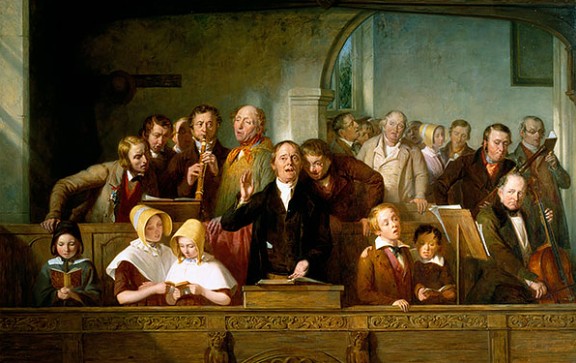
(Crosby, Benjamin. Congregational Singing. Oil on canvas. ca. 2022. Plough Publishing. https://www.plough.com/en/topics/culture/music/is-congregational-singing-dead.)
A 19th-century painting by Benjamin Crosby titled Congregational Singing depicts a Lutheran church service with worshippers singing hymns, instruments like lutes and violins in hand, illustrating the Reformation’s emphasis on participatory music in worship.
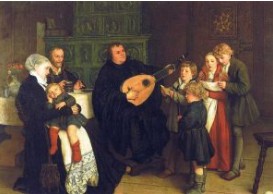
(Unknown. Martin Luther and Music. Engraving. ca. 1900. Musée protestant. https://museeprotestant.org/en/notice/martin-luther-and-music/.)
A historical engraving from the Musée protestant shows Martin Luther playing the lute with family, surrounded by children holding sheet music, symbolizing his composition of chorales like “Ein feste Burg” to make theology accessible through song.
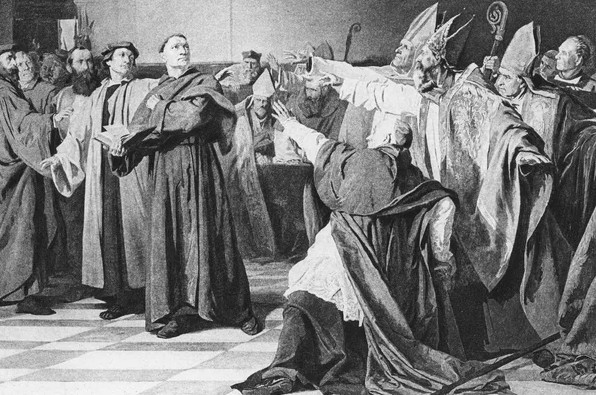
(Unknown. Reformation Chorale Choir. Illustration. 2023. Classical Music. https://www.classical-music.com/articles/reformation.)
A 19th-century illustration from Classical Music magazine depicts a Reformation choir singing a chorale, with conductor and singers in period costumes, highlighting the revolution in church music that democratized worship through vernacular hymns.