
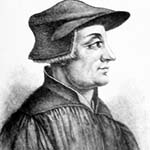
ZWINGLI
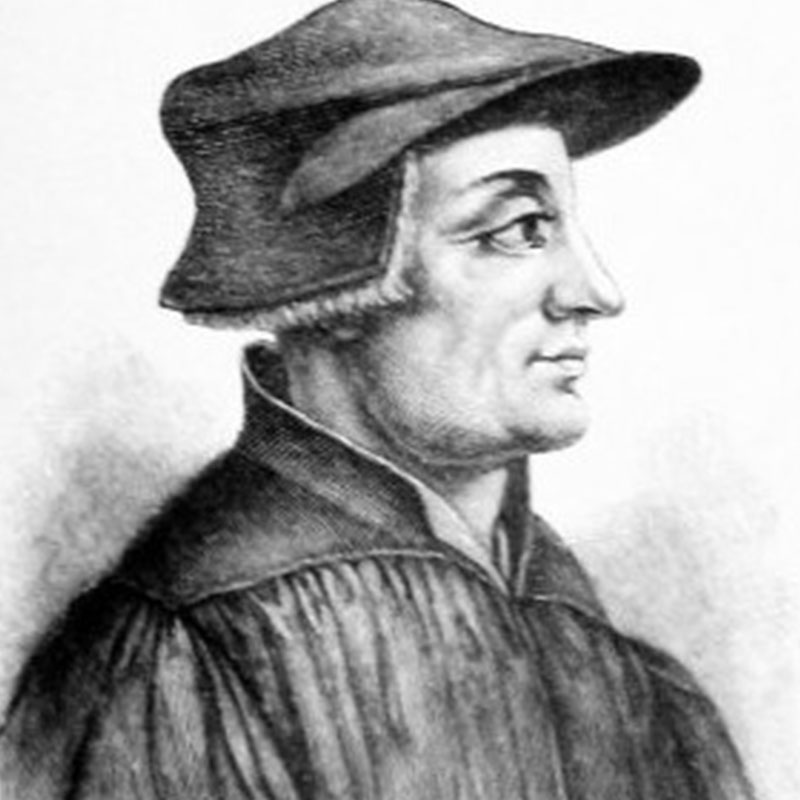
(Unknown. Ulrich Zwingli. Oil on canvas. ca. 1530. Wikimedia Commons. https://commons.wikimedia.org/wiki/File:Ulrich_Zwingli.jpg.)

Born: January 1, 1484 – Wildhaus, Switzerland
Died: October 11, 1531 – Kappel am Albis, Switzerland (killed in battle during the Second War of Kappel)
Notable
- Launching the Protestant Reformation in Switzerland
- Arguing that Scripture alone should guide faith and practice
- Getting rid of Catholic traditions like the Mass, indulgences, and religious images
- Clashing with Luther over the Lord’s Supper at the Marburg Colloquy (1529)
- Helping lay the foundation for Reformed and Calvinist traditions
1509-1564
Biography
Huldrych Zwingli (1484–1531) was a Swiss pastor and theologian who led the Protestant Reformation in Switzerland—separately from Martin Luther, though around the same time. Born in the village of Wildhaus in the Swiss Alps, Zwingli studied in Vienna and Basel, where he developed a strong interest in both classical learning and Christian theology.
In 1519, he became the pastor at Zurich’s main church, the Grossmünster, and quickly began pushing for reform. He called for removing religious images, ending the Catholic Mass, and returning to Scripture as the highest authority. While he agreed with Luther on many things, they famously clashed over the nature of the Eucharist—Zwingli believed it was symbolic, not the literal body and blood of Christ.
His reforms shaped what became the Reformed tradition in Protestantism. Zwingli died in battle during a conflict between Protestant and Catholic regions of Switzerland in 1531.
Bibliography
Sixty-Seven Articles (1523) – His core theological points, presented during the Zurich Disputation
Commentary on True and False Religion (1525) – A detailed argument for reform and Scripture-based faith
Fidei Ratio (1530) – His statement of belief written for the Diet of Augsburg
Sermons and Letters – Show his practical concerns as both a pastor and political reformer
Sixty-Seven Articles (1523) – His core theological points, presented during the Zurich Disputation
Commentary on True and False Religion (1525) – A detailed argument for reform and Scripture-based faith
Fidei Ratio (1530) – His statement of belief written for the Diet of Augsburg
Sermons and Letters – Show his practical concerns as both a pastor and political reformer
Influences & Notable For
Launching the Protestant Reformation in Switzerland
Arguing that Scripture alone should guide faith and practice
Getting rid of Catholic traditions like the Mass, indulgences, and religious images
Clashing with Luther over the Lord’s Supper at the Marburg Colloquy (1529)
Helping lay the foundation for Reformed and Calvinist traditions
Famous quotes
“In matters of faith, the will of God alone is to be followed.”
“Christ is the only mediator between God and man.”
“The Gospel is not a doctrine of the tongue, but of life.”
Major Works
Sixty-Seven Articles (1523):
Zwingli’s public statement of beliefs, arguing for:
Salvation through grace and faith
The rejection of papal authority
Ending clerical celibacy, indulgences, and transubstantiation
Commentary on True and False Religion (1525):
Calls for a Church rooted in Scripture
Attacks Catholic rituals as false and idolatrous
Fidei Ratio (1530):
A clear and concise summary of Zwingli’s beliefs
Written in response to efforts to unify Protestant doctrine at the Diet of Augsburg
Legacy & Modern Significance
Founder of the Swiss Reformation and an early voice in the Reformed tradition
Shaped later Protestant theology, including the ideas of Calvin and the Puritans
Blended religious reform with political change, especially in Zurich
His break with Luther over communion showed the diversity of thought within the Reformation
Continues to influence Reformed churches, especially in areas of worship, governance, and biblical preaching
Modern Moments & Impact on the 21st Century
Remembered in Switzerland as a national religious figure
His symbolic take on the Eucharist influenced many Protestant denominations
Zwingli’s model of reform—biblical, communal, and civic—still shapes how people think about church and society
His legacy is part of ongoing theological and interfaith conversations
Zwingli (2019) – A Swiss film that brings his story to a modern audience
Influences & Intellectual Context
Inspired by humanism, especially the works of Erasmus
Read Augustine and early Church Fathers but emphasized returning to the Bible
Agreed with Luther on key points but moved in his own direction
His ideas helped shape thinkers like John Calvin and Heinrich Bullinger
Suggested Reading & Resources
Books and Writings:
The Latin Works of Huldrych Zwingli, trans. Samuel Jackson (1912)
G.R. Potter, Zwingli (Cambridge, 1976)
W.P. Stephens, The Theology of Huldrych Zwingli (Clarendon, 1986)
Gottfried W. Locher, Zwingli’s Thought: New Perspectives (Brill, 1981)
Online Resources:
Stanford Encyclopedia of Philosophy – Zwingli
Reformation 500 Project
Christian Classics Ethereal Library – Zwingli Texts
Zwingli Museum, Zurich
FOUNDATION OF SWISS REFORMATION
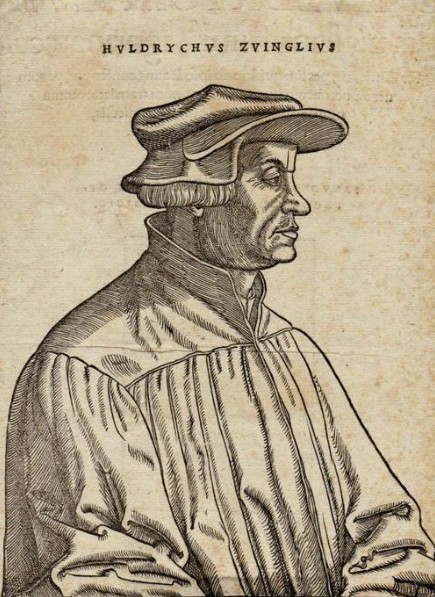
(Asper, Hans. Ulrich Zwingli. Oil on panel. 1531. Wikimedia Commons. https://commons.wikimedia.org/wiki/File:Ulrich_Zwingli_by_Hans_Asper_1531.jpg.)

Hans Asper’s 1531 oil portrait of Ulrich Zwingli, the Swiss reformer, in black robes with a Bible, capturing his serious demeanor and leadership in the Zurich Reformation emphasizing scriptural authority over tradition.
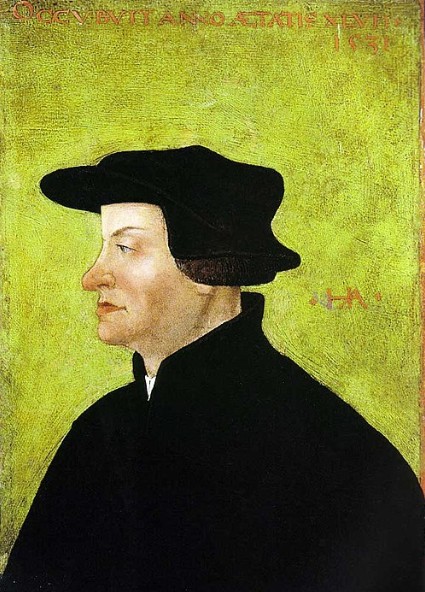
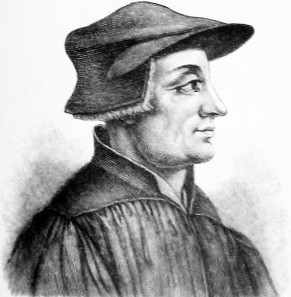
(Unknown. Ulrich Zwingli. Woodcut. ca. 1550. Wikimedia Commons. https://commons.wikimedia.org/wiki/File:Ulrich-Zwingli-1.jpg.)

A 16th-century woodcut portrait of Ulrich Zwingli, shown in profile with a cap and robes, highlighting his theological writings against the Mass and advocacy for iconoclasm in Swiss Protestantism.
(Unknown. Ulrich Zwingli. Oil on canvas. ca. 1530. Wikimedia Commons. https://commons.wikimedia.org/wiki/File:Ulrich_Zwingli.jpg.)
An anonymous 16th-century painting of Ulrich Zwingli preaching, with congregation listening intently, symbolizing his role in the Disputation of Zurich and establishment of Reformed theology in Switzerland.