
PETRARCH
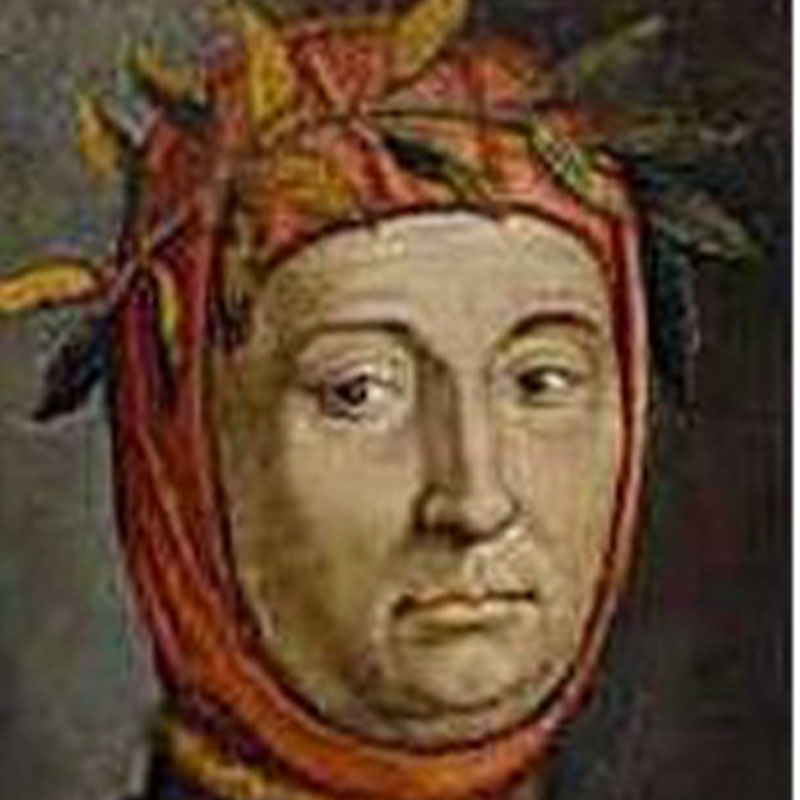
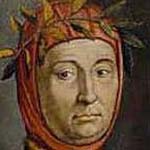
(Altichiero da Zevio (attributed). Portrait of Francesco Petrarca. Tempera on panel. ca. 1370. Private collection. Wikimedia Commons. https://commons.wikimedia.org/wiki/File:Francesco-Petrarca.jpg.)

Born: July 20, 1304, in Arezzo, Tuscany, Italy
Died: July 18, 1374, in Arquà Petrarca, Italy, at the age of 69.
Notable
-
Renaissance Humanist: Key figure in Italian literature and early humanism.
-
Poetic Innovation: Master of the sonnet, shaping European lyric poetry.
-
Individual Expression: Emphasized personal emotion and individuality in literature.
-
Classical Revival: Revived and preserved classical Greek and Roman texts.
1304 – 1374
Biography
Petrarch, also known as Francesco Petrarca, was an Italian scholar, poet, and humanist who is often referred to as the “Father of Humanism.” Born in Arezzo, Tuscany, in 1304, Petrarch spent much of his early life traveling throughout Italy and France, studying law and classical literature. He is best known for his poetry, particularly his sonnets written in Italian, which had a significant influence on the development of Renaissance literature. Petrarch’s works often focused on themes of love, politics, and philosophy, and he is considered one of the greatest lyric poets in the Italian language.
Throughout his life, Petrarch was deeply involved in the political and intellectual circles of his time, corresponding with many prominent figures such as Dante Alighieri and Boccaccio. He also played a key role in reviving interest in the works of ancient Roman and Greek writers, which had a lasting impact on the development of humanism in Europe. Petrarch’s legacy as a poet, scholar, and humanist continues to be celebrated to this day.
Bibliography & Major Works
Petrarch’s extensive body of work includes poetry, letters, and essays that have been preserved and studied for centuries. Some of his most famous works include the Canzoniere (Songbook), a collection of sonnets and songs written in Italian, and the Secretum, a dialogue exploring the conflict between worldly and spiritual desires. Petrarch’s letters, written in Latin, are also a significant contribution to his literary legacy, providing insight into his personal life and relationships with other scholars and writers of his time.
In addition to his original works, Petrarch also translated classic Roman and Greek texts into Latin, including the letters of Cicero and the works of Virgil. These translations played a crucial role in the revival of classical literature during the Renaissance and helped shape the intellectual landscape of Europe during Petrarch’s lifetime.
Influences & Notable For
Petrarch is best known for his contributions to Italian literature and for his role in the development of humanism during the Renaissance. His sonnets and other poetic works are considered masterpieces of the genre and have had a lasting impact on European literature. Petrarch’s emphasis on the individual and his exploration of personal emotions in his poetry helped shape the themes and styles of Renaissance literature.
In addition to his literary achievements, Petrarch’s role as a scholar and humanist was instrumental in reviving interest in classical learning and promoting the study of ancient texts. His efforts to collect, preserve, and translate works by Roman and Greek authors contributed to the intellectual and cultural flourishing of the Renaissance.
Famous quotes
“The journey of a thousand miles begins with a single step.” – Petrarch
“Books have led some to learning and others to madness.” – Petrarch
“Five enemies of peace inhabit with us—avarice, ambition, envy, anger, and pride; if these were to be banished, we should infallibly enjoy perpetual peace.” – Petrarch
Major Works
Petrarch’s major works include the Canzoniere, a collection of sonnets and songs written in Italian, focusing on themes of love, beauty, and nature. The Secretum is a dialogue between Petrarch and St. Augustine exploring the conflict between worldly desires and spiritual fulfillment. His letters consist of extensive correspondence with other scholars, writers, and political figures of his time, providing insights into his personal life and intellectual pursuits. Petrarch’s translations of classical works by authors such as Cicero and Virgil played a key role in the revival of classical literature during the Renaissance.
Legacy & Modern Significance
Petrarch’s legacy as a poet, scholar, and humanist continues to be celebrated for his contributions to Italian literature and the development of humanism. His works have inspired generations of writers and thinkers, influencing the intellectual and cultural landscape of Europe and beyond. Petrarch’s emphasis on the value of individual experience, the pursuit of knowledge, and the celebration of human potential remains relevant in the modern era, resonating with readers who seek to understand the complexities of human nature and the power of literature to shape our understanding of the world.
In addition to his literary achievements, Petrarch’s role in reviving interest in classical learning and promoting the study of ancient texts has had a lasting impact on the fields of literature, philosophy, and history. His influence on the development of humanism and the Renaissance continues to be studied and celebrated by scholars around the world.
Modern Moments & Impact on the 21st Century
In 2014, a digital archive of Petrarch’s letters was launched by the University of Leipzig, providing scholars and researchers with access to a wealth of primary source material for the study of Petrarch’s life and works.
The 700th anniversary of Petrarch’s birth was commemorated in 2004 with exhibitions, conferences, and scholarly editions of his works, highlighting his enduring significance in the history of literature and intellectual thought.
The University of Oxford hosted a conference in 2019 on “Petrarch and His Legacies,” bringing together scholars from around the world to discuss the impact of Petrarch’s writings on subsequent generations and their relevance in the modern era.
Influences & Intellectual Context
Petrarch’s work was influenced by a variety of intellectual and cultural currents of his time, including classical literature, humanism, and spiritualism. His interest in the works of ancient Roman and Greek authors, such as Virgil and Cicero, shaped his own writing and intellectual pursuits. His belief in the importance of individualism, reason, and the study of classical texts helped define the humanist movement of the Renaissance. Petrarch’s exploration of the tension between worldly desires and spiritual fulfillment, as seen in his Secretum, reflected the broader religious and philosophical debates of his time.
Petrarch’s emphasis on the value of personal experience, the pursuit of knowledge, and the celebration of human potential influenced generations of thinkers and writers who followed him, contributing to the intellectual and cultural flowering of the Renaissance.
POET OF LOVE AND LEARNING
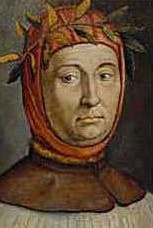
(Altichiero da Zevio (attributed). Portrait of Francesco Petrarca. Tempera on panel. ca. 1370. Private collection. Wikimedia Commons. https://commons.wikimedia.org/wiki/File:Francesco-Petrarca.jpg.)
A 14th-century Italian tempera painting attributed to Altichiero da Zevio depicts Francesco Petrarch in scholarly robes with a laurel wreath, holding a book and gazing thoughtfully, embodying his role as a pioneer of humanism and author of the Canzoniere.
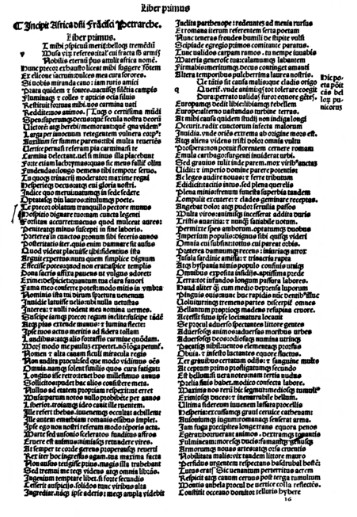
(Aldine Press. First Page of the 1501 Edition of Petrarch’s Africa. Printed page. 1501. Wikimedia Commons. https://commons.wikimedia.org/wiki/File:First_page_of_the_1501_edition_of_Petrarch%27s_%22Africa%22.png.)

The first page of the 1501 Aldine Press edition of Petrarch’s epic poem Africa, featuring ornate Latin text and decorative borders in black ink on paper, highlighting his mastery of classical epic form and Renaissance scholarship.