

MATTHEW
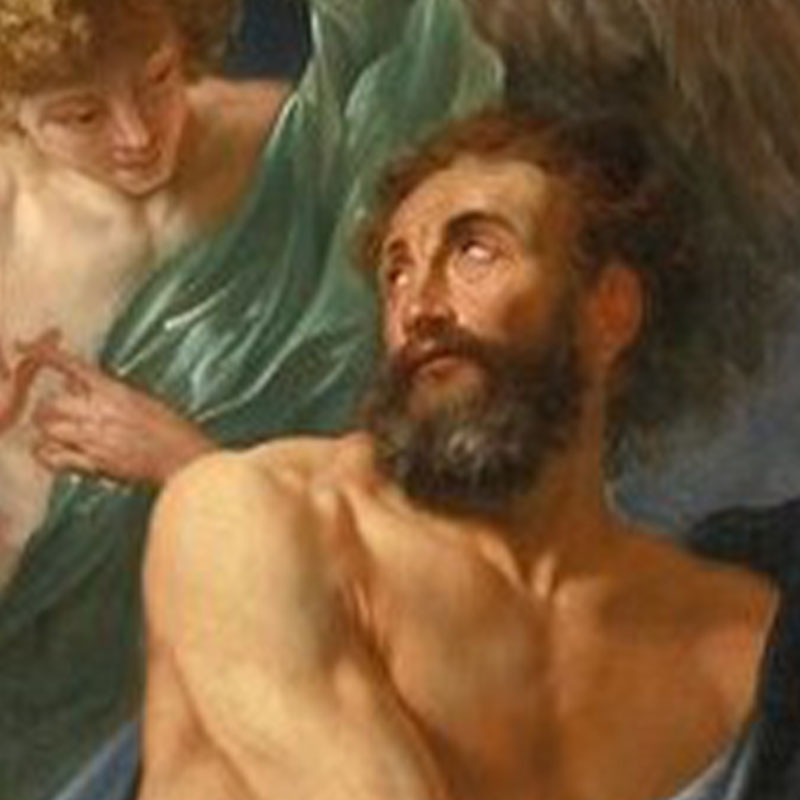
(Maes, Godfried. St. Matthew the Evangelist. Oil on canvas. ca. 1670. Private collection. Wikimedia Commons. https://commons.wikimedia.org/wiki/File:Godfried_Maes_-_St_Matthew_the_Evangelist.jpg.)

Born: c. 5 AD, Galilee
Died: c. 70 AD, Ethiopia (tradition)
Notable
-
Gospel Author: Traditionally credited with the Gospel of Matthew, the first book of the New Testament.
-
Jewish Focus: Presents Jesus as the Messiah and fulfillment of Old Testament prophecy.
-
New Moses: Portrays Jesus as lawgiver inaugurating the Kingdom of God.
-
Distinct Contributions: Preserves Jesus’ genealogy to Abraham and unique teachings.
5–70 AD
Biography
Matthew was one of the twelve apostles of Jesus. He is widely known as one of the four canonical Gospels in the New Testament of the Bible and is traditionally ascribed to the apostle Matthew. His life represents a dramatic transformation from tax collector to evangelist. The Gospel of Matthew provides an account of the life, ministry, death, and resurrection of Jesus Christ. While the authorship of the Gospel is debated among scholars, it is believed to have been written in the 1st century AD and is attributed to Matthew due to its internal references and early church tradition. The Gospel is written in Greek and is considered one of the Synoptic Gospels, along with Mark and Luke, due to its similar content and structure.
The Gospel of Matthew is structured around five major discourses of Jesus, known as the “Five Discourses of Matthew,” which emphasize different aspects of Jesus’ teachings. The Gospel also contains the Sermon on the Mount, a central teaching of Jesus that includes the Beatitudes and other ethical teachings. The Gospel of Matthew is widely read and studied by Christians around the world and has had a significant impact on Christian theology and practice throughout history. Matthew’s transformation from tax collector to apostle shows one of the most powerful callings and testimonies in the New Testament, showing the life-changing encounter with Jesus, emphasizing that no one is beyond the reach of divine grace.
Bibliography & Major Works
The primary source for the Gospel of Matthew is the text itself, which is included in the New Testament of the Bible. In addition to the Gospel of Matthew, there are various ancient manuscripts and versions of the text that have been discovered and studied by biblical scholars. These include early Greek manuscripts, Latin translations, and other versions that provide insights into the transmission and interpretation of the Gospel over time.
In addition to the biblical text, there are also numerous commentaries, scholarly articles, and books written about the Gospel of Matthew. These secondary sources provide analysis, interpretation, and historical context for the Gospel at that time, helping readers to understand its significance and relevance for Christian faith and practice.
Influences & Notable For
The Gospel of Matthew is best known for his authorship of the Gospel of Matthew, the first book of the New Testament.
His Gospel, written specifically for a Jewish audience, is well known for its comprehensive account of the life and teachings of Jesus Christ, as well as its emphasis on Jesus as the fulfillment of Old Testament prophecies.
The Gospel is particularly notable for its focus on Jewish themes and its portrayal of Jesus as the Messiah and the Son of God.
Matthew’s transformation from tax collector to apostle shows one of the most powerful divine callings, showing the life-changing encounter with Jesus.
Matthew presents Jesus as the new Moses, who delivers a new law and inaugurates the kingdom of God on earth.
Matthew is recognized for preserving Jesus’ genealogy tracing back to Abraham and for recording numerous parables and teachings not found in other Gospels.
Famous quotes
“Blessed are the poor in spirit, for theirs is the kingdom of heaven.” (Matthew 5:3)
“You are the light of the world. A city set on a hill cannot be hidden.” (Matthew 5:14)
“Love your enemies and pray for those who persecute you.” (Matthew 5:44)
“For where your treasure is, there your heart will be also.” (Matthew 6:21)
“Ask, and it will be given to you; seek, and you will find; knock, and it will be opened to you.” (Matthew 7:7)
Major Works
The major work of Matthew the apostle is the Gospel itself, which is divided into five major discourses of Jesus, known as the “Five Discourses of Matthew.” These discourses include the Sermon on the Mount (Matthew 5–7), the Missionary Discourse (Matthew 10), the Parabolic Discourse (Matthew 13), the Community Discourse (Matthew 18), and the Eschatological Discourse (Matthew 24–25). Each discourse focuses on different aspects of Jesus’ teachings and their implications for Christian discipleship.
In addition to the discourses, the Gospel of Matthew contains various narrative sections that provide accounts of Jesus’ life, ministry, death, and resurrection. These include the birth of Jesus (Matthew 1–2), the baptism and temptation of Jesus (Matthew 3–4), the miracles and teachings of Jesus (Matthew 8–9), and the passion and resurrection of Jesus (Matthew 26–28). Matthew also includes unique material not found in the other Gospels, such as the genealogy of Jesus, the narrative of the Magi, and the story of Judas Iscariot.
Legacy & Modern Significance
Matthew’s transformation from being a tax collector to being an apostle left a lasting legacy that continues to shape Christian theology, worship, and God’s mission throughout history. Matthew’s Gospel shows Jesus as the Messiah and Son of God, which has shaped Christian beliefs about the nature of Jesus’ identity, the authority of his teachings, and the significance of his death and resurrection. The Gospel’s emphasis on moral and ethical teachings, like the Sermon on the Mount, has inspired Christian communities to seek justice, peace, and righteousness in the world. The Lord’s Prayer, found in Matthew, is prayed daily by millions of people worldwide.
In terms of modern significance, the Gospel of Matthew continues to be studied and interpreted by scholars, church leaders, and believers around the world. Matthew’s themes of discipleship, kingdom ethics, and the universal mission of the church remain relevant to current debates about social justice, environmental stewardship, and interfaith dialogue. The Gospel’s message of hope, redemption, and reconciliation continues to inspire individuals and communities to live out the teachings of Jesus in their daily lives. Churches today use his teachings on reconciliation and community discipline to address conflicts.
Modern Moments & Impact on the 21st Century
In 2010, the Gospel of Matthew was translated into new languages for global distribution.
In 2013, Pope Francis chose Matthew’s calling as his papal motto, emphasizing mercy over judgment and shaping his inclusive approach to leading the Catholic Church worldwide.
In 2017, an academic conference was held on the Gospel of Matthew to find its relevance for contemporary biblical studies.
Today, churches worldwide continue celebrating his September 21 feast day with special masses, prayers, and reflections on redemption and transformation.
2021: Anniversary of significant scholarly editions and translations of the Gospel of Matthew for academic research and theological reflection.
In 2023, the Catholic Church placed Matthew’s Gospel at the center of Sunday readings worldwide, ensuring millions hear his account of Jesus throughout the year.
Influences & Intellectual Context
The Gospel of Matthew is influenced by a variety of literary, theological, and historical sources, including the Old Testament, other Gospels, and early Christian traditions. Matthew often quotes and refers to the Old Testament, especially the prophecies of Isaiah and the Psalms, to showcase that Jesus fulfills the Jewish scripture. The Gospel also draws on the teachings of Jesus found in the Gospel of Mark and the Q source, a hypothetical collection of sayings of Jesus used by Matthew and Luke.
In terms of intellectual context, the Gospel of Matthew reflects the diverse religious and cultural milieu of 1st-century Judaism and Christianity. Matthew addresses Jewish concerns and controversies, such as the role of the law, the identity of Jesus, and the nature of the kingdom of God. The Gospel emphasizes the universal significance of Jesus’ message and mission while also showing his Jewish identity and heritage.
Suggested Reading & Resources
Brown, Raymond E. An Introduction to the New Testament. Yale University Press, 2010.
France, R. T. The Gospel of Matthew. Eerdmans, 2007.
Keener, Craig S. A Commentary on the Gospel of Matthew. Eerdmans, 1999.
Hagner, Donald A. Matthew 1–13. Word Biblical Commentary, 1993.
Turner, David L. Matthew. Baker Exegetical Commentary on the New Testament, 2008.
Project Gutenberg. “The Gospel of Matthew.” https://www.gutenberg.org/ebooks/24128
JSTOR. Various scholarly articles on the Gospel of Matthew. https://www.jstor.org/
Britannica. “Gospel According to Matthew.” https://www.britannica.com/topic/Gospel-According-to-Matthew
Bible Odyssey. “Gospel of Matthew.” https://www.bibleodyssey.org/en/people/main-articles/matthews-gospel
Matthew, St., God. The Gospel of St. Matthew. N.p.: CreateSpace Independent Publishing Platform, 2014.
The Gospel According to St. Matthew, With Notes, by M. F. Sadler. N.p.: Creative Media Partners, LLC, 2025.
DISCIPLE AND WITNESS OF THE MESSIAH
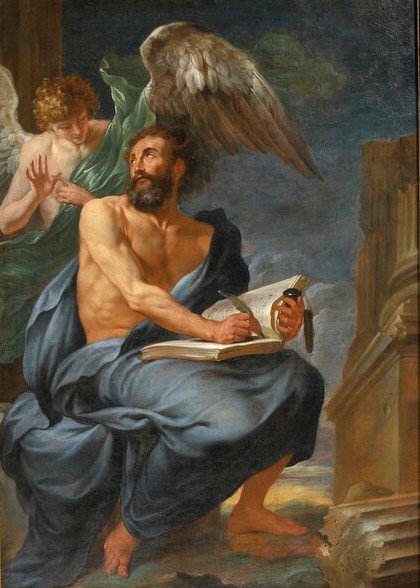
(Maes, Godfried. St. Matthew the Evangelist. Oil on canvas. ca. 1670. Private collection. Wikimedia Commons. https://commons.wikimedia.org/wiki/File:Godfried_Maes_-_St_Matthew_the_Evangelist.jpg.)
Godfried Maes’s 17th-century Baroque painting portrays Saint Matthew the Evangelist inspired by an angel, seated nude with drapery, writing his Gospel on a scroll amid ruins, emphasizing divine guidance in his apostolic mission.
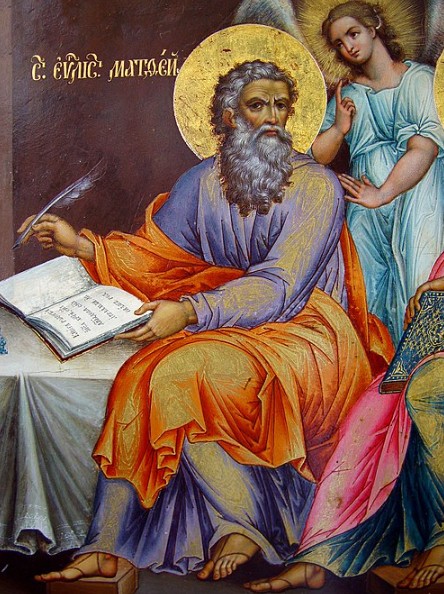
(Unknown. Matthew the Evangelist. Egg tempera on wood panel. ca. 1800. Wikimedia Commons. https://commons.wikimedia.org/wiki/File:Matthew_the_Evangelist_-_icon.jpeg.)

A 19th-century Russian icon depicts Saint Matthew enthroned with his Gospel book, accompanied by an angel, in gold-ground tempera with intricate inscriptions, highlighting his role as one of the four Evangelists in Eastern Orthodox tradition.
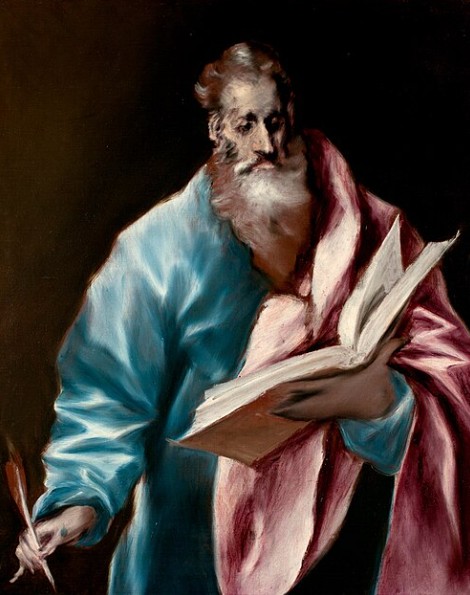
(El Greco. St. Matthew. Oil on canvas. ca. 1597–1604. Museo de Santa Cruz, Toledo. Wikimedia Commons. https://commons.wikimedia.org/wiki/File:El_Greco_-_St._Matthew_-_Google_Art_Project.jpg.)

El Greco’s Mannerist masterpiece from the late 16th century shows Saint Matthew dynamically writing, with flowing beard and robes in rich blues and pinks, against a dark background, conveying the intensity of his conversion and Gospel authorship.