
MARK
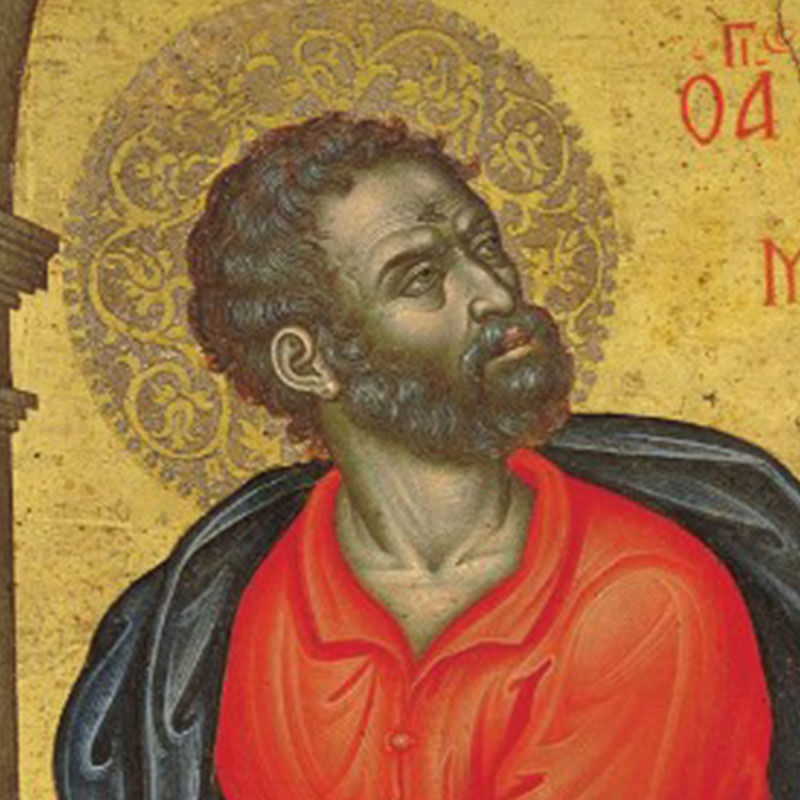
(Tzanes, Emmanuel. St. Mark the Evangelist. Tempera and gold leaf on panel; 66 × 54.1 cm. 1657. Benaki Museum, Athens. Wikimedia Commons. https://commons.wikimedia.org/wiki/File:Tzanes_Emmanuel_-_St_Mark_the_Evangelist_-_Google_Art_Project.jpg.)

Born: c. 5–15 CE
Died: Unknown; later tradition claims martyrdom in Alexandria, possibly around 68 CE
Notable
- Author of the Earliest Gospel: The Gospel of Mark is widely considered the first written gospel and served as a source for Matthew and Luke (the “Synoptic Problem”).
- Emphasis on Action: Mark’s gospel is characterized by urgency, vivid narrative, and a focus on Jesus’s deeds over his teachings.
- The “Messianic Secret”: Jesus frequently commands silence about his identity and miracles—a central literary theme in Mark.
- Foundational Figure in Christianity: Mark is venerated as a saint in multiple Christian traditions, including Roman Catholicism, Eastern Orthodoxy, and Coptic Christianity.
5–68 CE
Biography
Author: Traditionally identified as John Mark (Greek: Ἰωάννης Μᾶρκος)
Place of Birth: Probably Jerusalem, in Roman Judea
Education: Not documented, but he was likely literate in Greek and knowledgeable about Jewish and emerging Christian teachings.
Though not counted among the Twelve Apostles, Mark played an important role in the early Christian movement. He is frequently mentioned in the New Testament as a close associate of major apostolic figures. The Acts of the Apostles describes him as a traveling companion of Paul and Barnabas during their missionary efforts. Later, he is linked with Peter, and early church tradition suggests he served as Peter’s interpreter, writing down his recollections of Jesus’s life and teachings.
Mark is traditionally credited as the author of the Gospel of Mark, considered by most scholars to be the earliest of the four New Testament gospels. His narrative style is vivid and urgent, focusing heavily on Jesus’s deeds and his path toward suffering and sacrifice. The Gospel of Mark presents Jesus as the suffering Son of God and em
Bibliography & Major Works
The Gospel of Mark:
Language: Originally written in Greek
Date: Circa 65–70 CE
Audience: Likely written for a Gentile Christian audience in Rome or Syria
Themes: The identity of Jesus as the suffering Messiah, discipleship, the “Messianic secret”
References to Mark in Other Sources:
Acts of the Apostles (Acts 12:12, 13:5, 15:37–39) – Mark accompanies Paul and Barnabas
Colossians 4:10 – Paul mentions Mark, cousin of Barnabas
2 Timothy 4:11 – Paul asks for Mark, calling him “helpful in my ministry”
1 Peter 5:13 – Peter refers to “my son Mark,” indicating a close relationship
Influences & Notable For
Author of the Earliest Gospel: The Gospel of Mark is widely considered the first written gospel and served as a source for Matthew and Luke (the “Synoptic Problem”).
Emphasis on Action: Mark’s gospel is characterized by urgency, vivid narrative, and a focus on Jesus’s deeds over his teachings.
The “Messianic Secret”: Jesus frequently commands silence about his identity and miracles—a central literary theme in Mark.
Foundational Figure in Christianity: Mark is venerated as a saint in multiple Christian traditions, including Roman Catholicism, Eastern Orthodoxy, and Coptic Christianity.
Famous quotes
“The time is fulfilled, and the kingdom of God is at hand; repent and believe in the gospel.”
— Mark 1:15“Whoever wants to be my disciple must deny themselves and take up their cross and follow me.”
— Mark 8:34“Even the Son of Man did not come to be served, but to serve, and to give his life as a ransom for many.”
— Mark 10:45
Major Works
The Gospel of Mark:
Structure:
Chapters 1–8: Jesus’s public ministry in Galilee
Chapters 9–16: Journey to Jerusalem, passion, death, and resurrection
Key Themes:
Jesus’s identity as the Christ and Son of God
The suffering Messiah and cost of discipleship
Miracles, exorcisms, and parables
Conflict with religious authorities
Ending:
The original ending (Mark 16:1–8) ends abruptly with the empty tomb
Longer endings (Mark 16:9–20) appear in later manuscripts, likely added to harmonize with other Gospels
Legacy & Modern Significance
Mark’s gospel remains one of the most studied and debated texts in biblical scholarship. It set the foundation for the Synoptic Gospels (Matthew and Luke), which borrowed heavily from its structure and content. Its portrayal of Jesus as a suffering servant continues to influence Christian theology, especially in contexts of persecution, social justice, and martyrdom. In liturgy, art, and devotional life, the figure of Mark endures through his concise, action-oriented narrative of Christ’s life.
Modern Moments & Impact on the 21st Century
Biblical Scholarship and the Synoptic Problem:
Mark’s priority is widely accepted among scholars, fueling debates on source criticism, literary interdependence, and historical reliability.
Liturgical Use:
The Gospel of Mark is regularly read in Christian lectionaries, especially in Year B of the Roman Catholic Church’s liturgical cycle.
Media and Popular Culture:
Mark’s gospel has inspired numerous films, documentaries, and artistic representations of Jesus’s life, especially scenes like the exorcisms and the crucifixion.
Interfaith and Historical Study:
Mark is central to historical Jesus studies, comparative religion discussions, and theological debates in academia and interfaith dialogue.
Church of St. Mark, Venice:
Mark is the patron saint of Venice. According to tradition, his relics are housed in St. Mark’s Basilica, a major site of Christian pilgrimage and architectural heritage.
Influences & Intellectual Context
Jewish Apocalyptic Thought: Mark’s gospel reflects Jewish expectations of a coming kingdom and Messiah.
Greco-Roman Literary Style: Mark employs storytelling techniques common in Greco-Roman biographies.
Peter’s Testimony: Early tradition suggests that Mark recorded the teachings and memories of Peter, making the gospel a “Petrine” witness to Jesus.
Early Christian Persecution: Likely composed during or shortly after Nero’s persecution of Christians in Rome (64 CE), shaping its themes of suffering and endurance.
Suggested Reading & Resources
Secondary Literature (Scholarship):
Marcus, Joel. Mark: A New Translation with Introduction and Commentary. Anchor Yale Bible, 2000.
Donahue, John R., and Daniel J. Harrington. The Gospel of Mark (Sacra Pagina). Liturgical Press, 2002.
Hooker, Morna D. The Gospel According to Saint Mark. Black’s New Testament Commentaries, 1991.
Myers, Ched. Binding the Strong Man: A Political Reading of Mark’s Story of Jesus. Orbis Books, 1988.
Wright, N.T. Mark for Everyone. SPCK / Westminster John Knox Press, 2001.
Archival or Online Sources:
Bible Gateway – Gospel of Mark
Early Christian Writings – Gospel of Mark
Internet Archive – Historical Gospel Commentaries
Stanford Encyclopedia of Philosophy – Historical Jesus
The Gospel of Mark:
Structure:
Chapters 1–8: Jesus’s public ministry in Galilee
Chapters 9–16: Journey to Jerusalem, passion, death, and resurrection
Key Themes:
Jesus’s identity as the Christ and Son of God
The suffering Messiah and cost of discipleship
Miracles, exorcisms, and parables
Conflict with religious authorities
Ending:
The original ending (Mark 16:1–8) ends abruptly with the empty tomb
Longer endings (Mark 16:9–20) appear in later manuscripts, likely added to harmonize with other Gospels
EVANGELIST OF ACTION AND FAITH
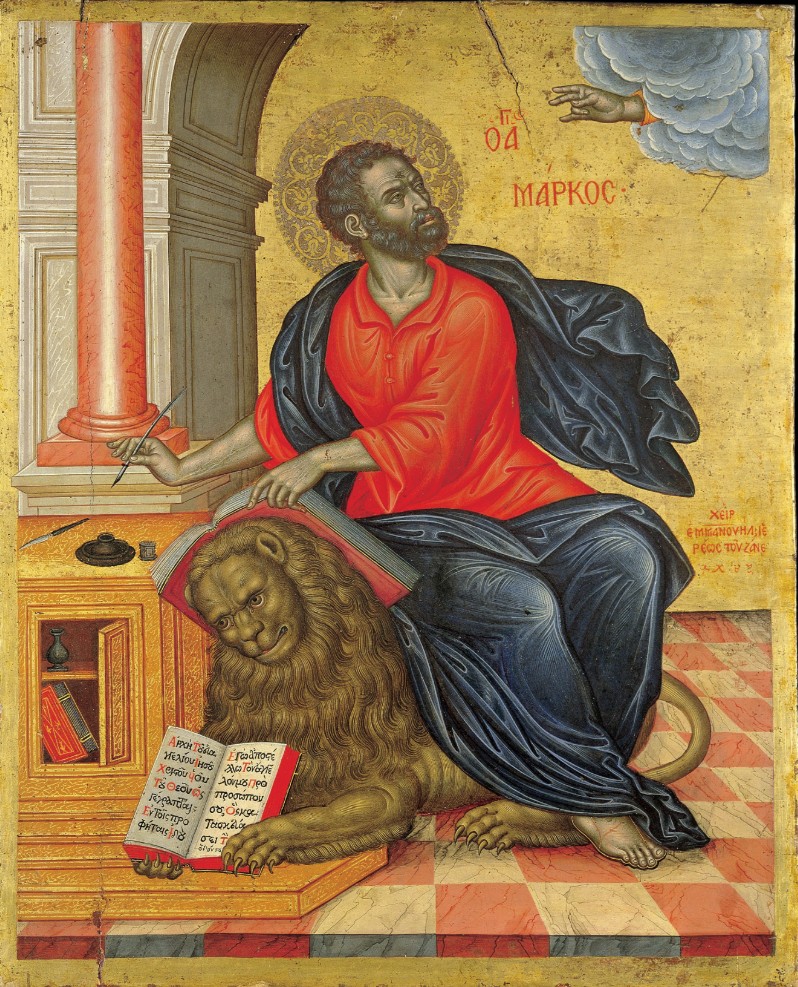
(Tzanes, Emmanuel. St. Mark the Evangelist. Tempera and gold leaf on panel; 66 × 54.1 cm. 1657. Benaki Museum, Athens. Wikimedia Commons. https://commons.wikimedia.org/wiki/File:Tzanes_Emmanuel_-_St_Mark_the_Evangelist_-_Google_Art_Project.jpg.)
An ornate 17th-century icon of Saint Mark the Evangelist, painted in tempera and gold leaf on panel by Cretan artist Emmanuel Tzanes, depicting the Gospel writer in traditional religious attire.
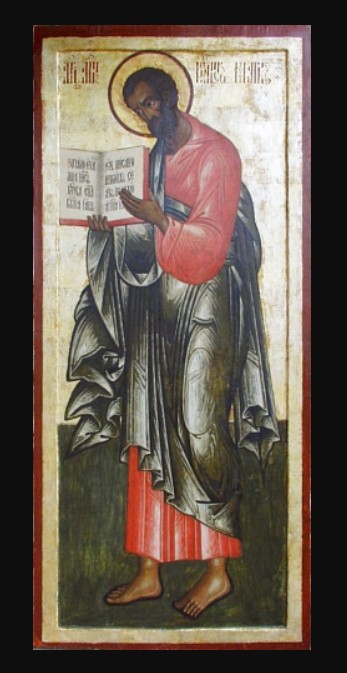
(Unknown. Mark the Evangelist. Icon. ca. first quarter of the 18th century. Transfiguration Church, Kizhi Monastery, Karelia, Russia. Wikimedia Commons. https://commons.wikimedia.org/wiki/File:Mark_Evangelist.jpg.)

A Russian icon from the first quarter of the 18th century depicting Saint Mark the Evangelist, shown standing with a book, part of the iconostasis in the Transfiguration church at Kizhi monastery.
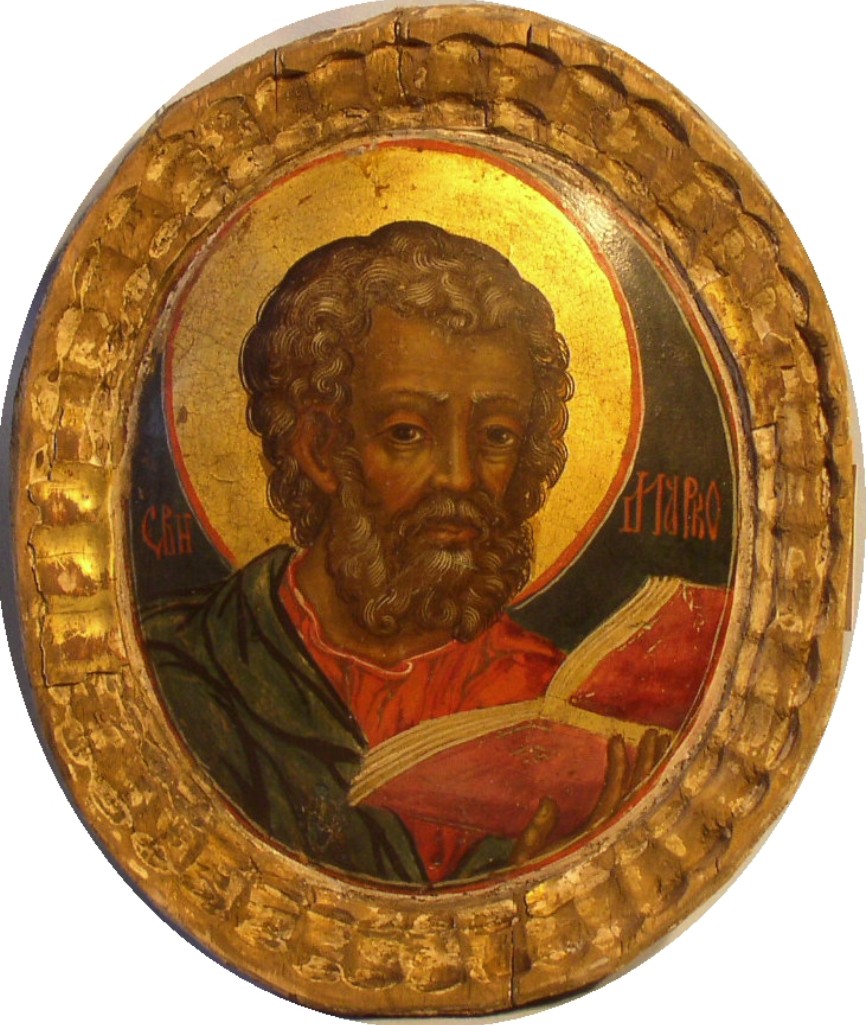
(Unknown. Saint Mark – Orthodox Icon. Icon. 18th century. Wikimedia Commons. https://commons.wikimedia.org/wiki/File:Saint_Mark_-_Orthodox_Icon.jpeg.)

An 18th-century Russian Orthodox icon of Saint Mark the Evangelist, portraying the Gospel author holding a book, with the inscription in Ukrainian suggesting possible origins from Ukraine or Belarus.