
LUKE
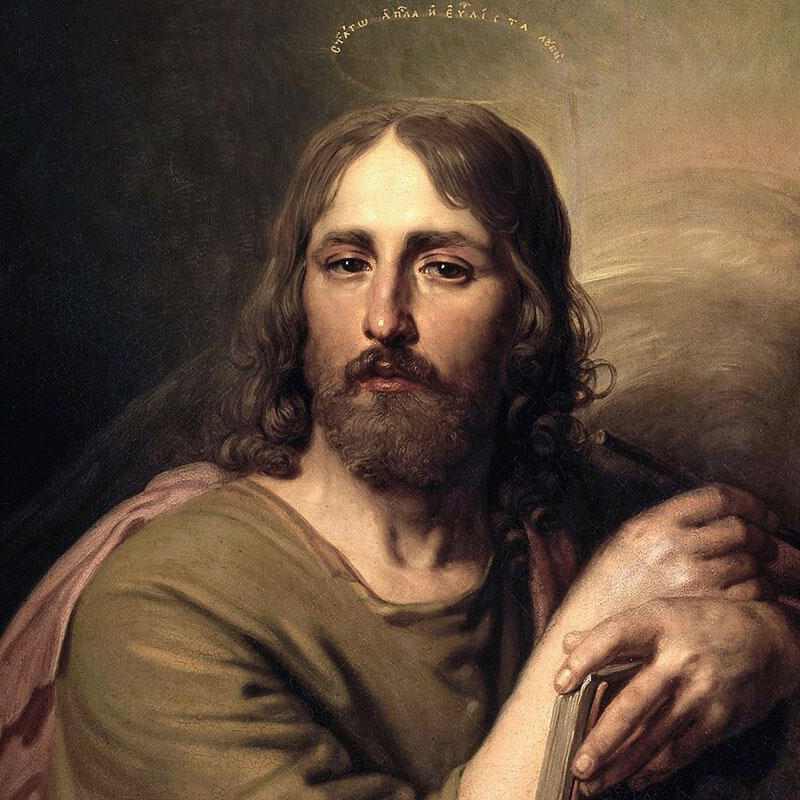
(“St Luke the Evangelist.” Wikimedia Commons. https://commons.wikimedia.org/wiki/File:St_Luke_the_Evangelist.jpg.)
Born: c. 1st century CE, likely in Antioch, Syria (modern-day Turkey)
Died: c. 84 CE, possibly in Boeotia, Greece
Notable
-
Evangelist of Compassion: Luke, a physician and author of the third Gospel and Acts of the Apostles, is renowned for his emphasis on Jesus’ mercy, inclusion of the marginalized, and detailed historical narrative in the New Testament.
-
Steadfast Chronicler of Faith: Known as the beloved physician, Luke’s dedication to documenting the life of Christ and the early church, despite challenges, exemplifies his unwavering commitment to spreading the Christian message.
70-85 CE
Biography
Luke the Evangelist is traditionally credited as the author of the Gospel of Luke and the Acts of the Apostles, which together comprise approximately 27.5% of the New Testament—making him its largest single contributor by word count. Although not one of the original twelve apostles, Luke is believed to have been a close companion of the Apostle Paul, accompanying him on several missionary journeys throughout the eastern Mediterranean. Most traditions hold that Luke was a physician, as attested by Paul’s reference to him as “the beloved physician” (Colossians 4:14). Luke was likely born in the Hellenistic city of Antioch (modern-day Turkey), and his name—of Latin origin—suggests a Gentile background, though some scholars argue he may have been a Hellenistic Jew. His writings demonstrate a polished Greek literary style, superior to that of the other Gospel writers, and reflect a well-educated individual. He is thought to have gathered much of his material during Paul’s imprisonment in Caesarea and later in Rome, where he is said to have composed his Gospel and Acts between 70 and 85 CE. Luke is believed to have died in 84 CE, with his remains (or relics) venerated in Padua, Prague, and Thebes.
Encyclopaedia Britannica: St. Luke
Catholic Encyclopedia: St. Luke
Bible Odyssey: Luke
Bibliography / Primary Sources
Gospel of Luke (circa 70–85 CE)
The most comprehensive account of Jesus’ life, ministry, death, and resurrection, with unique material such as the infancy narratives and parables like the Good Samaritan and the Prodigal Son.
Acts of the Apostles (circa 70–85 CE)
A sequel to the Gospel, narrating the early history of the Christian Church, the activities of the apostles, and the spread of Christianity from Jerusalem to Rome.
Original-language editions and key manuscript sources:
Codex Vaticanus (4th century CE): Contains both the Gospel of Luke and Acts.
Codex Sinaiticus (4th century CE): Another early complete manuscript of the New Testament.
Papyrus Bodmer XIV–XV (3rd century CE): Early papyrus manuscripts of Luke’s Gospel.
Gospel of Luke (c. 70–85 CE)
Read on Bible Gateway
Acts of the Apostles (c. 70–85 CE)
Read on Bible Gateway
Codex Vaticanus (4th century CE)
Vatican Library Digital Manuscript
Codex Sinaiticus (4th century CE)
Codex Sinaiticus Project
Papyrus Bodmer XIV–XV (P75) (3rd century CE)
Bodmer Papyrus XIV–XV (P75) at the Vatican Library
Influences & Notable For
Notable For
Author of the Third Gospel and Acts: Provides the most detailed and literary account of Jesus’ life and the early Church.
Physician and Historian: Known for his medical background and historical approach, compiling eyewitness testimony and presenting events in a systematic, chronological fashion.
Gentile Perspective: Likely the only Gentile author in the New Testament, offering a universal message of salvation.
Major Themes: Emphasis on prayer, the Holy Spirit, and concern for marginalized groups (women, the poor, Samaritans).
Author of the Gospel of Luke and Acts of the Apostles
(Encyclopaedia Britannica: St. Luke)
Companion of Paul and physician
(Colossians 4:14)
Emphasis on the marginalized and universal salvation
(Bible Odyssey: Luke)
Literary and historical quality of his writings
(Fitzmyer, J.A., Anchor Yale Bible Commentary)
Influences
Pauline Christianity: Luke was heavily influenced by the teachings and experiences of the Apostle Paul, with whom he traveled extensively.
Eyewitness Testimony: Luke claims to have “carefully investigated everything from the beginning” and to have relied on the accounts of those who were eyewitnesses (Luke 1:1–4).
Hellenistic Culture: His polished Greek style and universal message reflect the intellectual milieu of the Hellenistic world.
Jewish and Early Christian Traditions: Drew on Jewish Scripture and the oral traditions of the early Christian community.
Pauline Christianity:
(Bible Odyssey: Luke)
Eyewitness Testimony:
(Luke 1:1–4 (Bible Gateway))
Hellenistic Culture:
(Fitzmyer, J.A., Anchor Yale Bible Commentary)
Jewish and Early Christian Traditions:
(Johnson, L.T., The Gospel of Luke)
Famous quotes
- “For unto you is born this day in the city of David a Saviour, which is Christ the Lord.”
— Gospel of Luke 2:11- “But the tax collector stood at a distance. He would not even look up to heaven, but beat his breast and said, ‘God, have mercy on me, a sinner.’”
— Gospel of Luke 18:13- “It is more blessed to give than to receive.”
— Acts of the Apostles 20:35 (attributed to Jesus, but only recorded here)
Legacy & Modern Significance
Luke’s works have profoundly shaped Christian theology, liturgy, and art. His Gospel is central to the lectionary and is often cited for its emphasis on mercy, forgiveness, and social justice. The Acts of the Apostles is foundational for understanding the development of the early Church and the role of the Holy Spirit. Luke’s historical method and literary artistry have earned him the title of “the first Christian historian.” His universal message continues to inspire interfaith and ecumenical dialogue.
Liturgical Use: Gospel of Luke and Acts are central in Christian lectionaries.
(USCCB Lectionary)
Theological Impact: Luke’s themes of mercy and universality shape Christian ethics and social teaching.
(Encyclopaedia Britannica: St. Luke)
Art and Culture: Luke is patron saint of artists, physicians, and hospitals.
(Catholic Encyclopedia: St. Luke)
Modern Moments & Impact on 21st Century
Ongoing: Gospel of Luke and Acts of the Apostles remain core texts in Christian worship and education worldwide.
2020s: Digital editions of Luke’s works are available on platforms like Project Gutenberg, Bible Gateway, and the Perseus Digital Library.
Annual: Many churches and universities hold lectures or conferences on Luke’s theology and historical contributions.
Institutional: St. Luke’s hospitals and medical institutions
Ongoing:
Digital editions of Luke’s works available on Project Gutenberg, Bible Gateway, and Codex Sinaiticus Project.
2020:
St. Luke’s International Hospital in Tokyo continues to serve as a leading medical institution.
Annual:
St. Luke’s Feast Day celebrated on October 18 in Christian calendars.
Ongoing:
Lecture series and conferences on Luke’s theology at seminaries and universities.
Suggested Reading and Resources
Secondary Literature (Scholarship)
Fitzmyer, Joseph A. The Gospel According to Luke I–IX; X–XXIV. Anchor Yale Bible Commentaries, 1981, 1985.
Yale University Press
Conzelmann, Hans. The Theology of St. Luke. Fortress Press, 1982.
Fortress Press
Johnson, Luke Timothy. The Gospel of Luke. Liturgical Press, 1991.
Liturgical Press
Witherington, Ben. The Acts of the Apostles: A Socio-Rhetorical Commentary. Eerdmans, 1998.
Eerdmans Publishing
Green, Joel B. The Gospel of Luke. New International Commentary on the New Testament, 1997.
Eerdmans Publishing
Archival or Online Sources
Codex Vaticanus, Vatican Library
Codex Sinaiticus Project
Project Gutenberg: King James Bible
Bible Gateway: Luke
Bible Odyssey: Luke
THE BELOVED PHYSICIAN
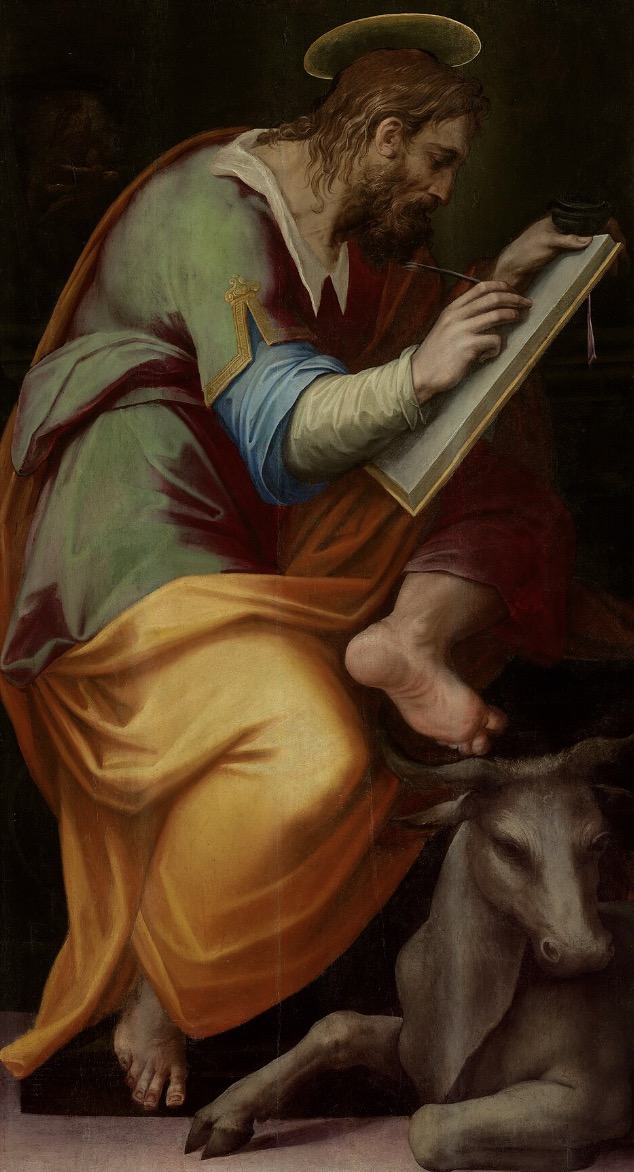
(Vasari, Giorgio. “Saint Luke.” Oil on panel. 1570–1571. National Gallery of Art, Washington, D.C. Wikimedia Commons. https://commons.wikimedia.org/wiki/File:Saint_Luke_A20061.jpg.)
A 16th-century oil painting by Giorgio Vasari depicting Saint Luke the Evangelist with his traditional attributes of a winged ox and a book, portraying him as a scholarly healer.
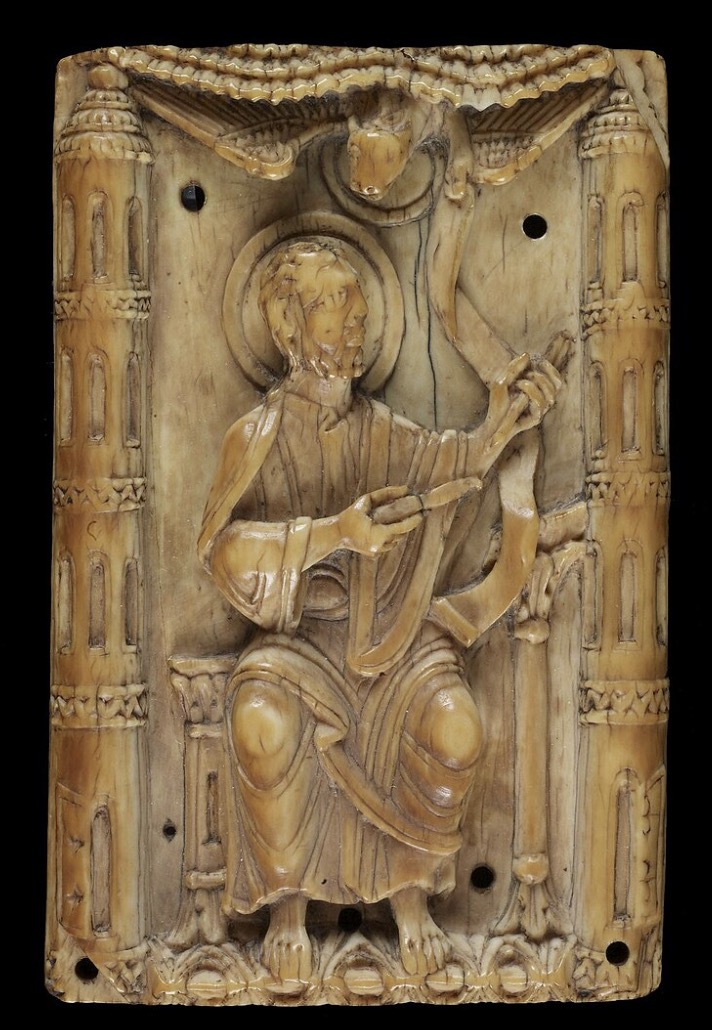
(Unknown German artist. “Saint Luke the Evangelist.” Tempera on panel. 15th century. Walters Art Museum, Baltimore. Wikimedia Commons. https://commons.wikimedia.org/wiki/File:German_-_Saint_Luke_the_Evangelist_-_Walters_71139_(2).jpg.)
A medieval German panel painting of Saint Luke the Evangelist, emphasizing his role as physician and author with symbolic elements like the ox and medical tools.
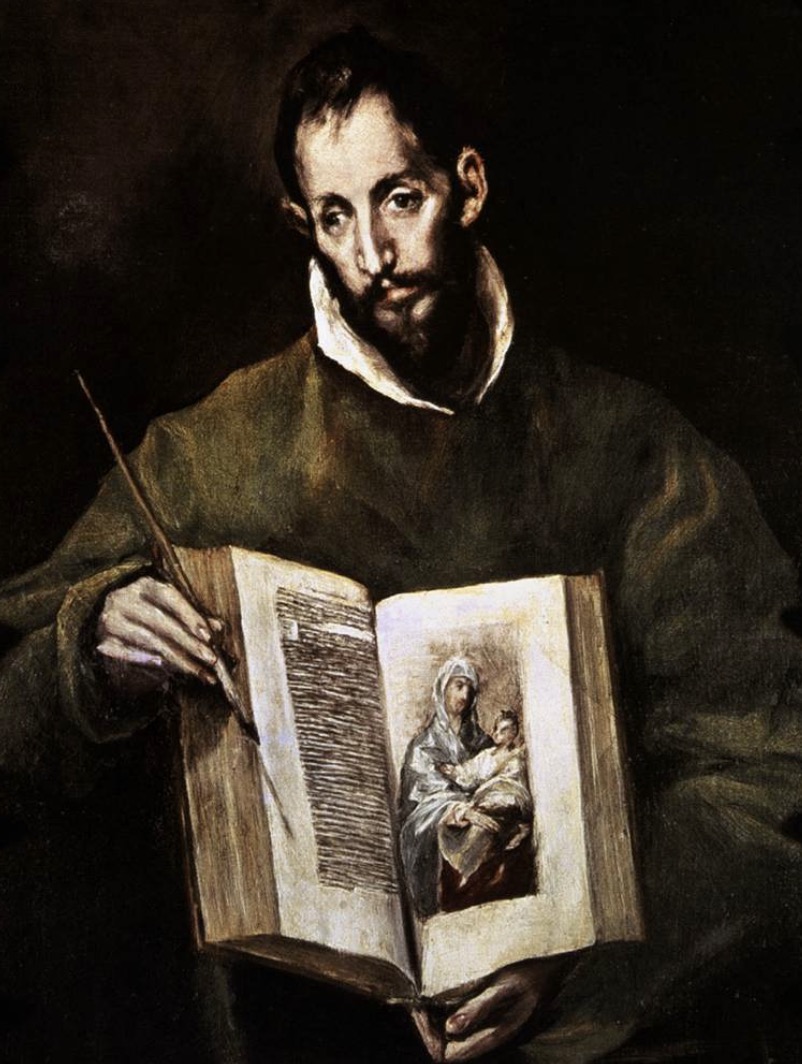
(El Greco. “Saint Luke the Evangelist.” Oil on canvas. Circa 1605. Private collection. Wikimedia Commons. https://commons.wikimedia.org/wiki/File:El_Greco_-_St_Luke_-_WGA10577.jpg.)
An expressive Mannerist portrait by El Greco of Saint Luke, shown in dynamic pose with a pen and Gospel, capturing the intensity of his evangelistic mission.