
BHAGAVADGITA
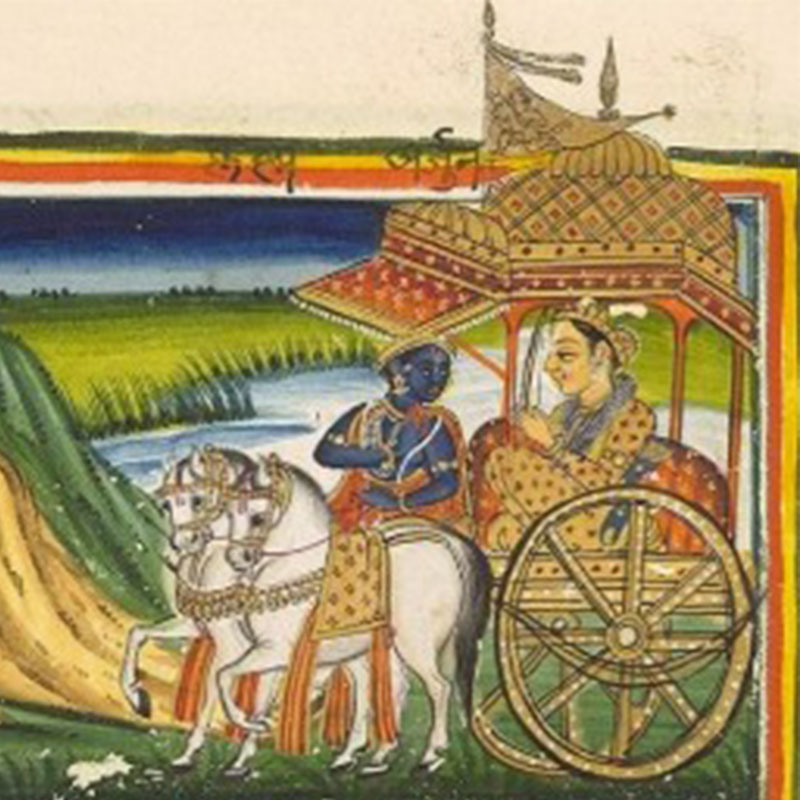
(“https://upload.wikimedia.org/wikipedia/commons/thumb/a/a5/BhagavadGita-19th-century-Illustrated-Sanskrit-Chapter_1.20.21.jpg/960px-BhagavadGita-19th-century-Illustrated-Sanskrit-Chapter_1.20.21.jpg?20201009204146”)

Born: N/A (Textual tradition, c. 5th century BCE–2nd century CE, composed as part of the Mahabharata)
Died: N/A (Timeless spiritual text)
Notable
-
Philosophical Voice of Dharma: The Bhagavad Gita, a 700-verse scripture within the Mahabharata, is revered for its dialogue between Krishna and Arjuna, offering timeless teachings on duty (dharma), devotion, and the path to liberation.
-
Guide Through Moral Dilemmas: Known for its profound guidance on righteous action amid conflict, the Gita’s wisdom on detachment and self-realization has inspired spiritual seekers and leaders across cultures and centuries.
5th-2nd Century BCE
Overview
The Bhagavad Gita, often translated as “The Song of the Lord,” is one of the most revered spiritual texts in Hindu tradition. Comprising 700 verses in Sanskrit, it is embedded within the Mahabharata—specifically, in Book VI (Bhishma Parva), spanning chapters 23 to 40. Though traditionally dated between the 5th and 2nd centuries BCE, the Gita likely draws from older oral teachings.
The narrative unfolds on the eve of a massive war at Kurukshetra, where Prince Arjuna faces a moral and emotional crisis about fighting his own kin. At this moment of inner turmoil, he turns to his charioteer, Krishna—who is revealed to be a divine incarnation—for guidance. Their dialogue explores the nature of duty, righteousness, and the self.
Through this exchange, the Gita offers profound reflections on human action, ethics, and spiritual awakening. It lays out several paths toward liberation (moksha), including:
Karma Yoga – the discipline of selfless action,
Bhakti Yoga – the path of loving devotion,
Jnana Yoga – the pursuit of knowledge and discernment.
As a cornerstone of Hindu philosophy, the Bhagavad Gita has had lasting influence not only within Indian spiritual life but also on global thinkers, including Mahatma Gandhi, Sri Aurobindo, and Western writers like Aldous Huxley.
Bibliography / Primary Sources
Mahabharata (c. 400 BCE – 400 CE) – The epic that contains the Bhagavad Gita. Traditionally attributed to Vyasa, this massive Sanskrit epic is central to ancient Indian culture.
https://www.sacred-texts.com/hin/maha/index.htm
The Bhagavad Gita (Sanskrit Text with English Translation) – Numerous translations exist, including those by Swami Sivananda, Eknath Easwaran, Swami Prabhupada, and Dr. S. Radhakrishnan.
https://www.bhagavad-gita.org/
https://www.holy-bhagavad-gita.org/
The Gita in Gandhi’s Writings – Gandhi referred to the Gita as his “spiritual dictionary,” interpreting it through the lens of nonviolence and duty.
https://www.mkgandhi.org/ebks/bhagavad_gita.pdf
Influences & Notable For
Notable For
Exploring the nature of duty (dharma) and selfless action in the face of moral crisis.
Introducing paths to liberation (moksha): Karma Yoga, Bhakti Yoga, and Jnana Yoga.
Presenting Krishna as a supreme deity and philosophical teacher.
Influencing modern leaders such as Gandhi (nonviolence), Tilak (nationalism), and modern Hinduism.
Serving as a unifying scripture across schools of Hinduism (Vedanta, Bhakti, Yoga traditions).
Influences
Vedic Religion – Builds on Upanishadic speculation (atman-Brahman unity), yet reorients toward practical, action-based spirituality.
Sankhya Philosophy – Dualistic metaphysics (Purusha and Prakriti) used in the text.
Yoga Philosophy – Emphasizes disciplined practice (ashtanga yoga) and inner detachment.
Bhakti Movement Roots – Devotion to a personal deity, here Krishna, begins to emerge fully in the Gita.
Historical Context – Period of social and political unrest; the Gita offered a synthesis of Vedic orthodoxy and ethical action.
Famous quotes
- “Now I am become Death, the destroyer of worlds.” – Chapter 11:32 (Krishna reveals his universal form)
- “You have the right to work, but never to the fruit of work.” – Chapter 2:47
- “Whenever there is a decline in righteousness and an increase in unrighteousness, O Arjuna, at that time I manifest Myself.” – Chapter 4:7
- “He who sees inaction in action, and action in inaction, is wise among men.” – Chapter 4:18
Legacy & Modern Significance
Global Influence: Translated into 100+ languages; read and revered across Hindu denominations, as well as in global philosophy and spirituality.
Gandhi’s Interpretation: Inspired nonviolent resistance and personal duty.
Western Thinkers: Admired by Emerson, Thoreau, Aldous Huxley, Carl Jung.
Modern Hindu Thought: Central to movements like ISKCON (Hare Krishna), Vedanta Societies, and yoga culture.
Academic and Ethical Influence: Used in leadership, management, mindfulness, and comparative religion studies.
Modern Moments & Impact on 21st Century
2014: Indian Prime Minister Narendra Modi gifted a copy of the Bhagavad Gita to U.S. President Barack Obama as a symbol of India’s spiritual heritage.
2020–2023: The Gita was increasingly quoted in international interfaith dialogue and at global peace conferences.
2023: AI ethicists referenced the Gita’s idea of action without attachment in the context of machine ethics and moral programming.
Ongoing: The Gita is a central text in yoga teacher trainings, wellness industries, and digital apps promoting mental well-being.
Suggested Reading and Resources
Primary Texts and Commentaries
The Bhagavad Gita (Translation by Eknath Easwaran)
Bhagavad Gita As It Is (A.C. Bhaktivedanta Swami Prabhupada, ISKCON)
The Bhagavad Gita: A New Translation (Stephen Mitchell)
Secondary Literature (Scholarship)
Radhakrishnan, Sarvepalli. The Bhagavadgita: With an Introductory Essay, Sanskrit Text, English Translation and Notes.
Sargeant, Winthrop. The Bhagavad Gita (Scholarly translation with Sanskrit)
Feuerstein, Georg. The Bhagavad Gita: A New Translation
Zaehner, R.C. The Bhagavad Gita: With a Commentary Based on the Original Sources
Arvind Sharma. The Gita for Modern Times: Ethics and Spirituality
THE CELESTIAL SONG
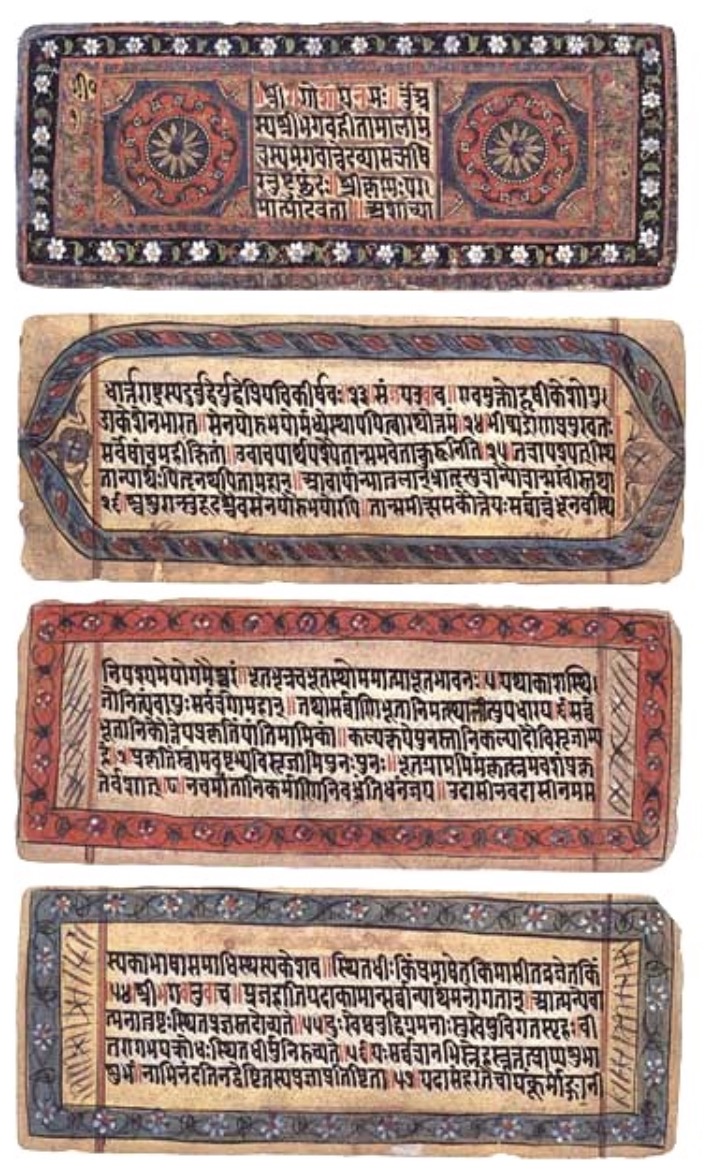
(“Bhagavad Gita, a 19th century manuscript.” Illuminated manuscript. 19th century. Ink, gold, and color on paper. North India. Wikimedia Commons. https://commons.wikimedia.org/wiki/File:Bhagavad_Gita%2C_a_19th_century_manuscript.jpg.)
A beautifully decorated 19th-century manuscript page from North India, featuring Sanskrit verses of the Bhagavad Gita with ornate floral borders and gold accents.
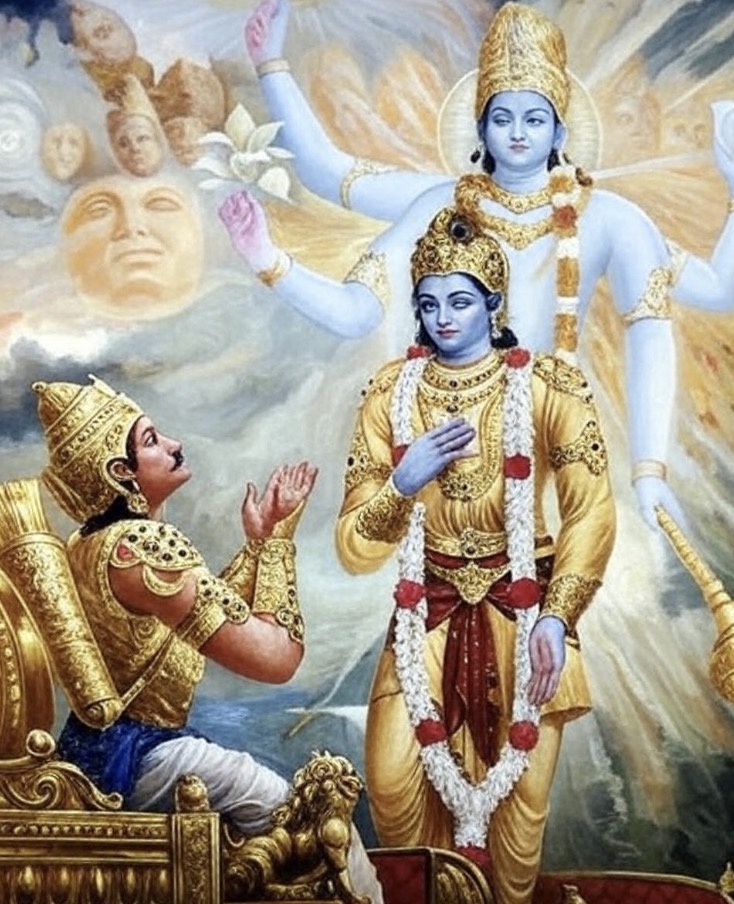
(AI-generated image)
The Bhagavad Gita, a timeless spiritual masterpiece from the Mahabharata, offers profound wisdom on duty, devotion, and liberation through the divine dialogue between Krishna and Arjuna, shaping spiritual and philosophical thought across millennia.
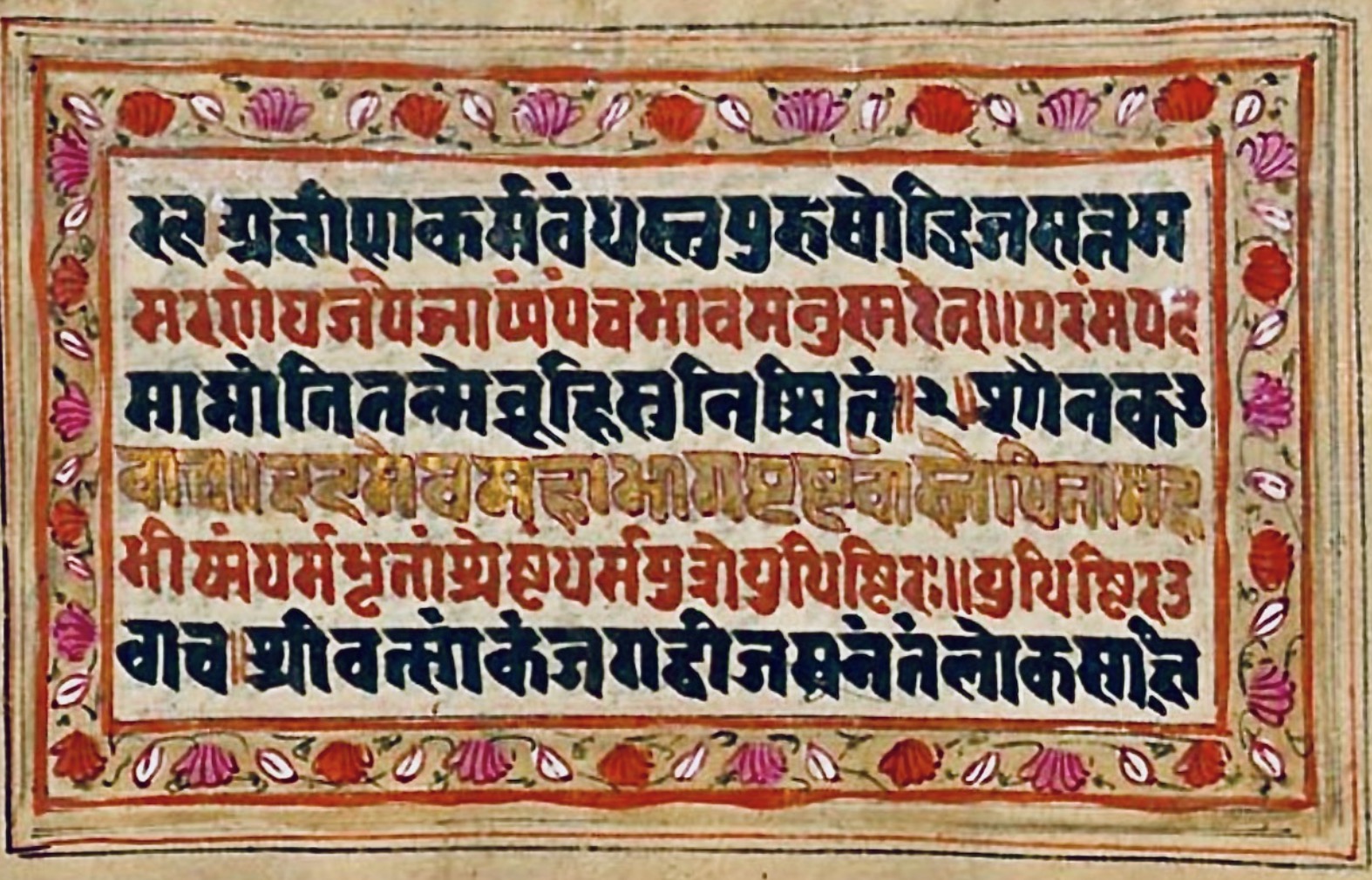
(“1800 CE manuscript copy, 2nd century BCE Bhagavad Gita, Schoyen Collection Norway.” Manuscript. 1800 CE (copy of 2nd century BCE text). Ink on paper. Schøyen Collection, Oslo. Wikimedia Commons. https://commons.wikimedia.org/wiki/File:1800_CE_manuscript_copy%2C_2nd_century_BCE_Bhagavad_Gita%2C_Schoyen_Collection_Norway.jpg.)
An 1800 CE manuscript copy of the 2nd-century BCE Bhagavad Gita from the Schøyen Collection in Norway, showcasing ancient script on aged paper with devotional motifs.